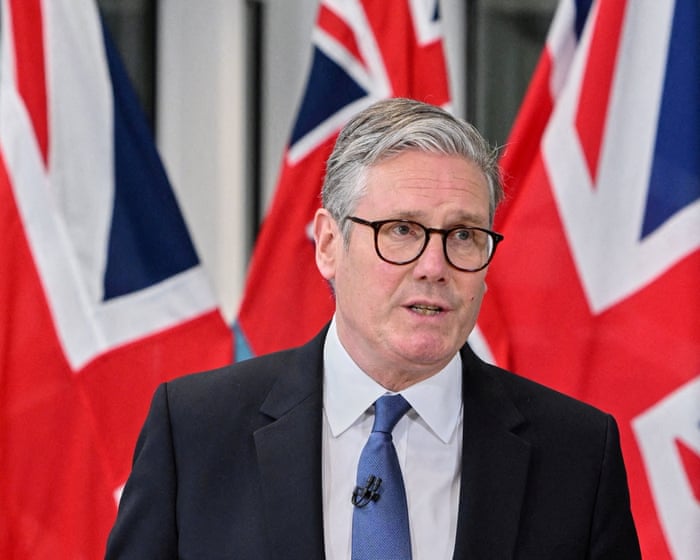
Keir Starmer has defended plans for the UK to align more closely with certain EU rules without requiring parliamentary votes for each change, stating that a stronger relationship with Europe is in the UK’s best interests, especially amid global instability like the conflict involving Iran.
Speaking to the BBC after the Guardian reported that ministers intend to use so-called Henry VIII powers to automatically align with EU rules, Starmer emphasized that nearly a decade after the Brexit referendum, it is time to “look forward.”
A new bill on food and drink trade with the EU will include provisions allowing the government to align with existing EU agreements. It will also enable the UK to quickly adopt evolving single market rules if deemed in the national interest, without undergoing full parliamentary scrutiny each time.
When asked if this amounted to “integration with the EU by stealth,” the prime minister denied that MPs would be sidelined, noting that changes would only occur “if parliament passes the legislation.”
He also defended moving closer to Europe given the current global situation, saying: “We’re in a world of massive conflict and great uncertainty, and I strongly believe the UK’s best interests lie in a stronger, closer relationship with Europe—whether in defence and security, energy, or our economy.”
Starmer explained that the proposed legislation aims to “make trade easier and reduce burdens for businesses,” adding: “That translates into lower prices, particularly with the EU deal we have. This mainly affects food and agricultural prices—and I think most people would agree that lowering those prices is a step in the right direction.”
The Conservatives have criticized the plans, with shadow business secretary Andrew Griffith accusing Starmer of being unable to accept the outcome of the 2016 referendum and reducing parliament to “a spectator while Brussels sets the terms.”
However, building on recent pro-European statements from the government, Starmer argued that opponents must recognize how the world has changed. “Ten years on from the Brexit referendum, we need to look forward, not backward,” he said. “Let’s move on from the old arguments and acknowledge that a stronger, closer relationship with Europe is in the UK’s best interest, especially in such a volatile world.”
At a Westminster press conference, Reform UK leader Nigel Farage claimed Starmer wants closer ties with “a declining part of the global economy.” Farage argued that aligning more closely “makes no economic sense” and is “a total betrayal of the Brexit vote, a breach of the Labour manifesto, and a further devaluation of parliament.”
Under the proposed bill, ministers plan to argue that the move will boost the UK economy by billions, mitigate costs related to the Iran conflict, and improve sluggish productivity.
The Guardian understands that if the bill—expected before summer—passes, negotiators could adopt EU rules on areas like cars and farming using secondary legislation. While parliament can approve or reject secondary legislation, it cannot amend it, likely leading MPs to “rubber-stamp” new deals rather than debating each one. Blocking votes could cause issues with the EU and potentially trigger retaliation. A source stated: “We are clear parliament will have a role in new deals and on new EU laws applying under those deals.”
A government insider added: “We expect opposition from those who favored the harshest Brexit terms. They will cry treason, but the reality is that all international agreements require some degree of alignment and compromise.”International agreements are built on shared rules. “Even the most ardent free traders and conservatives have always been pragmatic. But Nigel Farage lacks the courage to confront this reality; it’s impossible to imagine him ever negotiating a deal with the EU.”
Frequently Asked Questions
Of course Here is a list of FAQs about Keir Starmers proposal to align more closely with EU regulations designed to cover a range of perspectives and detail levels
Beginner Definition Questions
1 What exactly is Keir Starmer proposing
He is proposing that a future Labour government would seek a new UKEU deal to reduce trade barriers by voluntarily aligning UK regulations with EU rules in key sectors rather than rejoining the Single Market or Customs Union
2 Does this mean the UK is rejoining the EU
No This is not about rejoining the EU the Single Market or the Customs Union Its about seeking a closer trading relationship where the UK chooses to follow some EU rules to make trade smoother
3 Which regulations are we talking about
The focus is likely on sectors where friction hurts the economy most such as
Goods Sanitary standards for food product safety certifications and chemicals
Services Mutual recognition of professional qualifications for sectors like architecture and finance
Benefits Rationale
4 Whats the main benefit of doing this
The primary goal is to boost the UK economy by reducing the costly border checks paperwork and delays that have been added since Brexit making it easier and cheaper for British businesses to export to the EU
5 Will this make things cheaper in the shops
Potentially yes If it reduces the cost and complexity of importing food and goods from the EU some of those savings could be passed on to consumers helping with the cost of living
6 Why is Starmer focusing on this now
He argues the current Brexit deal is holding back economic growth and that a more pragmatic cooperative relationship with the EU is needed to fix it
Common Concerns Problems
7 Doesnt this just make us a ruletaker without a say
This is the biggest criticism Opponents argue that by aligning with EU rules the UK would have to follow future regulations it has no vote on undermining the sovereignty promised by Brexit
8 Will the EU even agree to this
Its not guaranteed The EU would likely demand significant concessions for better market access such as agreeing to a level playing field