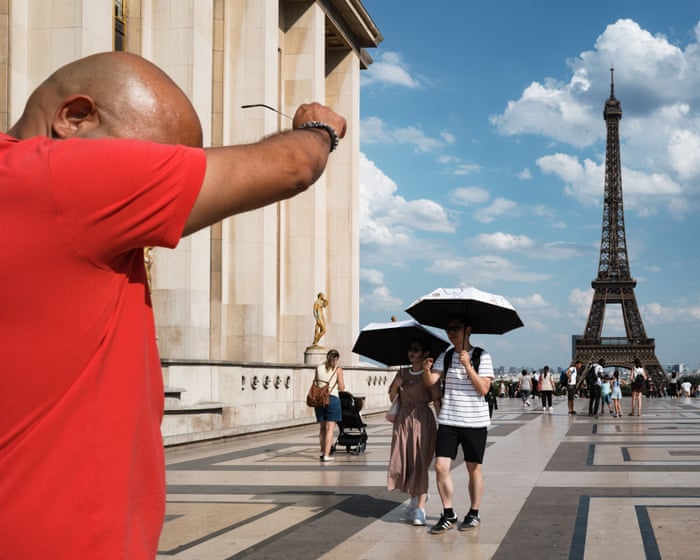
More than half of France’s population is under a severe weather warning as large parts of western Europe face the second extreme heat event of the year, with temperatures expected to exceed 40°C (104°F). French President Emmanuel Macron urged “extreme vigilance from everyone,” asking citizens to “take care of our oldest and most vulnerable people” and follow government advice. “We are going through difficult days,” he said.
A 30-year-old man died after suffering a cardiac arrest on an athletics track near Paris on Thursday as the temperature hit 37°C. This prompted rail operator SNCF to cancel 71 intercity trains and schools to reschedule exams. The national weather service, Météo-France, extended its orange heatwave alert to cover 53 of the country’s 96 mainland departments—home to 36 million people—from midday on Friday, warning of a “widespread, prolonged, and intense” heatwave.
Astronomical summer doesn’t start until Sunday, but this heatwave is already France’s second extreme temperature event of the year, following an unusually hot spell in May that broke local and national monthly temperature records. Météo-France said temperatures were likely to average 36°C in the northwest and 38°C in the center and south on Friday. After a slight drop on Saturday, they are forecast to rise to 40°C in many regions, including Paris, early next week.
With so much of the country affected, the agency said the national heat index—an average of night and daytime temperatures recorded at 30 weather stations nationwide—could approach all-time highs on Sunday and Monday. Power utility EDF said four nuclear plants were likely to reduce output next week because of high cooling water temperatures in the Rhône and Garonne rivers, and several municipalities have canceled Sunday’s Fête de la Musique festivities.
A spokesperson for Spain’s state meteorological office, Aemet, said temperatures would reach 40°C as the country enters “an episode of persistently high temperatures likely to meet the technical threshold for a heatwave.” Rubén del Campo said temperatures were likely to exceed 35°C across the Iberian Peninsula and Balearic Islands, hitting 40°C in some southern parts—such as the Tagus, Guadiana, and Guadalquivir valleys—but also in eastern Cantabria and the Ebro valley in the north.
The heatwave could last until next Wednesday or Thursday, when temperatures are expected to drop, but it may remain “very hot” across much of the country, with nighttime temperatures not falling below 25°C in many areas. Temperatures in southwestern Germany are forecast to rise to 36°C by the weekend, prompting authorities to issue heat warnings even at altitudes of 600 meters (2,000 feet). The DWD weather service also forecast heavy thunderstorms and downpours.
The agency advised people to avoid physical activity where possible, regardless of their fitness level, and for non-swimmers to be careful after a recent spate of drownings during hot spells. A hitzefrei (heat-free day) was declared for Friday, meaning lessons were cut short and pupils sent home early because buildings were heating up to unmanageable temperatures.
Frequently Asked Questions
Here is a list of FAQs about Macrons warning and the second European heatwave written in a natural tone with clear simple answers
BeginnerLevel Questions
1 What is happening in Western Europe right now
Western Europe is getting ready for its second major heatwave of the year with very high temperatures expected
2 What did President Macron say about this heatwave
He urged everyone to be very careful and stay alert He specifically warned about the dangers of wildfires and the strain on hospitals and emergency services
3 Why is a second heatwave a bigger deal than the first
The ground is already dry from the first heatwave and the heat might build up faster This makes wildfires more likely and dangerous
4 When did the first heatwave happen this year
Earlier in the summer there was a significant heatwave that broke temperature records in several countries
5 How hot is it expected to get
Temperatures are forecast to reach 40C or higher in some areas especially in France Spain and the UK
6 Is this heatwave dangerous for healthy people
Yes Even healthy people can suffer from heat exhaustion or heatstroke if they are outside for too long or dont drink enough water
IntermediateLevel Questions
7 Why is Macron personally warning people instead of just weather agencies
He is the head of state and can mobilize national resources and issue urgent public health alerts His warning carries more weight and urgency
8 What specific areas are most at risk
Southern France Spain Portugal and parts of Italy are at highest risk for extreme heat and wildfires The UK is also bracing for recordbreaking temperatures
9 How is this heatwave different from a typical summer hot spell
A heatwave is defined by its intensity and duration This one is expected to last several days and nights with very little cooling down at night which is particularly dangerous
10 What is a code red or red alert warning
Its the highest level of weather warning It means the heat is so extreme that it poses a danger to life even for healthy people Governments may close schools or cancel public events
11 How are wildfires connected to this heatwave
The extreme heat dries out vegetation grass