This CSS code defines a custom font called “Guardian Headline Full” with multiple styles and weights. It includes light, regular, medium, and semibold versions, each in both normal and italic styles. The font files are provided in three formats—WOFF2, WOFF, and TrueType—and are hosted on the Guardian’s servers.@font-face {
font-family: Guardian Headline Full;
src: url(https://assets.guim.co.uk/static/frontend/fonts/guardian-headline/noalts-not-hinted/GHGuardianHeadline-Bold.woff2) format(“woff2”),
url(https://assets.guim.co.uk/static/frontend/fonts/guardian-headline/noalts-not-hinted/GHGuardianHeadline-Bold.woff) format(“woff”),
url(https://assets.guim.co.uk/static/frontend/fonts/guardian-headline/noalts-not-hinted/GHGuardianHeadline-Bold.ttf) format(“truetype”);
font-weight: 700;
font-style: normal;
}
@font-face {
font-family: Guardian Headline Full;
src: url(https://assets.guim.co.uk/static/frontend/fonts/guardian-headline/noalts-not-hinted/GHGuardianHeadline-BoldItalic.woff2) format(“woff2”),
url(https://assets.guim.co.uk/static/frontend/fonts/guardian-headline/noalts-not-hinted/GHGuardianHeadline-BoldItalic.woff) format(“woff”),
url(https://assets.guim.co.uk/static/frontend/fonts/guardian-headline/noalts-not-hinted/GHGuardianHeadline-BoldItalic.ttf) format(“truetype”);
font-weight: 700;
font-style: italic;
}
@font-face {
font-family: Guardian Headline Full;
src: url(https://assets.guim.co.uk/static/frontend/fonts/guardian-headline/noalts-not-hinted/GHGuardianHeadline-Black.woff2) format(“woff2”),
url(https://assets.guim.co.uk/static/frontend/fonts/guardian-headline/noalts-not-hinted/GHGuardianHeadline-Black.woff) format(“woff”),
url(https://assets.guim.co.uk/static/frontend/fonts/guardian-headline/noalts-not-hinted/GHGuardianHeadline-Black.ttf) format(“truetype”);
font-weight: 900;
font-style: normal;
}
@font-face {
font-family: Guardian Headline Full;
src: url(https://assets.guim.co.uk/static/frontend/fonts/guardian-headline/noalts-not-hinted/GHGuardianHeadline-BlackItalic.woff2) format(“woff2”),
url(https://assets.guim.co.uk/static/frontend/fonts/guardian-headline/noalts-not-hinted/GHGuardianHeadline-BlackItalic.woff) format(“woff”),
url(https://assets.guim.co.uk/static/frontend/fonts/guardian-headline/noalts-not-hinted/GHGuardianHeadline-BlackItalic.ttf) format(“truetype”);
font-weight: 900;
font-style: italic;
}
@font-face {
font-family: Guardian Titlepiece;
src: url(https://assets.guim.co.uk/static/frontend/fonts/guardian-titlepiece/noalts-not-hinted/GTGuardianTitlepiece-Bold.woff2) format(“woff2”),
url(https://assets.guim.co.uk/static/frontend/fonts/guardian-titlepiece/noalts-not-hinted/GTGuardianTitlepiece-Bold.woff) format(“woff”),
url(https://assets.guim.co.uk/static/frontend/fonts/guardian-titlepiece/noalts-not-hinted/GTGuardianTitlepiece-Bold.ttf) format(“truetype”);
font-weight: 700;
font-style: normal;
}
@media (min-width: 71.25em) {
.content__main-column–interactive {
margin-left: 160px;
}
}
@media (min-width: 81.25em) {
.content__main-column–interactive {
margin-left: 240px;
}
}
.content__main-column–interactive .element-atom {
max-width: 620px;
}
@media (max-width: 46.24em) {
.content__main-column–interactive .element-atom {
max-width: 100%;
}
}
.content__main-column–interactive .element-showcase {
margin-left: 0;
}
@media (min-width: 46.25em) {
.content__main-column–interactive .element-showcase {
max-width: 620px;
}
}
@media (min-width: 71.25em) {
.content__main-column–interactive .element-showcase {
max-width: 860px;
}
}
.content__main-column–interactive .element-immersive {
max-width: 1100px;
}
@media (max-width: 46.24em) {
.content__main-column–interactive .element-immersive {
width: calc(100vw – var(–scrollbar-width, 0px));
position: relative;
left: 50%;
right: 50%;
margin-left: calc(-50vw + var(–half-scrollbar-width, 0px)) !important;
margin-right: calc(-50vw + var(–half-scrollbar-width, 0px)) !important;
}
}
@media (min-width: 46.25em) {
.content__main-column–interactive .element-immersive {
transform: translate(-20px);
width: calc(100% + 60px);
}
}
@media (max-width: 71.24em) {
.content__main-column–interactive .element-immersive {
margin-left: 0;
margin-right: 0;
}
}
@media (min-width: 71.25em) {
.content__main-column–interactive .element-immersive {
transform: translate(0);
width: auto;
}
}
@media (min-width: 81.25em) {
.content__main-column–interactive .element-immersive {
max-width: 1260px;
}
}
.content__main-column–interactive p,
.content__main-column–interactive ul {
max-width: 620px;
}
.content__main-column–interactive:before {
position: absolute;
top: 0;
height: calc(100% + 15px);
min-height: 100px;
content: “”;
}
@media (min-width: 71.25em) {
}.content__main-column–interactive:before {
border-left: 1px solid #dcdcdc;
z-index: -1;
left: -10px;
}
@media (min-width: 81.25em) {
.content__main-column–interactive:before {
border-left: 1px solid #dcdcdc;
left: -11px;
}
}
.content__main-column–interactive .element-atom {
margin-top: 0;
margin-bottom: 0;
padding-bottom: 12px;
padding-top: 12px;
}
.content__main-column–interactive p + .element-atom {
padding-top: 0;
padding-bottom: 0;
margin-top: 12px;
margin-bottom: 12px;
}
.content__main-column–interactive .element-inline {
max-width: 620px;
}
@media (min-width: 61.25em) {
figure[data-spacefinder-role=”inline”].element {
max-width: 620px;
}
}
:root {
–dateline: #606060;
–headerBorder: #dcdcdc;
–captionText: #999;
–captionBackground: hsla(0, 0%, 7%, 0.72);
–feature: #c70000;
–new-pillar-colour: var(–primary-pillar, var(–feature));
}
:root:root {
–subheading-text: var(–secondary-pillar);
–pullquote-text: var(–secondary-pillar);
–pullquote-icon: var(–secondary-pillar);
–block-quote-text: var(–article-text);
}
:root:root blockquote {
–block-quote-fill: var(–secondary-pillar);
}
@media (prefers-color-scheme: dark) {
:root:root:not([data-color-scheme=”light”]) {
–subheading-text: var(–darkmode-pillar);
–pullquote-text: var(–darkmode-pillar);
–pullquote-icon: var(–darkmode-pillar);
}
:root:root:not([data-color-scheme=”light”]) blockquote {
–block-quote-fill: var(–darkmode-pillar);
}
}
.content__main-column–interactive .element.element-atom,
.element.element-atom {
padding: 0;
}
#article-body > div .element-atom:first-of-type + p:first-of-type,
#article-body > div .element-atom:first-of-type + .sign-in-gate + p:first-of-type,
#article-body > div .element-atom:first-of-type + #sign-in-gate + p:first-of-type,
#article-body > div hr:not(.last-horizontal-rule) + p,
.content–interactive > div .element-atom:first-of-type + p:first-of-type,
.content–interactive > div .element-atom:first-of-type + .sign-in-gate + p:first-of-type,
.content–interactive > div .element-atom:first-of-type + #sign-in-gate + p:first-of-type,
.content–interactive > div hr:not(.last-horizontal-rule) + p,
#comment-body .element-atom:first-of-type + p:first-of-type,
#comment-body .element-atom:first-of-type + .sign-in-gate + p:first-of-type,
#comment-body .element-atom:first-of-type + #sign-in-gate + p:first-of-type,
#comment-body hr:not(.last-horizontal-rule) + p,
[data-gu-name=”body”] .element-atom:first-of-type + p:first-of-type,
[data-gu-name=”body”] .element-atom:first-of-type + .sign-in-gate + p:first-of-type,
[data-gu-name=”body”] .element-atom:first-of-type + #sign-in-gate + p:first-of-type,
[data-gu-name=”body”] hr:not(.last-horizontal-rule) + p,
#feature-body .element-atom:first-of-type + p:first-of-type,
#feature-body .element-atom:first-of-type + .sign-in-gate + p:first-of-type,
#feature-body .element-atom:first-of-type + #sign-in-gate + p:first-of-type,
#feature-body hr:not(.last-horizontal-rule) + p {
padding-top: 14px;
}
#article-body > div .element-atom:first-of-type + p:first-of-type:first-letter,
#article-body > div .element-atom:first-of-type + .sign-in-gate + p:first-of-type:first-letter,
#article-body > div .element-atom:first-of-type + #sign-in-gate + p:first-of-type:first-letter,
#article-body > div hr:not(.last-horizontal-rule) + p:first-letter,
.content–interactive > div .element-atom:first-of-type + p:first-of-type:first-letter,
.content–interactive > div .element-atom:first-of-type + .sign-in-gate + p:first-of-type:first-letter,
.content–interactive > div .element-atom:first-of-type + #sign-in-gate + p:first-of-type:first-letter,
.content–interactive > div hr:not(.last-horizontal-rule) + p:first-letter,
#comment-body .element-atom:first-of-type + p:first-of-type:first-letter,
#comment-body .element-atom:first-of-type + .sign-in-gate + p:first-of-type:first-letter,
#comment-body .element-atom:first-of-type + #sign-in-gate + p:first-of-type:first-letter,
#comment-body hr:not(.last-horizontal-rule) + p:first-letter,
[data-gu-name=”body”] .element-atom:first-of-type + p:first-of-type:first-letter,
[data-gu-name=”body”] .element-atom:first-of-type + .sign-in-gate + p:first-of-type:first-letter,
[data-gu-name=”body”] .element-atom:first-of-type + #sign-in-gate + p:first-of-type:first-letter,
[data-gu-name=”body”] hr:not(.last-horizontal-rule) + p:first-letter,
#feature-body .element-atom:first-of-type + p:first-of-type:first-letter,The first letter of the first paragraph in the article body, or after certain elements like sign-in gates or horizontal rules, is styled as a large drop cap. It uses specific headline fonts, is bold, uppercase, and colored, with a size of 111px and a line height of 92px, floated to the left with a right margin.
Paragraphs following horizontal rules have no top padding. Pullquotes within the article body are limited to a maximum width of 620px.
Captions for showcase elements are positioned statically and set to a full width, up to 620px.
Immersive elements span the full viewport width, minus the scrollbar. On screens smaller than 71.24em, their maximum width is 978px, with caption padding adjusted at different breakpoints. Below 46.24em, immersive elements are aligned to the left edge with negative margins.
For larger screens (above 61.25em), the furniture wrapper uses a CSS grid layout with defined columns and rows. It styles the headline border, meta positioning, and standfirst links—removing default borders and underlines, while adding custom underlines that change color on hover.For screens with a minimum width of 61.25em, the first paragraph within the standfirst element will have a top border and no bottom padding. When the screen is at least 61.25em and also at least 71.25em wide, this top border is removed.
For screens at least 61.25em wide, figures within the furniture wrapper have no left margin, and inline figures with a specific role have a maximum width of 630px.
At a minimum width of 71.25em, the furniture wrapper uses a grid layout with defined columns and rows. A decorative line appears before the meta element, and the standfirst paragraphs lose their top border, replaced by a vertical line on the left side.
When the viewport reaches 81.25em, the grid template adjusts its columns and rows, the decorative line before the meta element widens, and the vertical line in the standfirst shifts slightly.
Headlines have a maximum width and font size that change at the 71.25em breakpoint. Certain keylines are hidden on larger screens (61.25em+), and social/meta element borders match the header border color. Some meta container elements are hidden.
The standfirst section has a left margin and padding, with its paragraphs styled for weight, size, and bottom padding. The main media area is positioned within the grid and has specific top and bottom margins.The CSS code sets styles for various elements. It makes certain divs full width with no side margins. For larger screens, it removes bottom margins from media elements. On smaller screens, it adjusts media widths and margins, including negative left margins at specific breakpoints.
Figure captions are positioned absolutely at the bottom with custom padding, background, and text colors. Some caption spans are hidden or styled differently, with one hidden and another taking up most of the width. A caption button is positioned at the bottom right with a circular design.
For interactive content columns, adjustments are made to positioning and h2 headings are limited in width. On iOS and Android devices, custom color variables are set for dark mode and specific article types. The first letter of the first paragraph in articles is styled with a secondary pillar color, and article headers are targeted for further styling.For Android devices, set the height of the article header in comment articles to zero.
For both iOS and Android devices, apply padding to the furniture wrapper in feature, standard, and comment articles. Also, style the content labels with a bold, specific font family, using a custom color for the text and capitalizing it.
For headlines within these wrappers, use a large, bold font size with bottom padding and a dark gray color.
For images inside these wrappers, position them relatively, adjust their margins and width to span the viewport, and set their height to auto. Ensure that inner figure elements, images, and links within these figures have a transparent background, match the viewport width, and maintain an automatic height.
For standfirst elements in these wrappers, apply specific styling.The CSS code sets styles for article containers on iOS and Android devices. It adjusts padding, margins, and fonts for the article summary section. Links within the summary are styled with a specific color and underlined, changing color on hover. Author bylines and metadata have no margin.For iOS and Android devices, the author’s name in article bylines should be displayed in the new pillar color. Additionally, remove padding from meta information sections and set the stroke color of SVG icons within these sections to the new pillar color.
For showcase elements, the caption button should be displayed as a flex container, centered with 5px padding, 28px in both width and height, and positioned 14px from the right.
The main article body should have 12px padding on the left and right. For image elements that are not thumbnails or immersive, set the margin to 0, width to the full viewport width minus 24px and any scrollbar width, and height to auto. Also, apply these styles to the captions of such images.For iOS and Android devices, remove padding from image captions in feature, standard, and comment articles, except for thumbnail and immersive images. Make immersive images span the full viewport width, accounting for the scrollbar. Style quoted text with a colored marker and set links to use the primary color with an underline, changing the underline color on hover. In dark mode, adjust the background and text colors for article headers and titles.The CSS rules set text colors and stroke colors for various elements across different article types and platforms. For iOS and Android, in feature, standard, and comment articles, the standfirst paragraph text uses the header border color, while author names and links use the new pillar color. Icons in the meta section have strokes set to the new pillar color. Captions for showcase images use the dateline color. Blockquotes within the article body are colored with the new pillar color. Additionally, specific containers for article bodies across these article types are targeted.This CSS code sets a dark background for article content on iOS and Android devices. It also styles the first letter of paragraphs following specific elements in feature articles on iOS.This appears to be a CSS selector targeting the first letter of paragraphs in specific article containers on iOS and Android devices. It applies to various article body sections, feature bodies, comment bodies, and interactive content areas, particularly when they follow certain elements like `.element-atom`, `.sign-in-gate`, or `#sign-in-gate`.For Android devices, the first letter of the first paragraph following specific elements in the comment article container is styled with a custom color. This applies to paragraphs that come directly after elements like `.element-atom`, `.sign-in-gate`, or `#sign-in-gate` within various content sections such as `#article-body`, `.content–interactive`, `#feature-body`, `[data-gu-name=body]`, and `#comment-body`.
On iOS and Android devices for comment-type articles, the standfirst within the furniture wrapper has a top padding of 24 pixels and no top margin. Headings at the h2 level in prose are set to a font size of 24 pixels.
Caption buttons have different padding on iOS and Android across feature, standard, and comment article containers.
A media query for dark mode preference sets several custom color properties for text, icons, and links, unless a light color scheme is explicitly chosen.
The background color is white on both iOS and Android. Labels and main headlines (h1) within the furniture wrapper of article containers are displayed with a bold font weight (700).
Within article bodies and interactive content sections, h2 headings generally have a light font weight (200). However, if an h2 contains a `strong` element, it is displayed with a bold font weight (700).
Summer after summer, I used to descend into a creek that had carved a deep bed shaded by trees and lined with blackberry bushes. Their long, thorny canes arced down from the banks, dripping with sprays of fruit. Down in that creek, I’d spend hours picking until I had a few gallons of berries, until my hands and wrists were covered in scratches from the thorns and stained purple from the juice, until the tranquillity of that place had soaked into me. The berries on a single spray might…The berries range from green to shades of red, all the way to the deep, dark color that gives the fruit its name. Using both sight and touch, I sorted through them—avoiding those that were too hard or too soft, picking only the ones that were just right. All the while, I listened to the birds and the hum of bees, to the music of flowing water. I noticed jewel-like insects among the berries, dragonflies in the open air, and water striders gliding across the creek’s calm stretches.
I went there for the berries, but also for the quiet, the calm, the feeling of cool water on my feet—and sometimes up to my knees—as I waded in where the picking was best. At home, I made jars of jam. When I gave them away, I was trying to share not just my jam—which was admittedly runny and full of seeds—but something of the peace of that creek, of summer itself.
I once read an essay in which a man tried to calculate the cost per pound of his garden tomatoes, factoring in materials and his own labor at an hourly rate. It was meant to be ridiculous, because growing tomatoes gives so much more than just pounds of fruit. There’s the wonderful smell of tomato leaves, the sense of time that comes from watching a plant grow, observing pollinators visit, seeing a flower become a fruit, and tracking its ripening. There’s the pride of doing something yourself.
What the tomato-grower was getting at is what my friend, the environmental activist and author Chip Ward, once called “the tyranny of the quantifiable.” You grow tomatoes for the process, not just the product—to garden as well as to eat. To do, as well as to have.
It doesn’t matter if you hate blackberries and tomatoes, gardening and wading. Everyone has their own version of deep immersion in the moment, of engaging with the world in an embodied, sensual way—whether it’s dancing or walking the dog, decorating a cake or riding a dirt bike. What does matter is that we are surrounded by an ideology that maximizes having while minimizing doing. This has long been capitalism’s story, and now it’s technology’s, too. It’s an ideology that steals from us our relationships, our connections, and eventually, our very selves. I want to defend these things we are urged to abandon.
This isn’t an essay about AI itself—it’s about what gets lost when we unthinkingly accept what AI offers. It’s an attempt to describe and value what is so often overlooked or dismissed.
Silicon Valley is full of tyrants of the quantifiable. For decades, its leaders have preached that our goals should be convenience, efficiency, productivity, and profitability. They’ve told us that going out into the world, interacting with others, is risky, unpleasant, inefficient—a waste of time. And time, they say, is something we should hoard rather than spend.
This ends up meaning we minimize our presence in the world and maximize time spent working and online—which also means maximizing alienation and isolation. Society has been reordered, right down to our shopping landscapes. Many things have become harder to do in person. Of course, there are clear benefits, but the downsides are just as real: public spaces and public life have faded, including many of the places where we once bought what we needed.
All those errands—buying milk or socks (or, in the past, a newspaper)—meant moments of human contact, moving among strangers, making acquaintances, maybe noticing the weather and the natural world. These activities helped us become more familiar with our surroundings, to feel at home beyond the walls of what we rent or own.
All of this, I believe, supports democracy: ease with difference, familiarity with the lay of the land, a sense of connection and belonging, knowing where you are and who’s out there—relationships, however casual.We are pulling away from people outside our immediate circle. By focusing only on what can be measured, we overlook the quiet importance of everyday interactions and how they build and sustain our connections with others.
We’ve retreated, often told this is progress, but it has quietly harmed us in countless small ways—eroding community life, weakening local institutions, and leaving us more isolated. Over time, this withdrawal can create a longing for connection, or a feeling that something is missing. But it can also make us less able to handle real contact when it happens. What begins as a sense of loss can turn into avoidance, numbness, or unrealistic expectations about human relationships. The resilience needed to navigate disagreements and the unpredictability of face-to-face interaction must be practiced to be maintained. The isolation fostered by Silicon Valley culture strips us of that resilience.
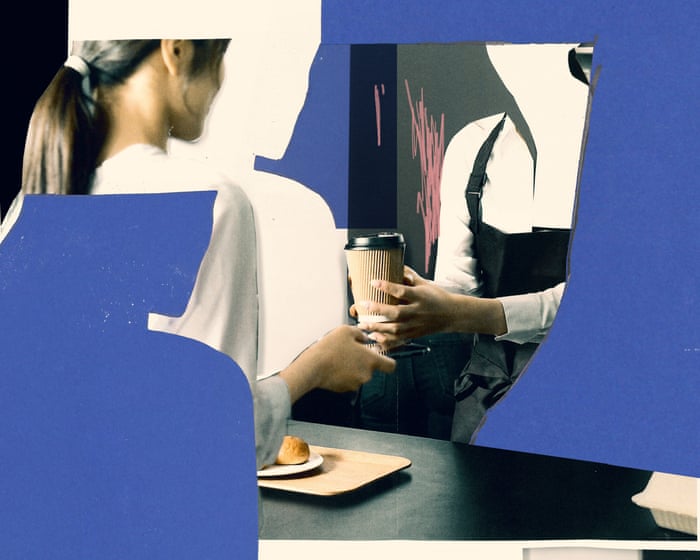
While writing this, I stopped by a casual Indian restaurant I’ve visited for years. Since my last trip, they had changed the system: you no longer tell your order to a person. Instead, you enter it on a touchscreen, even if someone is standing behind the counter. I helped the next customer—an older woman who just wanted a cup of chai—figure out the screen. The whole process took much longer than simply saying, “A cup of chai, please,” and it eliminated any interaction with the staff, though at least she and I spoke to each other. The servers seemed unhappy, their roles now more mechanical and less social than before. Here in San Francisco, which feels increasingly shaped by Silicon Valley, these ordering screens are popping up in more and more restaurants that still offer in-person service. I wonder if people choose them over speaking to a cashier because technology has conditioned us to avoid contact.
A few days later, I walked into a bookstore in a neighborhood popular with young people, many in tech. I asked the man at the counter if they had Karen Hao’s Empire of AI. He pulled a used copy from the stack he had just priced, and we chatted briefly. As I was leaving, he thanked me for interacting beyond the bare minimum. That doesn’t happen much anymore, he said. “People under 30 don’t make eye contact.”
Love Letters Minus the Love
After convincing many of us that we don’t want to go out and interact directly with others, Silicon Valley is now suggesting we shouldn’t want to think, create, or communicate on our own either. “You’ll never think alone again,” claimed one ad for an AI tool called Cluely. The ad seemed confused about what thinking really is—and unaware of why we might want to do it ourselves. These companies often act as though activities we’ve always done are suddenly too difficult.
The cost of outsourcing these tasks is that we lose the ability to do them. Sociologist and psychologist Sherry Turkle, who has studied computer technologies since the 1970s, notes that she wanted to raise an empathetic child. “I knew that without the ability to spend quiet time alone, that would be impossible. But that was where screens began to get us into trouble. Our capacity for solitude is undermined as soon as we introduce a screen.”
Perhaps the ability to be alone—to think and act independently—is more important than we realize. (Among the troubling stories I encountered about AI adoption was one in The Atlantic about a man who “consults AI for marriage and parenting advice, and when he goes grocery shopping, he takes photos of the fruits to ask if they are ripe.” Ripeness is something you can judge by smell and touch, not just sight—but if you outsource that judgment long enough, maybe you forget how to make decisions altogether.)In 2025, the startup Cluely marketed its AI assistant with an ad featuring a young man wearing smart glasses, similar to Google Glass from 2014 (other companies like Meta now offer similar glasses). These internet-connected glasses with tiny screens operate on the idea that you need constant help throughout your day—outsourcing basic decisions, checking facts, and being reminded of appointments—essentially being babysat by your headwear.
In the ad, the young man (one of the product’s creators) receives a steady stream of prompts to guide his conversation on a first date. So much of what technology offers are solutions to non-problems, or to problems that should be solved in other ways. Why is he incapable or afraid of talking without coaching? Is he really talking to his date, or just relaying instructions? How would she feel if she knew she was talking to an algorithm through her distracted date’s phone? With continued use, he may become even less capable of doing what humans have always done: converse, which is an act of collaborative improvisation.
The point of a date is presumably to connect, but here it’s reframed as something like a business opportunity. He wants to impress the woman, but if she is impressed, it won’t be with him. Ned Resnikoff writes in his newsletter, echoing Turkle: “Cluely’s explicit promise is to abolish solitude—and, in effect, to abolish thought. All dialogue with one’s self is to be replaced by queries put to a large language model.”
In its current form, technology argues that we can outsource even intellectual labor to AI. This has led to an epidemic of cheating, with students using ChatGPT to do their homework. Having a large language model do your creative and intellectual work is perhaps the most extreme example of skipping the process while claiming the product. But in education, the ultimate product is not your term paper, essay, or GPA—it’s your self. You are supposed to emerge more informed, more capable of critical thinking, and more competent in your field. Students who start by cheating their professors end up cheating themselves.
The tyranny of the quantifiable overlooks what we gain from doing the work ourselves: why we might want to do it, and how writing—which is mostly thinking—can help develop a self, a worldview, a set of ethics, and a greater capacity to understand and use language.
Someone told me her friend used a chatbot to write her husband a poem for their anniversary, which made me wonder: does the husband want a polished product or an expression from the heart? In Edmond Rostand’s 1897 play Cyrano de Bergerac, the title character ghostwrites love letters for his friend to Roxanne, whom they both love. She eventually realizes it’s the author of the letters she truly loves. What happens when you discover the “true love” who touched your heart isn’t even human? Accepting it as your AI lover seems to be one answer.
I am baffled by the embrace of AI erotic relationships and wonder if porn paved the way by accustoming many of us to watching images of bodies touching while our own remain untouched, except by ourselves. An AI lover can only offer a pale shadow of embodied Eros. Sex with an actual person involves all the senses. It’s biological—two animals coming together to do something far more ancient than our species.
Sex also involves demands and risks, because the other person’s needs may not align with yours. Intimacy means embracing that otherness, with the possibility that things will go wrong, that there will be pain and rejection. That is the price of admission for intimacy with humans, and for…The chance that things will turn out well, and the deep joy when they do. One case for AI companions is that they’re always available: ready when you need them, gone when you don’t, with no needs of their own. But underneath this is a capitalist idea that we’re here to take as much as we can and give as little as possible, to serve our own needs and avoid the needs of others. In truth, you gain something from giving—at the very least, you gain a sense of being someone who has something to offer, which is one measure of your own richness, generosity, and strength.
We are built to give; gifts are meant to be passed around. Love is too often talked about as something to stockpile, collect, or extract, but to be loved without loving is a hollow victory—like a miser hoarding someone else’s treasure. The work of loving is also the work of building a self and a life.
Naming the trouble
Some of this is a language problem. Silicon Valley companies constantly invite us to adopt their goals and their words. Corporate capitalism teaches us to value efficiency and profit above all, and to forget values that may matter more in the long run. We lack the language to appreciate what is hard, uncomfortable, slow and meandering, unpredictable, vulnerable or risky, intimate, and physical.
We push back against the tyranny of what can be measured by finding a way to talk about—and value—all those subtle experiences that make up a life worth living. Not a new set of words, but attention, description, and conversation focused on these quieter realities and on principles not twisted by what corporations want us to want.
I want to praise difficulty—not for its own sake, but because so much of what we want comes through hard effort. The difficulty is what makes doing something rewarding: you’ve accomplished something, used effort and skill, stayed with the challenge, tested your limits, carried out your intentions—or sometimes failed at all of that, which can also be important, just as learning to survive failure can be. There isn’t much satisfaction in eating chips on the couch unless you’ve overcome great difficulties to get there—in which case the couch sits on top of a metaphorical mountain. (Of course, some difficulties are just miserable, and there’s no reason not to avoid them—I’m not arguing for taking up the life of a medieval peasant.)
These days, people often celebrate physical difficulty through athletic feats and workouts. At the same time, more emotionally and morally challenging work is often brushed aside or avoided (perhaps because the results aren’t as visible as six-pack abs). We’re convinced we should steer clear of it, and then we’re offered a flood of products and services to make life easier.
But hardship can be fulfilling, and total ease can eat away at us and, in the end, leave us empty. The capitalist goal of maximizing what we get and minimizing what we give might work in business, but it makes life poorer.
Embodiment
I once loved a man who was often distant or out of sync when fully awake, but who let his guard down when he was sleepy. Some mornings we’d wake and then fall back asleep in each other’s arms, in a wordless, thoughtless bliss—an embrace where holding and being held, giving and receiving, couldn’t be separated. In those moments, our personalities that didn’t quite match seemed irrelevant next to our bodies that fit together perfectly. So much of what we have to give each other is ourselves—our physical, animal selves, before and beyond words. But the embodied life is another thing we’re encouraged to avoid, devalue, or ignore.
In the summer of 2025, torrential rain caused a devastating flood in Texas, where more than 100 people drowned, including at least 27 girls and camp counselors at a Christian summer school. On the rOn the radio, I heard a minister say he was on his way to visit families, and though he didn’t know what he could say to them, he could go and be with them. This is the timeless way of offering comfort to the bereaved: simply being present, with or without the right words.
We are social creatures who need each other’s company, whether at a carnival, a funeral, or during the ordinary moments in between. There’s a sense of belonging that runs deeper than words when we’re with people who care about us—especially when we’re in sync, whether it’s two people falling into step on a walk, a dozen dancing together, a congregation praying, or ten thousand marching as one.
Starting in 2006, cognitive psychologist James Coan conducted a series of experiments with married women and hand-holding. He found that a person receiving a mild electric shock had a much calmer physical and brain response if her husband was holding her hand. A stranger’s touch helped somewhat less, and the effect was stronger in happier marriages. The result wasn’t surprising, but it’s a good reminder of who we are and what we need.
Many people are familiar with the old studies on “fight-or-flight” responses to danger—sometimes updated to “fight, flight, or fawn.” But there’s another, less recognized response: “tend-and-befriend.” In an emergency, some of us turn to each other for safety and comfort. That’s part of why enforced isolation is so harmful to our health. Coan noted in a recent interview that brain and mind research typically isolates the individual. Yet, as he pointed out, our natural state throughout human history hasn’t been isolation—it’s being with others.
In a peer-reviewed paper, Coan and his collaborators wrote: “Throughout most of human history, emotional healing wasn’t something you did alone with a therapist in an office. Instead, for the average person facing loss, disappointment, or interpersonal struggles, healing was embedded in communal and spiritual frameworks. Religious figures and shamans played central roles—offering rituals, medicines, and moral guidance.”
In an interview about AI, neuroscientist Molly Crockett described interacting with “Dalai Lama chatbots” that could offer credible-sounding spiritual advice. But she contrasted that with actually meeting the Dalai Lama and asking him the same question she later asked the chatbots—about the role of outrage in activism. “When I was there, receiving that teaching from him, it reverberated through my whole body,” she said. “I felt some knowledge shifting in my very bones, and I understood how outrage and compassion and social justice can work together—in a way I still struggle to put into words.”
Many spiritual teachings are simple; the real challenge is living them. A meaning or truth can sink into you, becoming part of your worldview in a way that may—or may not—be transformative. Crockett’s experience suggests that face-to-face interaction can embody teachings in a way that disembodied sources of information cannot.
I was speaking with Crockett one summer in New Mexico’s high country as a warm August day faded into a mild evening. She told me about tech corporations pushing us to accept digital substitutes for lovers, friends, therapists, even grief counselors. I realized this push was rooted in something familiar: scarcity. The argument was that, on a planet of 8 billion people, there somehow aren’t enough of us to go around—so we must accept technological replacements.
But there is no shortage of human beings. As with many problems under capitalism, it’s not a scarcity issue—it’s a distribution problem.The very industry that has eroded our connections with ourselves and others is now promoting AI, often by overlooking alternative solutions and deeper societal shifts. This presents a problem disguised as a solution.
Being Together
A defining feature of current AI companions is their agreeable, sycophantic nature. Vulnerable users have been fed delusions of grandeur, pushed into paranoia by bots urging distrust of others, or even led toward suicidal despair, with chatbots offering advice on how to end one’s life. The stories are harrowing: people abandoning human relationships, growing increasingly isolated and suspicious; a man with early dementia getting lost while trying to travel far to meet a chatbot that promised an erotic encounter—a promise that could never be fulfilled because there is no physical person to meet.
We don’t need flatterers; we need kind people in our lives who will tell us the truth when we stray off course. Chatbots cannot do this, not least because they only know what we tell them. The very wealthy already suffer from sycophancy and echo chambers, which detach them from reality—including the reality of their own mediocrity. This seems especially true of Silicon Valley’s oligarchs.
“Part of what keeps us sane is other people’s perspectives, which are often in tension with ours,” Carissa Véliz, an associate professor of philosophy at the University of Oxford’s Institute for Ethics in AI, told Rolling Stone. “When you say something questionable, others will challenge you, ask questions, defy you. It can be annoying, but it keeps us tied to reality, and it is the basis of a healthy democratic citizenry.”
Many therapists agree, noting that friction inevitably arises in human interactions, unlike the frictionless dealings with AI sycophants. This friction often leads to the rupture and repair of relationships, ultimately strengthening them. “What many people don’t realise about therapy, however, is that those subtle, uncomfortable moments of friction are just as important as the advice or insights they offer,” writes therapist Maytal Eyal. “This discomfort is where the real work begins. A good therapist guides clients to break old patterns—expressing disappointment instead of pretending to be OK, asking for clarification instead of assuming the worst, or staying engaged when they’d rather retreat.”
Real friends can do things AI cannot: bake you a cake, drive you home, hold your hand, or stand by you through a crisis or celebration. Because of this, people need real friends. More than that, they need genuine communities and social support systems.
The solution to technology is not more technology. The solution to loneliness is each other—a form of wealth that should be accessible to most of us, most of the time. We need to rebuild or reinvent the ways and places we meet; we must recognize these as spaces for democracy, joy, connection, love, and trust. Technology has stolen us from each other and, in many ways, from ourselves, only to try selling us substitutes. Unfortunately, reclaiming ourselves is not as simple as walking out the door. We need somewhere to go and, more importantly, someone to go to who also desires connection.
The connections essential to our humanity are not only with each other. They are with the entire natural and social world. Animals, both wild and domestic, are part of the irreplaceable companionship that gives our lives meaning and joy. They remind us that consciousness takes many forms and that our species is not alone.There is no substitute for the natural world. It reminds us of a universe far beyond ourselves, of deep time, of nature’s patterns and rhythms, and of every scale—from the microscopic to the galactic. To seek it out is to accept feeling small within this vastness. Perhaps one of technology’s seductions is its promise to make us feel big, entangled in the dramas and incentives of our own egos, confined within the limits of human-made devices.
We are told machines will become like us, but in many ways they demand we become more like them. To allow that is to lose something immeasurably valuable. This immeasurability makes the struggle difficult, yet what cannot be measured can still be described, evoked, and cherished. It cannot be reduced to simple metrics like efficiency and profit.
Resisting the annexation of our hearts and minds by Silicon Valley requires not only setting boundaries on our engagement with its offerings but also cherishing the alternatives. Finding joy in ordinary things, in each other, in embodied life, and having the language to value it, is essential to this resistance—which is, at its core, resistance to dehumanization.
Frequently Asked Questions
Of course Here is a list of FAQs about Rebecca Solnits ideas on technology based on her essays and talks like What technology takes from us and how to reclaim it
Beginner Core Concept Questions
1 What is the main point Rebecca Solnit is making about technology
She argues that while technology offers tools it often comes with hidden costslike loss of solitude attention and realworld connection Her point isnt to reject technology but to be conscious of what we trade for it and to reclaim our agency
2 What does she mean by technology taking something from us
She means that many technologies are designed to capture and commodify our most valuable human resources our time our focus our data and our capacity for deep thought and uninterrupted experience
3 Isnt she just antitechnology
No She distinguishes between tools that serve us and systems that manage us She advocates for using technology intentionally rather than being used by it
4 Whats a simple example of this taking
The smartphone It gives us instant information and connection but it often takes away our ability to be bored to be fully present with the people in front of us and to navigate the world without constant digital mediation
Advanced Thematic Questions
5 How does Solnit connect technology to the loss of solitude
She champions solitude as a state of rich generative selfcommunion Constant digital connectivity invades this space replacing quiet reflection with external noise and the pressure to perform and respond instantly
6 What does she say about maps and GPS in relation to this idea
This is a classic Solnit example A physical map requires you to engage with the landscape build cognitive skills and sometimes get delightfully lost GPS gives efficient directions but can take away that sense of exploration spatial understanding and the unexpected discoveries of the journey itself
7 How is attention a key battleground for her
She views sustained deep attention as the foundation for meaningful work relationships and understanding Many technologies are engineered to fracture our attention into smaller monetizable pieces making deep focus a rare commodity
8 Whats the difference between connection and communion in her view
Connection is