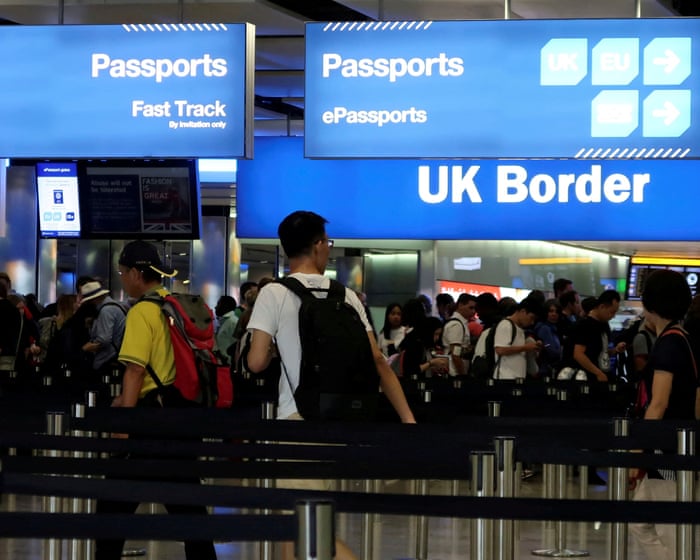
A family of three, including a young child, has become the first group to arrive in the UK from France under Keir Starmer’s “one in, one out” agreement, according to the Home Office.
This follows the removal of four asylum seekers from the UK to France over the past six days, despite ongoing legal challenges. The deal, signed in July by Starmer and French President Emmanuel Macron, allows the UK to detain asylum seekers who cross the Channel and return them to France. In exchange, the UK accepts a similar number of asylum seekers with family connections in Britain.
The first person to be returned under the agreement was an Indian national who arrived by small boat in August and was flown from Heathrow to Paris last Thursday. Since then, three more men—from Afghanistan, Eritrea, and Iran—have also been sent to France.
However, a fifth man from Eritrea has temporarily blocked his deportation after a High Court ruling. The Home Office was denied permission to appeal the decision on Tuesday.
The developments come just days after Donald Trump urged the Prime Minister to deploy the military to stop small boat crossings, which recently reached a record high. He warned that illegal migration could “destroy” countries. In response, Business Secretary Peter Kyle suggested the Royal Navy could be called upon “if needed” to address the issue.
A Home Office spokesperson described the UK-France deal as a “historic agreement” and emphasized the commitment to detain and remove those who arrive by small boat, while also operating a legal route for eligible migrants after security checks.
On Friday, more than 1,000 people reached the UK by small boat, bringing this year’s total to over 32,000.
Imran Hussain of the Refugee Council welcomed the new arrivals under the scheme, saying: “This is a really welcome step. No family should ever have to risk their lives in a flimsy boat just to reach safety. By opening up safe and legal routes, we not only give children and parents the chance to rebuild their lives with dignity, but we take power away from the smugglers who profit from people’s desperation.”
In a separate issue, Home Secretary Shabana Mahmood has ordered a review into the use of taxis, funded by the public, to transport asylum seekers from hotels to medical appointments—sometimes over long distances. A BBC report highlighted cases where journeys cost hundreds of pounds, prompting the Home Office to investigate.
A Home Office spokesperson confirmed: “The home secretary has asked the department to urgently look into the use of taxis to transfer asylum seekers.”
Frequently Asked Questions
Of course Here is a list of FAQs about a family arriving under the new one in one out immigration agreement designed to be clear and helpful
BeginnerLevel Questions
1 What is the one in one out immigration agreement
Its a new policy where for every person granted permission to live in the UK through certain immigration routes another person who is in the UK illegally or has no right to remain is expected to be removed
2 Who was the first family to arrive under this agreement
A family of three has become the first to arrive Specific details about their nationality or circumstances have not been widely publicized to protect their privacy
3 Why is this family considered the first
They are the first publicly acknowledged case where the UK government has directly linked a new arrival to the removal of another individual under this specific policy framework
4 What is the main goal of this policy
The stated goal is to control net migrationthe difference between the number of people moving to the UK and those leavingby ensuring new legal immigration is offset by the removal of individuals without legal status
IntermediateLevel Questions
5 How does the one in one out process actually work
The government processes an application for someone to immigrate legally Separately it identifies someone for removal such as a failed asylum seeker or someone who has overstayed their visa The policy aims for these actions to balance each other out numerically
6 Does one in one out mean one person for one person or can it be a family
The policy is based on numbers A family of three counts as three people in Therefore the government would aim to remove three people to meet the out part of the agreement for that specific case
7 What are the potential benefits of this policy
Proponents argue it could reduce overall net migration ease pressure on public services like housing and schools and increase public confidence in the immigration system by showing it is being managed actively
8 What are the common criticisms or problems with this policy
Critics say it is logistically very difficult to enforce fairly could be inhumane if people are removed to unsafe countries may not account for complex individual cases and could damage the