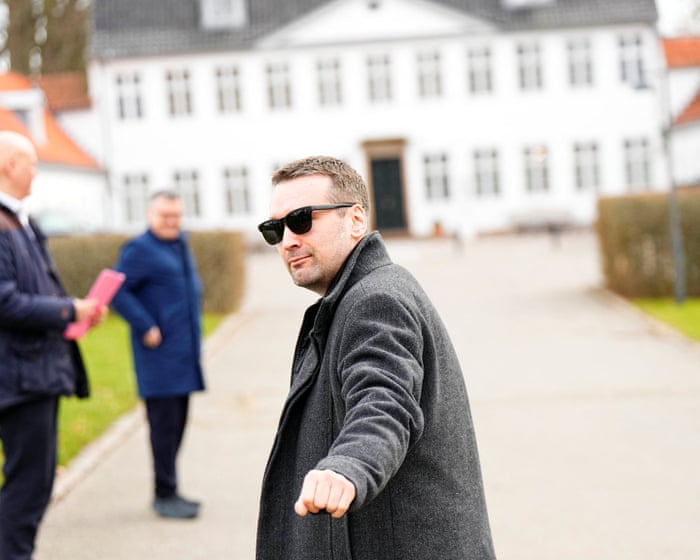
It’s not the typical motto for a newly elected parliamentarian, but Qarsoq Høegh-Dam is adamant: if he does his job properly, there will soon be no need for it. “I want to make myself as obsolete as possible,” he said.
Last month, Høegh-Dam, a Greenlandic politician, became the first member of the pro-independence Naleraq party to be elected to the Danish parliament. The new MP is clear that if all goes to plan, the largely autonomous Arctic territory will be the sole responsibility of the parliament in Nuuk, the island’s capital. And there will no longer be any need for two seats representing Greenland in Copenhagen, its former colonial ruler.
“Greenland and the Greenlandic people are to be the responsibility of the Greenlandic parliament and the Greenlandic government. So the primary objective is: I will have succeeded if I am no longer relevant,” he said with a laugh.
The Danish general election—in which Mette Frederiksen’s Social Democrats won the most votes but not a clear majority—followed one of the most precarious moments in Denmark’s recent history, when Donald Trump threatened to take control of Greenland.
Trump’s threats to take over the Arctic island came to a dramatic climax in January when, it has since emerged, tensions were so high that Denmark reportedly prepared for a potential attack from the U.S. by flying bags of blood to Greenland and explosives to blow up runways. While tensions have slightly eased, all sides say the situation remains unresolved and talks are ongoing.
The geopolitical drama has put a global spotlight on Greenland and Denmark’s relationship and history.
Modern colonization of Greenland, where Inuit people are understood to have lived since as early as 2500 BC, began with the support of what was then Denmark-Norway in 1721. During the Second World War, it was temporarily occupied by the U.S. when Denmark was occupied by Germany. In 1953, Greenland became part of the Kingdom of Denmark, and in 1979, home rule was introduced. Since then, more power has been handed over to Greenland, but Copenhagen still retains control of its foreign and security policy.
Høegh-Dam warned that the race for control of the Arctic by the world’s superpowers—including the U.S., as well as interest from Russia—meant Denmark needed to show it was meeting its commitments to the Greenlandic people. For example, he said Copenhagen was not fulfilling its responsibilities for maintaining Greenlandic prison facilities.
“Especially in these political climates, Denmark trying to penny-pinch in regard to Greenland with their own responsibilities is a hazardous gamble because other foreign nations can use it,” he said.
While all of Greenland’s political parties support eventual independence, Naleraq, also seen as the most Trump-friendly, is in favor of doing it as soon as possible. But Høegh-Dam said they also wanted the transition to be as smooth as possible.
“Which is why we are trying to follow the law that has been established in the Danish parliament,” he said, referring to a 2009 act that recognized the people of Greenland’s right to self-determination.
Naleraq, which was formed in 2014, has soared in popularity in recent years. In Greenland’s last election, held last year, it doubled its seats to become the second-largest party in Inatsisartut, the parliament. It did not join the coalition government and now sits in opposition.
Høegh-Dam is from a family of Greenlandic politicians. His sister, 29-year-old Aki-Matilda Høegh-Dam, until recently represented Greenland in the Danish parliament with the Siumut party, and last year switched parties to Naleraq. His late uncle, Thue Christiansen, was in Greenland’s first ever…He designed the cabinet and created Greenland’s national flag. His cousin, Aaja Chemnitz, was also a member of the Danish parliament until the last election. “Of course, politics comes up at the holiday table and over coffee,” he said. “I hope I can contribute even a small part in the same way.”
Last Tuesday, Høegh-Dam and Greenland’s other elected MP to the Danish parliament, Naaja Nathanielsen, met with Frederiksen, who is currently serving as caretaker prime minister while trying to form a coalition government. Nathanielsen, who held major ministerial roles in Greenland’s government for five years, now represents the territory for the Inuit Ataqatigiit (IA) party.
Nathanielsen stated she is pushing for reform of the 1953 constitution, which Greenlanders did not vote on and which blocks Nuuk from managing its own foreign and security policies.
“We have much more self-determination than in the 1950s, but there are still areas where we don’t have access to necessary information and face limits on what we can do independently. That shows a basic inequality,” Nathanielsen said. “If that’s your starting point, it’s hard to discuss anything else when the ground you stand on isn’t level.”
While Greenland’s voice in foreign policy has grown significantly, she noted there are still “red lines in terms of what Greenland can achieve on its own” under the constitution’s framework.
She added, “We really want to push those limits because we believe the Greenlandic government should shape and communicate foreign policy when it comes to the Arctic and to us. And often, that’s not the case today.”
Despite belonging to different parties, the two Greenlandic MPs say they intend to set aside domestic disagreements and collaborate closely in Copenhagen.
Høegh-Dam emphasizes he is not against a close relationship with Denmark but wants Greenland to become a fully independent nation.
“The structure we have now, a postcolonial structure, isn’t working. We want to make the best of it,” he said. “The world is changing, but we’re so accustomed to outside forces trying to change us that we’ve become resilient. I believe in the Greenlandic people, but I also truly want to believe in the Danish people and our shared future, if we have one.”
Frequently Asked Questions
Of course Here is a list of FAQs about the Greenlandic independence movement and the idea of making ones role unnecessary framed in a natural conversational tone
Beginner Definition Questions
1 What does I want to make my role unnecessary even mean in this context
Its a powerful statement from a politician like Aaja Chemnitz Larsen who is working toward Greenlands independence from Denmark Their ultimate goal is to succeed in creating a fully selfgoverning independent nation If they achieve that the specific political role they hold would no longer exist because Greenland would have its own sovereign government
2 Who is the lawmaker saying this
The quote is most famously associated with Aaja Chemnitz Larsen a Greenlandic politician who served as a member of the Danish Parliament for the Inuit Ataqatigiit party She and others in the independence movement see their work in Danish institutions as a necessary step to eventually dissolve those ties
3 So Greenland isnt independent already
No its not Greenland is an autonomous territory within the Kingdom of Denmark It has selfrule over most domestic affairs but Denmark handles foreign policy defense and monetary policy The independence movement seeks full sovereignty
Motivation Benefits Questions
4 Why would a politician want to eliminate their own job
Because they believe in a cause bigger than their personal career For them the success of Greenlandic independenceachieving selfdetermination for their people and cultureis the true victory making their current middleman role obsolete and a sign of mission accomplished
5 What are the main arguments for Greenlands independence
Proponents argue its about Selfdetermination control over vast natural resources preservation and promotion of Inuit culture and language and direct international engagement on issues like climate change where Greenland is on the front lines
6 Isnt Denmarks financial support a big benefit to Greenland
Yes and this is the central debate Denmark provides an annual block grant which