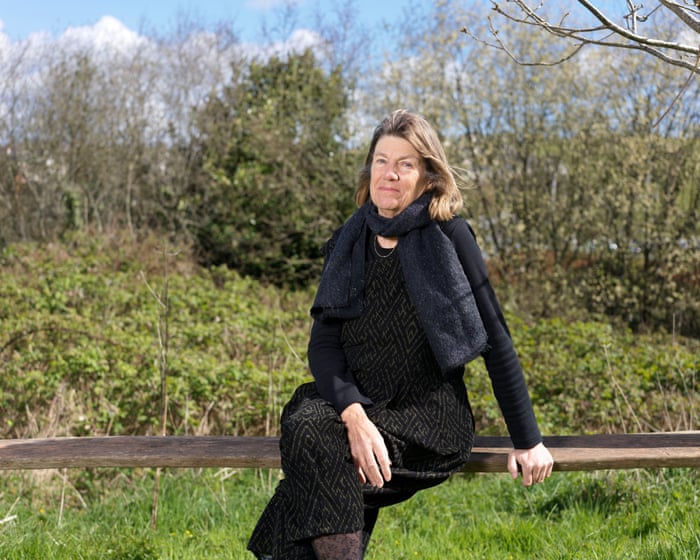
One of the most unsettling remarks Sue Miller makes about nuclear weapons is also one of her mildest: “The last people to take a big interest in any of this were Gordon Brown and Margaret Beckett.” Those figures now seem like a distant memory. Brown still campaigns tirelessly against poverty, and Beckett remains active as a baroness, but their voices against the global nuclear arms buildup feel like relics of the past, evoking a sense of nostalgia.
Yet the Doomsday Clock—the Bulletin of the Atomic Scientists’ symbolic measure of how close the world is to catastrophe—has never been closer to midnight than it is now: just 85 seconds (and this assessment came before the current conflict involving Iran). Since invading Ukraine, Russia has issued thinly veiled threats about the “tactical” use of nuclear weapons, while its drone incursions into NATO countries have “heightened European threat perceptions,” as the bulletin notes. Despite this heightened anxiety, no one seems to be moving toward nuclear de-escalation, let alone disarmament. Meanwhile, some non-nuclear European nations are discussing “nuclear latency”—building the capability to develop nuclear weapons quickly if needed.
Nuclear-armed nations, of which there are nine, are focused on modernizing their arsenals rather than reducing risks. A slim majority of these are in the P5—the nations formally committed to non-proliferation: China, the UK, Russia, the US, and France. “Now there is talk of nuclear weapons in space and hypersonic technology,” says Lady Miller, speaking from Totnes in Devon. The 72-year-old Liberal Democrat peer is a lifelong campaigner against nuclear weapons and a patron of the new all-party parliamentary forum on global nuclear non-proliferation and arms control, which held its first meeting in late March. She is also co-president of Parliamentarians for Nuclear Non-Proliferation and Disarmament, an international group whose members—including Bangladesh, South Korea, Canada, the European Parliament, and Japan—read like a list of countries living in the shadow of terrifying nuclear neighbors. And, of course, the UK is included—we are often our own worst enemy.
Non-proliferation hasn’t been abandoned as a goal, Miller says, but “there’s a slight doublespeak, because the original 1970 treaty was much more primitive, focusing mainly on numbers.” Having fewer but far more powerful weapons still counts as non-proliferation, even though it poses a greater threat. Miller also points out that as nuclear weapons become harder to detect, the risk of mistaking conventional missiles for nuclear ones increases. “I thought the danger of hypersonic weapons was their speed, but apparently it’s their stealth,” she says. “They’re much harder to detect.”
Of the four nuclear-armed nations outside the P5, the conflict between India and Pakistan in May 2025 was marked by nuclear brinkmanship that made neighboring Bangladesh—and should have made all of us—deeply uneasy. North Korea’s nuclear buildup continued throughout last year, “and we’re allowed to talk about Korea’s nukes. We’re not really supposed to talk about the fact that Israel has nuclear weapons,” Miller notes. China remains the only country with a no-first-use policy. “There is a… complete absence of communication on strategic stability among nuclear adversaries,” observes the Bulletin of the Atomic Scientists.
And all of this represents only the risks governments are knowingly taking. “If you look at the Chatham House study on near-misses and risks,” Miller says (which covers incidents from the Cold War to the 21st century), “there are events that could have be…Disastrous each time, but for an individual who decided it wasn’t an attack. One time it was geese flying in formation. There are plenty of less dramatic but no less threatening mistakes—misidentifying a rocket launch or misinterpreting a military training exercise. Some near-misses are simply filed as “miscommunication.” Interestingly, when the authors updated their report three years ago, one of their recommendations was to improve awareness about the effects of nuclear weapons. It seems preposterous that this could be forgotten, yet it makes sense; even Armageddon seems less frightening if you stop talking about it altogether.
In the 1980s, Miller wasn’t in politics at all; she was running a bookshop in Sherborne, Dorset (she also worked in publishing for Penguin). She went to see her MP because her father had disappeared in Turkey and “the Foreign Office wasn’t helping at all.” (Sadly, he had died, most likely from a heart attack.) That MP was Paddy Ashdown in Yeovil, and he asked Miller to stand for the district council. “I said: ‘Certainly not—it’s full of old blokes and it’s probably really boring.'” Nevertheless, she did stand as a Lib Dem, lost the first time, and won the next. Meanwhile, in 1983, the first US missiles arrived at RAF Greenham Common in Berkshire, “which coincided with my daughter being a baby. I never camped at Greenham because she was so little, but we went there.”
It was a time of seismic geopolitical change. “The most unlikely people, like Reagan and Thatcher, and the Soviet Union, were really pushing for better treaties, to limit proliferation and talk about verification,” Miller says. “It was just a different world from what we have now.” Throughout the 1980s, nuclear anxiety permeated even mainstream culture (the authors of Scarred for Life, horror-nostalgia books about the 1980s, once counted 101 songs about nuclear apocalypse).
The Campaign for Nuclear Disarmament’s ambition was vast: not just limiting nuclear weapons (except as a stepping stone), but eliminating them entirely. (The clue was in the name.) Miller is clear-eyed that those days are long gone: “Disarmament is so far off the agenda, we just need to talk about risk reduction now. There is a parliamentary CND officer, but I think for parliamentarians, being associated with CND and disarmament has become a real non-starter, especially after Jeremy Corbyn.”
There’s an interesting conversation to be had about the Labour party’s rifts over unilateral disarmament back then, but that’s for another time. Perhaps the most important point about nuclear buildup and risk today is that opposition to it has somehow become associated with the hard or fringe left, when in fact this is the least partisan issue imaginable. We’re seeing increased aggression and threat perception at a governmental level, giving nuclear weapons a veneer of respectability and common sense. “The only counter to that,” Miller says, “is citizen movements… for most people, I think they would find being blown up very unacceptable. We need to get back to that way of thinking.”
By the 1990s, the fall of the Berlin Wall had suddenly taken imminent annihilation off the table, and there was an atmosphere of euphoric relief. But there was still, Miller notes, “a collective memory about Hiroshima and Nagasaki. Even when I first went into the Lords, which was 1998, a couple of ex-military people, Lord Ramsbotham and Lord Bramall, were very keen that we progressed this agenda, and as ex-military people they carried a lot of weight. But they’ve all died now and the younger ones aren’t taking up the issue.”
Current affairs discourse often swallows whole the idea that nuclear deterrence makes us safer, and therefore to sSupporting the military is innately patriotic, but one of the mainstream’s great misapprehensions is that all military personnel share this view. In reality, as Miller points out, “every pound spent on Trident is not going into the conventional army or navy,” and no one understands this better than those who must strategize with limited resources. The nuclear plans outlined in the most recent Strategic Defence Review would, if implemented, consume 30% to 40% of the entire defence budget. Theoretically, this might be acceptable if the military were flush with funds, but in practice, it leaves conventional forces so depleted that the nuclear option shifts from being a last resort to the only resort.
At a democratic level, we also seem to have lost the expectation of transparency. Miller notes, “the fact that we’re hosting American weapons, or are about to at Lakenheath in Suffolk—the issue is largely silenced in parliament. There is an unwillingness in government to discuss it.” Activists from Nukewatch have been tracking the weapons’ arrival, but the only mention of Lakenheath in Hansard is two questions from local MP Peter Prinsley, so sugary they read like satire: “Does the Minister agree that the US remains our most essential ally, and will he join me in expressing gratitude for the service of those brave US servicemen and women, who are so important for our security?” He makes no mention of which weapons those brave servicemen and women have accompanied.
Lone voices at the end of the 20th century were no match for what Miller calls “the ‘history is over’ period. It really did lull us into thinking things would keep improving—we’d get more treaties, spend less on the military overall. And that was very dangerous.”
The Iraq war was a turning point, but in contradictory ways. It certainly made the world seem dangerous again, yet in the UK, it also fostered a civic pessimism: “So many of us marched against the Iraq war, with the overwhelming feeling that the government was determined to go to war, no matter what.”
However, Gordon Brown’s time in office sparked a renewed seriousness. “There was suddenly a lot more interest again in working on nuclear non-proliferation,” Miller recalls. “I was a member of the Inter-Parliamentary Union and proposed that the UK put forward a motion on non-proliferation. To my great surprise, it was accepted. This led to a handbook addressing both non-proliferation and nuclear-free zones. It has been quite a successful movement—there are many nuclear-free zones in the world—but that progress is overshadowed by the fact that nuclear states are intent on buildup and modernization.”
Miller adds that one of the most surprising developments this century has been the post-financial crisis economic blind spot regarding nuclear weapons: countries, including the UK, have tightened state spending in damaging ways under the guise of urgent necessity, yet continue to modernize their nuclear arsenals.
The UK’s role in this is that “it has the Trident system, which is entirely submarine-based, carrying intercontinental ballistic missiles armed with nuclear warheads. We have committed to further modernization—the system now integrates closely with the American system.” Details remain vague, as “if you asked for specifics in parliament, you wouldn’t be told. American nuclear bombs may or may not be at Lakenheath; they can’t be used without the say-so of the US president, but as far as I understand, we don’t have a veto over their use.”
What are the implications for us? “All I know is that it’s a move in the absolute wrong direction,” Miller says. “It’s back to hosting American nuclear bombs—that makes us a target.”It makes us more of a target. And we’re not talking about reducing our arsenal, which I believe we should do.”
Regarding the new all-party parliamentary forum on global non-proliferation, several MPs—such as Conservative Julian Lewis—would not have joined if the group were as staunchly anti-nuclear as its counterpart in the 1980s (which operated under names like the All-Party Parliamentary Group for World Governance). Others, like Fabian Hamilton, who served as shadow minister for peace and disarmament under Corbyn, remain committed to the goal of complete disarmament. Essentially, the group has united in a spirit of realpolitik: “If you said tomorrow that the UK no longer wanted nuclear weapons, it wouldn’t change the global dynamic. What would change it is if one of the P5 nations said: ‘This is truly dangerous. We need to seriously begin de-escalation.'”
In 2024, the UK voted against participating in a UN study on the humanitarian consequences of nuclear war. While 144 countries voted in favor, only the UK, France, and Russia opposed it. “That is something the public really needs to know and discuss,” Miller says. “How can we have a conversation about mutually assured destruction if we don’t understand what it entails? I found that shocking. Why would we want to ignore the humanitarian impact?”
The P5 Process, currently chaired by the UK, holds a review meeting of the Non-Proliferation Treaty every five years. The last one was largely overshadowed by the pandemic. Lady Miller would like to see the dialogue updated, with countries willing to clarify their nuclear posture. She wants the UK’s stance to be: “Last resort, not first use. Conventional weapons are more important for defending our islands; if we’re hosting American bombs and buying bombers to carry them, that sends the wrong message.”
Ultimately, the upcoming meeting—scheduled for April and May in New York—needs to reaffirm the world’s commitment to non-proliferation. The alternative is proliferation, and “what if there were 20 nuclear states? What are the chances that by the end of this century there’s a war or an accident? We would all be in the destruction zone.” Meanwhile, the rest of us need to start speaking up.
Frequently Asked Questions
FAQs Nuclear Weapons Proliferation NonProliferation Efforts
BeginnerLevel Questions
Q1 What does nuclear proliferation mean
A Its the spread of nuclear weapons nuclear weapons technology or fissile material to countries that dont already have them
Q2 Why is the spread of nuclear weapons considered so dangerous
A More countries with nuclear weapons increases the risk of them being usedby accident by miscalculation during a crisis or by falling into the hands of terrorist groups The phrase caught in the blast highlights that a nuclear war would have catastrophic global consequences affecting everyone not just the fighting nations
Q3 Whats the main treaty trying to stop the spread of these weapons
A The Nuclear NonProliferation Treaty It has two main goals 1 Prevent nonnuclear states from acquiring bombs and 2 Oblige nucleararmed states to work toward disarmament
Q4 How many countries have nuclear weapons
A Nine countries are known to possess nuclear weapons the United States Russia China France the United Kingdom India Pakistan North Korea and Israel
Q5 Can a country just decide to build a bomb
A Its extremely difficult expensive and technologically challenging It requires specialized materials advanced engineering and testing The international community also has tools to detect and pressure countries trying to do this
Advanced Practical Questions
Q6 What are the biggest challenges to halting proliferation today
A Key challenges include
Geopolitical tensions Countries may seek nuclear weapons for security if they feel threatened
Breakdown of agreements The collapse of treaties like the Iran nuclear deal or the INF Treaty undermines trust
New technologies Advances in cyber warfare missiles and hypersonic glide vehicles could destabilize the balance
Nuclear sharing Some argue the practice of NATO allies hosting US nuclear weapons contradicts nonproliferation goals