The extreme heat and drought fueling massive wildfires in Spain and France were made much more likely by climate change, according to a scientific analysis. Experts from the World Weather Attribution (WWA) group found that global warming made hot, dry, and windy conditions at least 20 times more likely in Spain and twice as likely in France. This is the latest evidence pointing to the burning of oil, gas, and coal as the main cause of Europe’s deadly summer heat.
A previous WWA study showed that the intense heatwave in late June, which is thought to have killed 20,000 people, could not have happened without the extra heat trapped by carbon pollution. Another study found that climate-driven heat was “sucking soils dry” as extreme drought spread across Europe.
The scorching heat and dry land led to very high “daily severity ratings” (DSR), a measure used in the new analysis to predict how severe a wildfire would be if it started. Studies of the 2025 wildfires also showed they were made worse by the climate crisis.
This year’s wildfires in western Europe have been worsened by a wet winter and spring, which helped plants grow more than usual. Those plants then dried out and became fuel for the fires—a pattern known as “whiplash” conditions. Global warming is making winters wetter and summers drier and hotter in Europe.
Dr. Clair Barnes, a research associate at Imperial College London and part of the WWA study team, said: “We’ve seen again and again how climate change creates hot, dry, and flammable conditions that are very likely to cause wildfires. What’s unique about the July fires in Spain and France is that it’s still early in the season—and with another heatwave coming, these findings are extremely worrying. What we’re seeing is a clear sign of the growing impact of human-caused warming.”
Julie Arrighi, director of programs at the Red Cross Red Crescent Climate Centre, said: “What we are seeing now in Spain and France goes far beyond what we would expect from past events.”
The wildfires have released huge clouds of toxic smoke. Dr. Augustin Colette, at the French National Institute for Industrial Environment and Risks, said: “The smoke increased particulate pollution peaks up to 20 times above what is considered ‘fair air quality,’ and very poor air quality was felt up to 400 km away from the fires.” It is estimated that about 1.5 million people a year have their lives shortened by wildfire smoke.
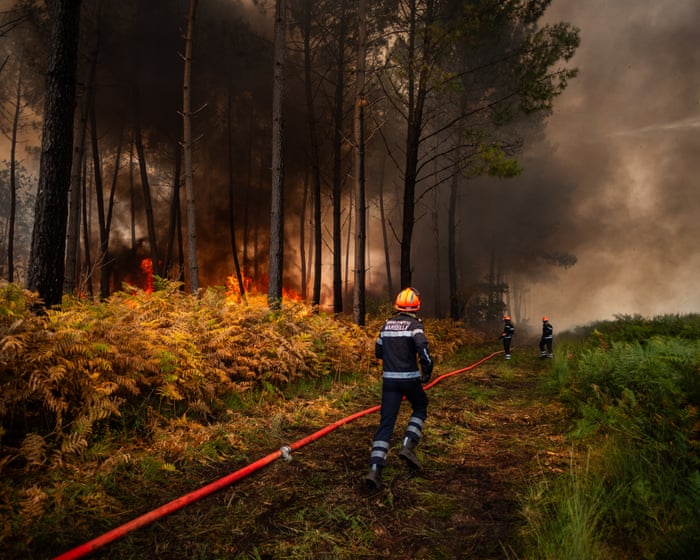
Severe wildfires have been burning across Spain and France since early July, killing people, destroying thousands of homes, and forcing more than 300,000 people to evacuate. The WWA analysis looked at the seven-day period with the highest daily severity ratings for each country. The scientists used weather records and established statistical methods to estimate how much more likely a week of extremely high DSR is in today’s warmer world compared to before mass fossil-fuel burning raised global temperatures by 1.4C (2.5F).
Large wildfires have also broken out in the UK and Greece, where three firefighters lost their lives.
The UN’s climate chief, Simon Stiell, said: “These European megafires show how quickly climate-driven extreme heat and dry landscapes can turn wildfires into devastating national disasters. Humanity continuing to burn huge amounts of coal, oil, and gas is making these conditions more dangerous, and these megafires more deadly and destructive. But the solutions are equally clear: all countries…”We need to speed up the shift from fossil fuels to renewable energy and shield people from the worsening effects of climate change—whether that’s wildfires, massive storms, floods, or droughts that threaten food production.
The Guardian’s Climate Forum 2026
On Tuesday, October 20, join Damian Carrington and our expert panel—featuring Prof Andy Haines, Katie White MP, Asad Rehman, Shruti Suresh, Gareth Thomas, and Amy Fairman—for an evening focused on hope and practical solutions. Get your tickets here or at guardian.live.
Frequently Asked Questions
Here is a list of FAQs based on the topic ranging from beginner to advanced
General Beginner Questions
1 What exactly are the extremely alarming findings about wildfires in Europe
Recent studies show that climate change is making the weather conditions that drive wildfireslike extreme heat dry air and strong windsmuch more common and severe This means that even normal sparks can turn into massive uncontrollable fires much faster than they used to
2 Is the climate crisis really the main cause of bigger wildfires
Yes While humans often start the initial spark the climate crisis acts as the fuel By drying out vegetation and creating hotter windier days climate change turns forests into tinderboxes making fires spread faster and burn more intensely than they naturally would
3 I live in a city in Northern Europe Does this affect me
Yes indirectly Even if you dont see the flames wildfire smoke travels thousands of miles causing poor air quality and health issues Also fires release massive amounts of carbon dioxide which worsens climate change for everyone Finally the economic cost of fighting these fires often comes from national budgets
4 What does fire weather mean
Fire weather refers to specific meteorological conditions that make wildfires more likely to start and spread These include high temperatures low humidity little to no recent rain and strong winds The new findings show that fire weather days are happening much more frequently across Europe
Impact Specifics
5 Which parts of Europe are most at risk
Southern Europe remains the highest risk zone However the study shows that the risk is expanding northward and eastward with countries like Germany Poland and even parts of Scandinavia now facing extreme fire danger days that they never experienced before
6 How does this affect the benefits of forests like carbon storage
Forests are supposed to be carbon sinks But when they burn they release all that stored carbon back into the atmosphere in a matter of days This creates a dangerous feedback loop climate change causes fires and fires worsen climate change