Videos often start with the camera sweeping across a glowing dashboard as a gloved hand turns the key. The camera then shifts to show masked figures in the back seat, who are also filming, before swinging back to the windscreen. Beyond it lies a dark cityscape.
The engine hums, headlights cut through the night, and the drive begins—first along a suburban road, then onto a motorway. The speedometer climbs, the needle trembling as the car picks up speed.
The destination doesn’t matter. This is a show—a display of boldness, lawlessness, and recklessness that pulls in viewers on TikTok and other social media platforms, with the thrill of police chases and dramatic crashes.
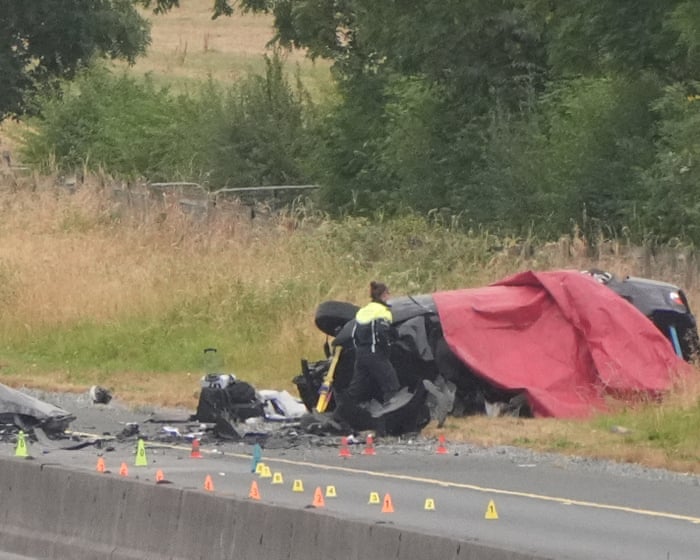
These videos are part of a disturbing trend that has shocked and angered Ireland after a crash last week killed five teenagers—who were driving the wrong way down a motorway—and left a family of four critically injured. The incident has sparked debate about policing, criminal justice, social services, and social media regulation.
“You have to ask: how do five young men find each other and decide this is a good idea? Where have we gone wrong as a society?” said Graham Kavanagh, a former officer with the police force An Garda Síochána, who used to chase car thieves. “No one is born bad, but sometimes you might meet a kid as young as six or seven and you know trouble is waiting for them.”
In the early hours of 16 August, a group of young males broke into homes and cars in County Kildare, south-west of Dublin. Police believe these were the masked occupants of a BMW who then seemed to try to lure patrol cars into a chase.
Around 3am, the BMW was driving the wrong way down the M9 when it crashed into a Hyundai, injuring three sisters—Ella Hendricken, Niamh Kinsella, and Alma Kinsella, in their 20s and 30s—and Alma’s seven-year-old son. They were heading to Dublin airport for a family wedding in the UK.
The boys who died—Joe Carthy, 15; Kamil Pustkowski, Jack Kennedy, and Alex McCarthy, all 17; and Jeremy O’Brien, 18—were known to police. Three were also known to the child welfare agency Tusla. Several had previously posted videos of reckless driving, once called joyriding.
Seeking excitement and admiration from peers through such behavior isn’t new, but social media has escalated and amplified the trend, said Mary Aiken, a professor of forensic cyberpsychology at the University of East London.
“I’d call it hybrid behavior. While driving, they’re also filming and capturing content to post later or stream live. They have one foot in the real world and one in cyberspace.” Cyberspace is psychologically absorbing and can heighten a tendency to take risks and ignore consequences, said Aiken. “They’re thinking about the likes, they’re thinking about the praise.”
The tragedy has sparked sharply divided reactions.
An outpouring of support for the injured family has fueled a fundraising appeal that has raised more than €660,000 (£565,000). A vigil was planned in County Carlow on Friday evening.
Online comments about the five boys, in contrast, have often been abusive, leading relatives to pull back funeral notices. The first funeral, for McCarthy, was held on Friday in Athy. Family members wore T-shirts with his photo, and a horse-drawn carriage carried the coffin. Police kept watch from a distance.
Denis Nulty, the bishop of Kildare and Leighlin, said the community was in shock. “We’re all trying to make sense of something that makes no sense,” he told RTÉ. “We’re all trying to find answers to questions that seem unanswerable.”The Bishop of Kildare and Leighlin said he shared the public’s disgust and anger, but urged people to show compassion. “We have to be very careful with our language. Words can wound, but they can also heal,” he told RTÉ. “Let’s not try to condemn. Let’s see how we can encourage better behavior from all of us.”
In the past week, new clips of other reckless driving incidents have reportedly been posted on TikTok, fueling criticism of the platform and calls for stricter regulation and enforcement.
On Thursday, the company turned down an invitation to speak to a parliamentary committee on media, citing the ongoing police investigation into the crash, a separate probe by the media regulator Coimisiún na Meán, and the fact that no other platform had been asked to attend. Alan Kelly, who chairs the committee, called the refusal a “slap in the face” to the Irish public.
Other politicians have called for harsher penalties for dangerous driving, such as treating driving the wrong way down a motorway as attempted murder.
There is frustration that gardaí have not been trained in vehicle pursuits and that officers can be held personally responsible if something goes wrong during a chase. Earlier this year, British driver training experts from the Devon and Cornwall police began instructing Garda trainers.
Kavanagh, who recently retired from the force and is now developing a community safety toolkit for the voluntary group Muintir na Tíre, said reckless driving for thrills was a problem that has existed for decades. “I knew guys who were addicted to it—stealing, driving fast, that was the excitement, and if they were chased by police, that was the icing on the cake.”
Police could try to intercept such drivers, but all of society—parents, teachers, social workers, and others—must step in years earlier to stop troubled youths from going down the wrong path in life, said Kavanagh.
Frequently Asked Questions
Here is a list of FAQs about the deadly TikTok motorway trend in Ireland written in a natural and accessible tone
General Questions
Q What exactly is this TikTok motorway trend everyone is talking about
A Its a dangerous social media challenge where people film themselves sitting or lying in the middle of a busy motorway lane to get a video for TikTok usually with a caption about thinking about the likes theyll get They wait until traffic is coming and then jump out of the way at the last second
Q Why are people doing this Is it just for fame
A Yes essentially The goal is to get a viral video and gain likes followers and attention on TikTok The more shocking the video the more views they think theyll get which is why theyre risking their lives on a highspeed road
Q Where is this happening
A The trend has been reported in Ireland specifically on major motorways like the M50 around Dublin However authorities are worried it could easily spread to other countries as these trends often do
Q Is this actually a real trend or is it just a hoax
A Irish police have confirmed they are investigating reports of this happening and they have issued urgent public warnings While it might not be a mass movement it is a real and confirmed dangerous activity that has occurred
Safety and Legal Questions
Q How dangerous is this really
A It is extremely potentially fatally dangerous Cars on a motorway travel at 100120 kmh A driver may not see a person lying on the road until its too late and they cannot stop in time Its not just the person filming whos at risk it can cause massive multicar pileups injuring or killing innocent drivers and passengers
Q What are the legal consequences if someone gets caught
A In Ireland this is a serious criminal offense A person could be charged with endangerment which carries a potential prison sentence They could also face fines and have their driving license revoked if they are a driver If someone dies as a result the charges could be much more severe including manslaughter