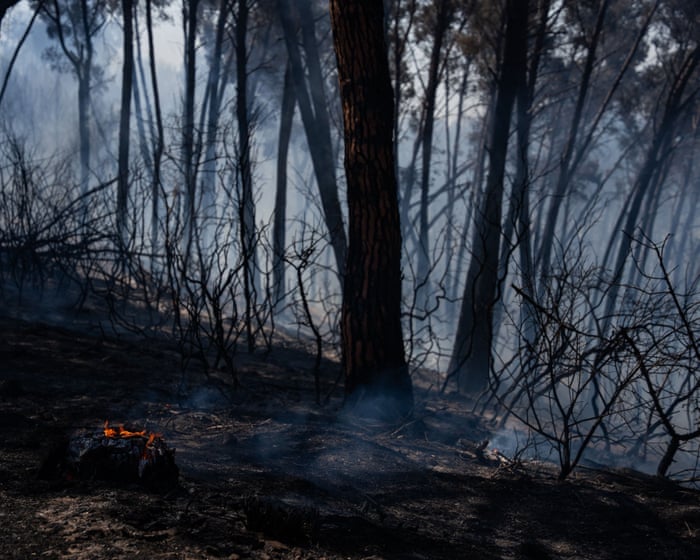
At least 12 people have died and 23 are missing after one of Spain’s deadliest wildfires broke out in the southeastern province of Almería, as the country faces its second heatwave of the summer. The regional government of Andalucía said the victims, four of whom are believed to be British, died while trying to escape the flames near the village of Bédar in the municipality of Los Gallardos.
“There are no words for such pain, and I want to offer our condolences to the families of the dead,” Antonio Sanz, the region’s emergency minister, said on Friday morning. “This is terrible news, and today the hearts of the people of Andalucía are in mourning.”
Sanz said emergency services were fighting a “terrible and very complex fire, which is spreading very fast.”
Hundreds of firefighters and soldiers are working to contain the spread of the fire. He said eight people had been injured—four of them seriously—and that authorities were trying to find out if there were any more victims from the fire, which started on Thursday afternoon.
According to Sanz, those who were found dead had tried to flee despite advice recommending that people stay put or follow an official evacuation route. He added that the fire had not ultimately reached Bédar.
“Unfortunately, the decision to look for another way out through a ravine was a real trap,” he said. “Four people who died in one vehicle are thought to be British, as the car they were found in was right-hand drive. Seven other people who got out of their cars and tried to walk out on a route that wasn’t the evacuation route suffered terrible consequences. It seems most of them were also foreigners, but their identities have not yet been confirmed.”
The Guardia Civil urged people trying to find missing family members to go to its station in the nearby town of La Garrucha. “The main goal is to identify the missing people and to take DNA samples as quickly as possible to identify the victims,” a spokesperson said.
Sanz said efforts to bring in heavy firefighting equipment were being hampered by limited access and “terrible” terrain. He added that 800 people had been evacuated, including nearly 200 who were being housed in shelters.
Sanz also urged people to follow official advice, saying: “In an emergency, the authorities’ instructions are not recommendations; they are designed to protect lives. If evacuation or confinement is ordered, do so immediately and follow the established routes.” Authorities believe the fire may have been caused by a fallen power line.
Juan Manuel Moreno Bonilla, the regional president of Andalucía, offered his condolences to everyone affected by the fire, which he described as “one of the fastest and most complex fires in recent years.”
He added: “Everything is very dry due to the heatwaves, making it the perfect fuel, and combined with the wind, it’s a ticking time bomb.”
By Friday morning, 150 firefighters were battling the blaze, and 220 soldiers from the country’s military emergencies unit were being sent to help them.
The mayor of Los Gallardos, Francisco Miguel Reyes, said people in the area had been devastated by the unprecedented fire. “This is the first time we’ve had a fire as destructive as this,” he told Cadena Ser radio. “It looks like a bomb has gone off in our municipality.”
Extreme heat has fueled devastating wildfires across southern Europe in recent years, the latest in a series of disasters made worse by climate change amid a continuing heatwave.In 2017, wildfires tore through central Portugal, killing 66 people. Many of the victims died in their cars while trying to escape the flames. In 2025, wildfires in Spain claimed at least seven lives, and a record 393,000 hectares (971,000 acres) of land were burned that year.
Spain’s Prime Minister, Pedro Sánchez, urged people to be extra cautious. “We feel deep sadness and devastation over the terrible impact of the fire in the province of Almería,” he said. “I want to offer my condolences to the families of those who died in the Los Gallardos forest fire. I wish the injured a speedy recovery and stand in solidarity with all affected residents.”
Record wildfires in Europe show that failing to adapt comes with a growing cost. Read more.
Last September, the prime minister announced a 10-point plan to get the country ready for the climate emergency. He said, “If we don’t want to leave our children a Spain that’s gray from fire and flames, or brown from floods, then we need a Spain that’s greener.”
He noted that last August’s wildfires, fueled by a heatwave, burned an area six times the size of Ibiza and required “the largest human and technical effort” ever seen in Spain. This showed, he said, that immediate action was needed to reduce the effects of the climate crisis.
Over the past five years, Sánchez added, the climate emergency has caused more than 20,000 deaths and cost the government €32 billion (£28 billion) in material losses.
Health authorities in Spain and France have reported that last month’s extreme heat led to over 2,000 extra deaths in the two countries.
Frequently Asked Questions
Here is a list of FAQs about the wildfire in southern Spain written in a natural clear and concise tone
General Questions
Q What happened in southern Spain
A A large wildfire broke out in southern Spain during a severe heatwave It has killed at least 12 people
Q Where exactly did the fire start
A The fire is reported in the Andalusia region near the Costa del Sol Specific areas include Málaga province and the Sierra Bermeja mountain range
Q When did this fire start
A It started during a major heatwave which is when temperatures were extremely high
Q How many people have died
A At least 12 people have been confirmed dead Most victims were firefighters or emergency workers
Q Is the fire still burning
A As of the latest reports the fire is not fully under control Firefighters are still battling the flames though some progress has been made
Causes Conditions
Q What caused the wildfire
A The exact cause is still under investigation but the extreme heatwave and drought conditions made the area highly flammable Lightning or human activity are possible causes
Q Why was the fire so dangerous
A The heatwave created tinderdry vegetation Strong hot winds also fanned the flames making the fire spread incredibly fast and unpredictable
Q Does climate change play a role
A Experts agree that heatwaves and droughts made worse by climate change create perfect conditions for severe fastmoving wildfires like this one
Safety Evacuation
Q Were people evacuated
A Yes Several villages and towns were evacuated and thousands of people were told to leave their homes or stay indoors
Q How do people stay safe during a wildfire
A Follow local authorities Leave immediately when told to Close all windows and doors Drive away from the fire not toward it If trapped find a clear area like a swimming pool or a recently burned patch
Q What should tourists do if they are in the area
A Check local news follow official emergency services on social media and contact your hotel or tour operator Avoid driving toward smoke or flames