Two men chop peppers, slice eggplants, and laugh for the camera as they explore vegan cooking. Both wear ski masks and T-shirts with Nazi symbols.
The German videos, called Balaclava Kitchen, began in 2014 and ran for months before YouTube removed the channel for breaking its rules. But they revealed how far-right groups have turned to cultural production—from clothing brands to Top 40 music—to make their ideas seem normal, a process researchers say has reached new levels in the social media age.
“It’s frightening, honestly,” said Katherine Kondor, a researcher at the Norwegian Center for Holocaust and Minority Studies. “You can be radicalized sitting on your couch.”
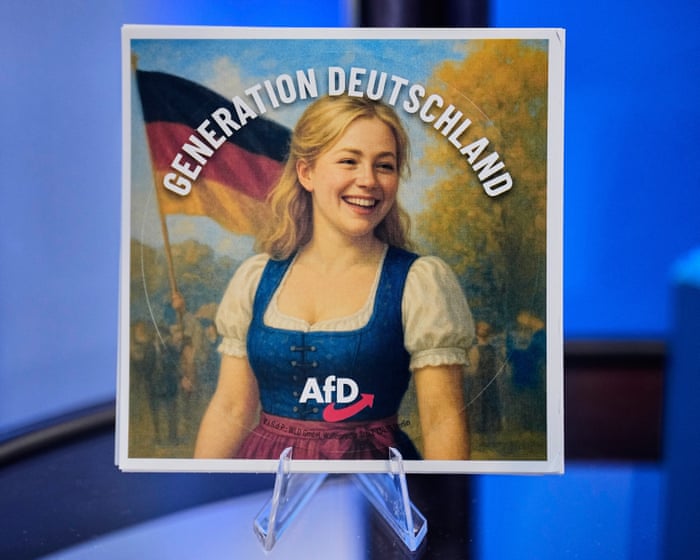
Working with the Center for Research on Extremism (C-REX), Kondor is leading a six-country study on how the extreme right uses aesthetics—from fitness influencers to memes and stickers—to spread their views across Europe.
From Sweden to Spain, researchers found extremist messaging woven into everyday culture, both online and offline.
“In Hungary, we have examples of extreme-right bands going mainstream because they’re on the Top 40 chart. I mean, what’s more normal than being on the Top 40?” Kondor said. “I have a stepson who sometimes sends me videos, and when I look into who made them, it turns out to be a far-right influencer.”
So-called “tradwives”—women who promote traditional gender roles on social media—are another example. As more women embrace this idea online, its far-right origins are often hidden. Still, the views they promote, from anti-feminism to nostalgia for an imagined past, continue to support far-right goals.
These cultural elements act as gateways, sometimes drawing people into extremism, Kondor explained. “I think there’s a mistaken idea that people join the far right because they believe in the ideology and want to meet like-minded people,” she said. “But that’s not how it works.”
While some are driven by prejudice or specific beliefs, or follow friends who are already involved, many are attracted by the subcultures surrounding these movements, she noted.
“They might start listening to a band they really like and go to their concerts. Then they meet people there, and it can escalate from there,” Kondor said. “When people find things that match their aesthetic or vibe, or music they really enjoy, it can really influence them.”
The connection between extreme ideas and the cultural tools they use isn’t always direct, she added, pointing to far-right extremists in the Netherlands who host wine-tasting events. “They’ve even started their own food delivery service,” she said. “It’s wild that you could be ordering food from the far right without knowing.”
Extremists have long used culture to build a sense of belonging and attract public attention, said Greta Jasser, a research associate at Germany’s Institute for Democracy and Civil Society, which is also part of the six-country project.
In the past, their success depended on having talented members—musicians, artists, camera operators—to create content. But with generative AI, that’s no longer necessary.
“Now there’s technology that can generate an image or video instantly, or music in just minutes,” said Jasser. “So the playbook is old, but the speed is much faster.”
The economics of social media have also changed the process.This raises questions about who is creating far-right content and why. “It could be posted by a bot. It could be anyone trying to generate income by producing as many AI videos and images as possible,” said Jasser. “This then calls into question how ideologically driven these accounts really are, or if it’s just a way to make money.”
As the research continues, Kondor and her team are considering how best to share their findings with the public. They are exploring strategies like online content or tools to help people better recognize far-right movements and the wide range of cultural material they are producing. “I think it’s often shocking to people,” said Kondor. “Right now it’s dangerous because we’re seeing a steady rise of the far right in every aspect of society. It’s more important than ever to figure out how to address this.”
Frequently Asked Questions
Of course Here is a list of FAQs about the topic Its frightening How the far right is seeping into everyday life designed with clear natural questions and direct answers
Beginner Definition Questions
1 What exactly do we mean by the far right
The far right is a political ideology that typically emphasizes nationalism antiimmigration strict social hierarchies and often opposes multiculturalism and liberal democracy It exists on the extreme end of the political spectrum
2 What does seeping into everyday life mean in this context
It means these ideas arent just found in extremist rallies or dark corners of the internet anymore They are appearing in mainstream politics social media feeds local community discussions and even in conversations with friends or family often in subtle or coded ways
3 Isnt this just about having conservative or different political opinions
No While healthy debate between mainstream conservative and liberal views is normal the far right is distinct It often promotes conspiracy theories scapegoats minority groups and may advocate for undermining democratic institutions which goes beyond traditional policy disagreements
How It Manifests Examples
4 What are some everyday examples of this seepage
Online Memes with hidden extremist symbols dogwhistle comments on news articles or influencers using coded language about replacement or globalists
In Politics Mainstream candidates adopting farright talking points on immigration or culture wars to win votes
In Community Opposition to diverse books in local libraries or school curricula framed as protecting children when the arguments originate from farright playbooks
In Conversation A relative repeating a conspiracy theory they heard on a podcast that aligns with farright narratives
5 Whats a dog whistle in politics
Its coded language that sounds normal to the general public but sends a specific often prejudiced message to a targeted group For example phrases like protecting our heritage or law and order can sometimes be used to signal racial animus without saying it explicitly
6 Is social media to blame for this
Social media is a major amplifier Its algorithms can create echo chambers that push users from mainstream grievances toward more extreme content normalize radical ideas and help organize movements