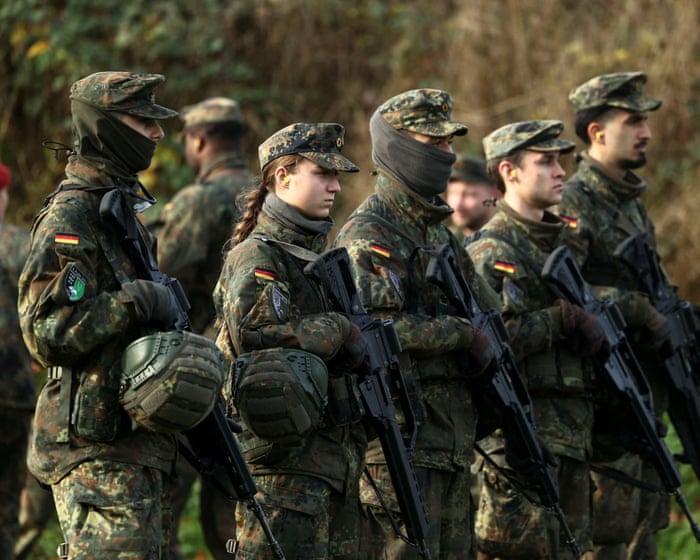
Not long ago, being a German soldier in uniform was a difficult role to fill. You could be walking down the street and be spat on or have insults shouted at you.
Recently, I’ve noticed people starting conversations with soldiers—something I hadn’t seen before. Just the other day, someone approached a soldier, talked with him about his job, and thanked him at the end.
Kate Connolly, the Guardian’s Berlin correspondent, speaks with Annie Kelly about Germany’s major military expansion and the geopolitical shifts driving it. They explore the ongoing rearmament and recruitment efforts, the political and economic challenges facing the German government, and the broader questions of national identity that Germany is now confronting.
Support the Guardian today at theguardian.com/todayinfocuspod. Photograph: Leon Kuegeler/Reuters
Frequently Asked Questions
FAQs Germanys Military Expansion
BeginnerLevel Questions
Why is Germany expanding its military now
Germany is responding to major shifts in the global security landscape most notably Russias war in Ukraine This event shattered longheld assumptions about peace in Europe and exposed critical gaps in Germanys military readiness
What does expanding actually mean Is it just more soldiers
Its a comprehensive effort It involves a significant increase in defense spending modernizing aging equipment replenishing ammunition stocks and creating new permanent structures such as a brigade permanently stationed in Lithuania
How much is Germany spending on this
In 2022 Germany established a special 100 billion fund for immediate military upgrades It has also committed to meeting the NATO target of spending at least 2 of its Gross Domestic Product on defense annually a goal it now consistently exceeds
Isnt Germany historically pacifist Why the big change
Yes due to its 20thcentury history Germany developed a strong culture of military restraint The current expansion announced as a Zeitenwende represents a profound policy shift acknowledging that a strong defense is necessary to protect democracy and European security in a more dangerous world
Will this make Germany a major military power again
The goal is not to become a unilateral military power but to be a reliable capable leader within NATO and the European Union Germany aims to be the backbone of deterrence in Europe fulfilling its alliance obligations that it had underfunded for decades
Advanced Practical Questions
What are the biggest practical challenges to this expansion
Key hurdles include
Bureaucracy Slow procurement processes and complex approval chains
Industry Capacity Defense manufacturers cant ramp up production of complex weapons overnight
Manpower Recruiting and training enough skilled personnel for a more technologically advanced military
How does this affect Germanys role in NATO and Europe
It fundamentally strengthens it A militarily capable Germany is essential for NATOs eastern flank defense It allows Germany to take on more leadership reassuring allies in Eastern Europe and sharing burdens more equitably with partners like the United States
Where is the money being spent first
Priorities include