As we move past the first quarter of the century, Europe seems to be at a crossroads. For decades, its share of the global economy has been shrinking, and its geopolitical influence fading. There comes a point where relative decline can become absolute—and that moment may be nearing.
The U.S., Russia, and China are now openly competing for influence in Europe. Moscow aims to reestablish dominance in the east, Beijing covets Europe’s industrial strength, and Washington demands compliance—and even Greenland. In Germany, anxiety about the future is growing. France, disoriented, struggles to manage its budget. Desperate for economic growth, Brussels is rolling back climate laws it enacted just a few years ago while bending over backwards to appease Donald Trump. European dignity feels diminished, and a sense of decline is taking hold.
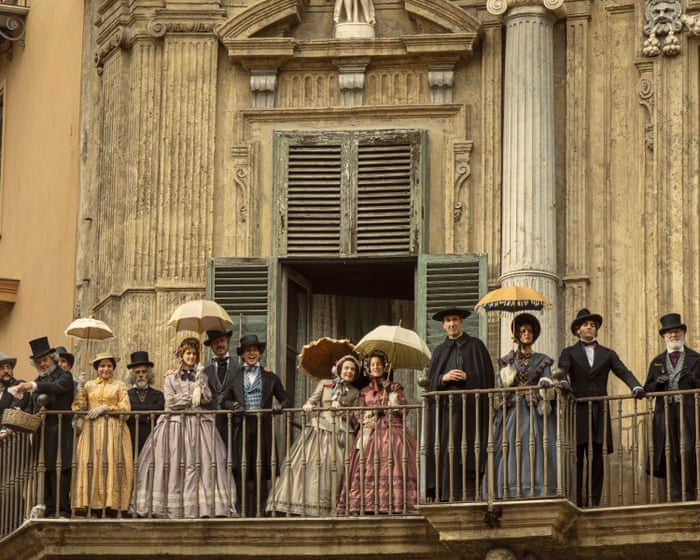
This mood may explain why Netflix’s recent adaptation of Giuseppe Tomasi di Lampedusa’s 1958 masterpiece The Leopard is resonating across the continent. The novel traces the decline of a Sicilian aristocratic family in the 19th century—and, more lastingly, the mindset of elites who know their world is ending but will compromise almost anything to cling to power a little longer.
Today, Europe’s political class, caught between pain and complacency, resembles that aristocracy, resigned to a strategy of managed decline. Yet as Lampedusa writes, “as long as there is death, there is hope.” Europe is not necessarily lost—if its leaders learn the right lessons from The Leopard.
Reading the novel is a feast; watching Luchino Visconti’s 1963 film is essential; and the slow-paced Netflix series is time well spent. For those short on time, here’s the gist: Set during Italian unification, the story follows the Prince of Salina, an aging Sicilian aristocrat living comfortably off his vast estates. Around him, the world is changing. Villagers aspire to more than laboring on his land, and aristocratic power is giving way to an ambitious, sometimes ruthless, middle class.
The prince sees clearly that his way of life is dying. His wealth and privileges are fading. “Everything needs to change for everything to remain the same,” his nephew Tancredi famously argues, urging him to adapt to the new economic and political order. But if staying on top means abandoning one’s values and traditions, is that really winning?
The proud prince is drawn to the dignity of resistance, yet he cannot escape the logic of pragmatic surrender, hoping to delay his family’s decline. Reading The Leopard today, it’s hard not to see Europe in the melancholic Prince of Salina.
Like the prince, many Europeans have lived in relative prosperity. And like aristocrats of the past, they are convinced of the superiority of their model—a democratic order, a tempered capitalism, a refined culture—while overlooking that this wealth has also relied on the exploitation of others.
Europeans, too, sense history turning against them. Domestically, politics has become a contest of nostalgias. The rising populist right dreams of an imagined nationalist past, while the mainstream behaves like the Prince of Salina—trying to prolong the present through tactical adjustments: more debt here, welfare cuts there, deregulation, and above all, yielding to a figure like Donald Trump, who mocks EU leaders online and openly calls them “weak.”
This politics of muddling through has its merits. Managed decline may be better than hubris followed by collapse. But there is an alternative to both denial and accommodation.
The crucial question behind Tancredi’s saying is this: If you adapt so that “everything can remain the same,” what exactly are you trying to preserve?
The prince has no good answer. He seeks to uphold an order that benefits only himself. Europeans, by contrast, have many potential allies—if they choose to defend principles like democracy, the rule of law, and human dignity.The rule of law, a state we need not fear, and the principle of territorial sovereignty—these foundations matter. As we saw last week, standing united against Trump’s tariff threats over Greenland proved effective. A united Europe is far from weak.
Europe can maintain this sense of purpose by focusing on building an economy that is both successful and allows people to lead meaningful lives. Pursuing an order that prioritizes human needs over capital interests is not decadent. Unlike the prince’s world in The Leopard, Europe’s way of life is not doomed—especially because Europeans refuse to let the continent become a periphery governed by others, as Sicily is in the novel.
Europeans continue to show resilience: polls indicate that 76% rejected last summer’s humiliating trade deal with Trump, 81% support a common EU defense and security policy, and approval of the EU has reached a record high of 74%. Even as Russia’s war enters its fifth year, European public opinion remains steadfast in its support for Ukraine.
Yes, Europe must change profoundly to protect what truly matters. Safeguarding Europe’s ability to choose its own future requires a stronger, more democratic EU. In Davos, European Commission President Ursula von der Leyen urged letting go of “nostalgia” to build a newly independent Europe. Each humiliation at the hands of Trump, Xi Jinping, or Vladimir Putin makes Europeans more receptive to this argument.
The real question is whether our leaders are ready to drive change rather than merely endure it passively—or whether, like the prince, they will withdraw from the fight, seeking only comfort until the end. After all, the most aristocratic and irresponsible saying remains: après moi, le déluge.
Joseph de Weck is a fellow with the Foreign Policy Research Institute.
Frequently Asked Questions
Of course Here is a list of FAQs about the statement Europe stands at a crossroads The EUs cautious leaders could learn a thing or two from
BeginnerLevel Questions
1 What does it mean that Europe stands at a crossroads
Its a metaphor meaning the European Union is at a critical point where it must make major decisions that will define its futurewhether it becomes more united and powerful or remains fragmented and less influential on the world stage
2 Who are the EUs cautious leaders being referred to
This typically refers to the heads of EU member states and institutions who are often seen as prioritizing consensus slow bureaucracy and incremental change over bold swift action especially during crises
3 What kind of crossroads is Europe facing
Key challenges include the war in Ukraine and defense policy economic competitiveness vs the US and China managing migration the green energy transition and internal political divisions between member states
4 What could the EU learn from other countries or models
The blank is often filled with examples like the US Ukraine or startup nations The lesson is usually about being less bureaucratic and more decisive
Advanced Practical Questions
5 Whats a specific example of EU caution that critics point to
A common example is the initial slow and fragmented response to the 2015 migration crisis and the more recent hesitant steps toward a common EU defense and army relying heavily on USled NATO
6 What are the risks if the EU continues its cautious approach
Risks include falling behind geopolitically being dictated to by other global powers a loss of economic competitiveness and the potential for internal populist movements to gain strength by exploiting slow crisis responses
7 What are the benefits of the EUs cautious consensusdriven model
It ensures stability protects smaller member states interests and creates durable legally sound policies Rushed decisions could break EU unity which is its greatest asset
8 Is the EU actually capable of acting decisively When has it done so
Yes when there is overwhelming urgency Key examples