This CSS code defines a custom font family called “Guardian Headline Full” with multiple font weights and styles. It includes light, regular, medium, and semibold weights, each with normal and italic variations. The fonts are loaded from the Guardian’s servers in WOFF2, WOFF, and TrueType formats to ensure compatibility across different browsers.@font-face {
font-family: Guardian Headline Full;
src: url(https://assets.guim.co.uk/static/frontend/fonts/guardian-headline/noalts-not-hinted/GHGuardianHeadline-Bold.woff2) format(“woff2”),
url(https://assets.guim.co.uk/static/frontend/fonts/guardian-headline/noalts-not-hinted/GHGuardianHeadline-Bold.woff) format(“woff”),
url(https://assets.guim.co.uk/static/frontend/fonts/guardian-headline/noalts-not-hinted/GHGuardianHeadline-Bold.ttf) format(“truetype”);
font-weight: 700;
font-style: normal;
}
@font-face {
font-family: Guardian Headline Full;
src: url(https://assets.guim.co.uk/static/frontend/fonts/guardian-headline/noalts-not-hinted/GHGuardianHeadline-BoldItalic.woff2) format(“woff2”),
url(https://assets.guim.co.uk/static/frontend/fonts/guardian-headline/noalts-not-hinted/GHGuardianHeadline-BoldItalic.woff) format(“woff”),
url(https://assets.guim.co.uk/static/frontend/fonts/guardian-headline/noalts-not-hinted/GHGuardianHeadline-BoldItalic.ttf) format(“truetype”);
font-weight: 700;
font-style: italic;
}
@font-face {
font-family: Guardian Headline Full;
src: url(https://assets.guim.co.uk/static/frontend/fonts/guardian-headline/noalts-not-hinted/GHGuardianHeadline-Black.woff2) format(“woff2”),
url(https://assets.guim.co.uk/static/frontend/fonts/guardian-headline/noalts-not-hinted/GHGuardianHeadline-Black.woff) format(“woff”),
url(https://assets.guim.co.uk/static/frontend/fonts/guardian-headline/noalts-not-hinted/GHGuardianHeadline-Black.ttf) format(“truetype”);
font-weight: 900;
font-style: normal;
}
@font-face {
font-family: Guardian Headline Full;
src: url(https://assets.guim.co.uk/static/frontend/fonts/guardian-headline/noalts-not-hinted/GHGuardianHeadline-BlackItalic.woff2) format(“woff2”),
url(https://assets.guim.co.uk/static/frontend/fonts/guardian-headline/noalts-not-hinted/GHGuardianHeadline-BlackItalic.woff) format(“woff”),
url(https://assets.guim.co.uk/static/frontend/fonts/guardian-headline/noalts-not-hinted/GHGuardianHeadline-BlackItalic.ttf) format(“truetype”);
font-weight: 900;
font-style: italic;
}
@font-face {
font-family: Guardian Titlepiece;
src: url(https://assets.guim.co.uk/static/frontend/fonts/guardian-titlepiece/noalts-not-hinted/GTGuardianTitlepiece-Bold.woff2) format(“woff2”),
url(https://assets.guim.co.uk/static/frontend/fonts/guardian-titlepiece/noalts-not-hinted/GTGuardianTitlepiece-Bold.woff) format(“woff”),
url(https://assets.guim.co.uk/static/frontend/fonts/guardian-titlepiece/noalts-not-hinted/GTGuardianTitlepiece-Bold.ttf) format(“truetype”);
font-weight: 700;
font-style: normal;
}
@font-face {
font-family: Guardian Headline Full;
src: url(https://assets.guim.co.uk/static/frontend/fonts/guardian-headline/noalts-not-hinted/GHGuardianHeadline-Light.woff2) format(“woff2”),
url(https://assets.guim.co.uk/static/frontend/fonts/guardian-headline/noalts-not-hinted/GHGuardianHeadline-Light.woff) format(“woff”),
url(https://assets.guim.co.uk/static/frontend/fonts/guardian-headline/noalts-not-hinted/GHGuardianHeadline-Light.ttf) format(“truetype”);
font-weight: 300;
font-style: normal;
}
@font-face {
font-family: Guardian Headline Full;
src: url(https://assets.guim.co.uk/static/frontend/fonts/guardian-headline/noalts-not-hinted/GHGuardianHeadline-LightItalic.woff2) format(“woff2”),
url(https://assets.guim.co.uk/static/frontend/fonts/guardian-headline/noalts-not-hinted/GHGuardianHeadline-LightItalic.woff) format(“woff”),
url(https://assets.guim.co.uk/static/frontend/fonts/guardian-headline/noalts-not-hinted/GHGuardianHeadline-LightItalic.ttf) format(“truetype”);
font-weight: 300;
font-style: italic;
}
@font-face {
font-family: Guardian Headline Full;
src: url(https://assets.guim.co.uk/static/frontend/fonts/guardian-headline/noalts-not-hinted/GHGuardianHeadline-Regular.woff2) format(“woff2”),
url(https://assets.guim.co.uk/static/frontend/fonts/guardian-headline/noalts-not-hinted/GHGuardianHeadline-Regular.woff) format(“woff”),
url(https://assets.guim.co.uk/static/frontend/fonts/guardian-headline/noalts-not-hinted/GHGuardianHeadline-Regular.ttf) format(“truetype”);
font-weight: 400;
font-style: normal;
}
@font-face {
font-family: Guardian Headline Full;
src: url(https://assets.guim.co.uk/static/frontend/fonts/guardian-headline/noalts-not-hinted/GHGuardianHeadline-RegularItalic.woff2) format(“woff2”),
url(https://assets.guim.co.uk/static/frontend/fonts/guardian-headline/noalts-not-hinted/GHGuardianHeadline-RegularItalic.woff) format(“woff”),
url(https://assets.guim.co.uk/static/frontend/fonts/guardian-headline/noalts-not-hinted/GHGuardianHeadline-RegularItalic.ttf) format(“truetype”);
font-weight: 400;
font-style: italic;
}The text appears to be a snippet of CSS code defining font faces for the “Guardian Headline Full” font family. Here it is rewritten in fluent, natural English:
This CSS defines the “Guardian Headline Full” font family with multiple styles and weights. Each entry specifies the font files in WOFF2, WOFF, and TrueType formats, hosted at the given URLs, along with their corresponding font weight and style (italic or normal). The styles range from regular (weight 400) to black (weight 900), each in both normal and italic variants.The provided text appears to be a mix of CSS font definitions and responsive grid layout rules for a website, likely The Guardian. Here is a fluent, natural English rewrite that simplifies the technical phrasing while preserving the meaning:
The code defines custom fonts for the website, including “Guardian Headline” in various weights and styles, and “Guardian Titlepiece” in bold. It then sets up a responsive grid layout for article content. On smaller screens, the layout is a single column. As the screen gets wider, the layout adjusts: it adds padding, introduces a right-hand column, and eventually creates a more complex multi-column structure with a border and specific areas for the title, headline, media, and body text. The rules also adjust caption padding for immersive images at different screen sizes.For interactive grid figures with immersive captions, the caption padding is set to 4 pixels at the top and 0 elsewhere. In various content areas, elements like lines and meta are positioned in the grid from row 2, column 1 to row 5, column 2. The lines element has a height that fits its content with a 5px top margin, while the meta element has an 18px top margin.
On wider screens, the interactive grid uses a five-column layout with specific widths.
On iOS and Android devices, article headers use specific fonts: the standfirst text uses a medium-weight headline font, section kickers are displayed as blocks with capitalized first letters, and keylines have 12px top padding. Byline authors are shown in a bold headline font. Within articles, image figures have an automatic height, and paragraphs following atomic elements have no top margin.
A custom font, Guardian Headline Full, is loaded in light and light italic weights from specific web addresses.The provided text appears to be a series of CSS font-face rules for a font family named “Guardian Headline Full.” These rules define different font weights and styles (like regular, italic, medium, bold, etc.) and specify the web addresses (URLs) where the actual font files can be found in various formats (WOFF2, WOFF, TTF).@font-face {
font-family: ‘Guardian Headline Full’;
src: url(‘https://assets.guim.co.uk/static/frontend/fonts/guardian-headline/noalts-not-hinted/GHGuardianHeadline-Black.woff2’) format(‘woff2’),
url(‘https://assets.guim.co.uk/static/frontend/fonts/guardian-headline/noalts-not-hinted/GHGuardianHeadline-Black.woff’) format(‘woff’),
url(‘https://assets.guim.co.uk/static/frontend/fonts/guardian-headline/noalts-not-hinted/GHGuardianHeadline-Black.ttf’) format(‘truetype’);
font-weight: 900;
font-style: normal;
}
@font-face {
font-family: ‘Guardian Headline Full’;
src: url(‘https://assets.guim.co.uk/static/frontend/fonts/guardian-headline/noalts-not-hinted/GHGuardianHeadline-BlackItalic.woff2’) format(‘woff2’),
url(‘https://assets.guim.co.uk/static/frontend/fonts/guardian-headline/noalts-not-hinted/GHGuardianHeadline-BlackItalic.woff’) format(‘woff’),
url(‘https://assets.guim.co.uk/static/frontend/fonts/guardian-headline/noalts-not-hinted/GHGuardianHeadline-BlackItalic.ttf’) format(‘truetype’);
font-weight: 900;
font-style: italic;
}
@font-face {
font-family: ‘Guardian Titlepiece’;
src: url(‘https://assets.guim.co.uk/static/frontend/fonts/guardian-titlepiece/noalts-not-hinted/GTGuardianTitlepiece-Bold.woff2’) format(‘woff2’),
url(‘https://assets.guim.co.uk/static/frontend/fonts/guardian-titlepiece/noalts-not-hinted/GTGuardianTitlepiece-Bold.woff’) format(‘woff’),
url(‘https://assets.guim.co.uk/static/frontend/fonts/guardian-titlepiece/noalts-not-hinted/GTGuardianTitlepiece-Bold.ttf’) format(‘truetype’);
font-weight: 700;
font-style: normal;
}
@media (min-width: 71.25em) {
.content__main-column–interactive {
margin-left: 160px;
}
}
@media (min-width: 81.25em) {
.content__main-column–interactive {
margin-left: 240px;
}
}
.content__main-column–interactive .element-atom {
max-width: 620px;
}
@media (max-width: 46.24em) {
.content__main-column–interactive .element-atom {
max-width: 100%;
}
}
.content__main-column–interactive .element-showcase {
margin-left: 0;
}
@media (min-width: 46.25em) {
.content__main-column–interactive .element-showcase {
max-width: 620px;
}
}
@media (min-width: 71.25em) {
.content__main-column–interactive .element-showcase {
max-width: 860px;
}
}
.content__main-column–interactive .element-immersive {
max-width: 1100px;
}
@media (max-width: 46.24em) {
.content__main-column–interactive .element-immersive {
width: calc(100vw – var(–scrollbar-width, 0px));
position: relative;
left: 50%;
right: 50%;
margin-left: calc(-50vw + var(–half-scrollbar-width, 0px)) !important;
margin-right: calc(-50vw + var(–half-scrollbar-width, 0px)) !important;
}
}
@media (min-width: 46.25em) {
.content__main-column–interactive .element-immersive {
transform: translate(-20px);
width: calc(100% + 60px);
}
}
@media (max-width: 71.24em) {
.content__main-column–interactive .element-immersive {
margin-left: 0;
margin-right: 0;
}
}
@media (min-width: 71.25em) {
.content__main-column–interactive .element-immersive {
transform: translate(0);
width: auto;
}
}
@media (min-width: 81.25em) {
.content__main-column–interactive .element-immersive {
max-width: 1260px;
}
}
.content__main-column–interactive p,
.content__main-column–interactive ul {
max-width: 620px;
}
.content__main-column–interactive:before {
position: absolute;
top: 0;
height: calc(100% + 15px);
min-height: 100px;
content: “”;
}
@media (min-width: 71.25em) {
.content__main-column–interactive:before {
border-left: 1px solid #dcdcdc;
z-index: -1;
left: -10px;
}
}
@media (min-width: 81.25em) {
.content__main-column–interactive:before {
border-left: 1px solid #dcdcdc;
left: -11px;
}
}
.content__main-column–interactive .element-atom {
margin-top: 0;
margin-bottom: 0;
padding-bottom: 12px;
padding-top: 12px;
}
.content__main-column–interactive p + .element-atom {
padding-top: 0;
padding-bottom: 0;
margin-top: 12px;
margin-bottom: 12px;
}
.content__main-column–interactive .element-inline {
max-width: 620px;
}
@media (min-width: 61.25em) {
figure[data-spacefinder-role=”inline”].element {
max-width: 620px;
}
}
:root {
–dateline: #606060;
–headerBorder: #dcdcdc;
–captionText: #999;
–captionBackground: hsla(0, 0%, 7%, 0.72);
–feature: #c70000;
–new-pillar-colour: var(–primary-pillar, var(–feature));
}
.content__main-column–interactive .element.element-atom,
.element.element-atom {
padding: 0;
}
#article-body > div .element-atom:first-of-type + p:first-of-type,
#article-body > div .element-atom:first-of-type {The first paragraph after specific elements like an atom, sign-in gate, or horizontal rule gets a top padding of 14 pixels.
For the first letter of that first paragraph, use the Guardian Headline font with a bold weight, size of 111 pixels, and a line height of 92 pixels. It should be floated left, uppercase, and colored with the designated drop-cap color, with an 8-pixel margin to the right.
Paragraphs immediately following a horizontal rule should have no top padding.
Pullquotes within the article body, interactive content, comments, or feature sections are limited to a maximum width of 620 pixels.
For showcase elements in the main content or article containers, captions are positioned statically, taking full width up to 620 pixels.
Immersive elements span the full viewport width, minus the scrollbar. On screens smaller than 71.24em, their maximum width is 978 pixels, and their captions have inline padding.@media (max-width: 71.24em) and (min-width: 30em) {
.element.element–immersive.element-immersive figcaption {
padding-inline: 20px;
}
}
@media (min-width: 46.25em) and (max-width: 61.24em) {
.element.element–immersive.element-immersive {
max-width: 738px;
}
}
@media (max-width: 46.24em) {
.element.element–immersive.element-immersive {
margin-left: -10px !important;
margin-right: 0 !important;
left: 0;
}
}
@media (max-width: 46.24em) and (min-width: 30em) {
.element.element–immersive.element-immersive {
margin-left: -20px !important;
}
.element.element–immersive.element-immersive figcaption {
padding-inline: 20px;
}
}
@media (min-width: 61.25em) {
.furniture-wrapper {
display: grid;
grid-column-gap: 20px;
grid-row-gap: 0px;
grid-template-columns: [title-start headline-start meta-start standfirst-start] repeat(5, 1fr) [title-end headline-end meta-end standfirst-end portrait-start] repeat(5, 1fr) [portrait-end];
grid-template-rows: [title-start portrait-start] .25fr [title-end headline-start] 1fr [headline-end standfirst-start] .75fr [standfirst-end meta-start] auto [meta-end portrait-end];
}
.furniture-wrapper #headline > div:first-child,
.furniture-wrapper [data-gu-name=headline] > div:first-child,
.furniture-wrapper .headline > div:first-child {
border-top: 1px solid var(–headerBorder);
}
.furniture-wrapper #meta,
.furniture-wrapper [data-gu-name=meta] {
position: relative;
padding-top: 2px;
margin-right: 0;
}
.furniture-wrapper .standfirst .content__standfirst,
.furniture-wrapper #standfirst .content__standfirst,
.furniture-wrapper [data-gu-name=standfirst] .content__standfirst {
margin-bottom: 4px;
}
.furniture-wrapper .standfirst ul li,
.furniture-wrapper #standfirst ul li,
.furniture-wrapper [data-gu-name=standfirst] ul li {
font-size: 20px;
}
.furniture-wrapper .standfirst li a,
.furniture-wrapper .standfirst a,
.furniture-wrapper #standfirst li a,
.furniture-wrapper #standfirst a,
.furniture-wrapper [data-gu-name=standfirst] li a,
.furniture-wrapper [data-gu-name=standfirst] a {
border-bottom: none;
background-image: none !important;
text-decoration: underline;
text-underline-offset: 6px;
text-decoration-color: var(–headerBorder, #dcdcdc);
}
.furniture-wrapper .standfirst li a:hover,
.furniture-wrapper .standfirst a:hover,
.furniture-wrapper #standfirst li a:hover,
.furniture-wrapper #standfirst a:hover,
.furniture-wrapper [data-gu-name=standfirst] li a:hover,
.furniture-wrapper [data-gu-name=standfirst] a:hover {
text-decoration-color: var(–new-pillar-colour);
}
.furniture-wrapper .standfirst p:first-of-type,
.furniture-wrapper #standfirst p:first-of-type,
.furniture-wrapper [data-gu-name=standfirst] p:first-of-type {
border-top: 1px solid var(–headerBorder);
padding-bottom: 0;
}
}
@media (min-width: 61.25em) and (min-width: 71.25em) {
.furniture-wrapper .standfirst p:first-of-type,
.furniture-wrapper #standfirst p:first-of-type,
.furniture-wrapper [data-gu-name=standfirst] p:first-of-type {
border-top: unset;
}
}
@media (min-width: 61.25em) {
.furniture-wrapper figure {
margin: 0 0 0 -10px;
}
.furniture-wrapper figure[data-spacefinder-role=inline].element {
max-width: 630px;
}
}
@media (min-width: 71.25em) {
.furniture-wrapper {
grid-template-columns: [title-start headline-start meta-start] repeat(2, 1fr) [meta-end standfirst-start] repeat(5, 1fr) [title-end headline-end standfirst-end portrait-start] repeat(7, 1fr) [portrait-end];
grid-template-rows: [title-start portrait-start] 80px [title-end headline-start] auto [headline-end standfirst-start meta-start] auto [standfirst-end meta-end portrait-end];
}
.furniture-wrapper #meta:before,
.furniture-wrapper [data-gu-name=meta]:before {
content: “”;
width: 540px;
position: absolute;
top: 0;
background-color: var(–headerBorder);
height: 1px;
}
.furniture-wrapper .standfirst p,
.furniture-wrapper #standfirst p,
.furniture-wrapper [data-gu-name=standfirst] p {
border-top: unset;
}
.furniture-wrapper .standfirst:before,
.furniture-wrapper #standfirst:before,
.furniture-wrapper [data-gu-name=standfirst]:before {
content: “”;
width: 1px;
background-color: var(–headerBorder);
height: 100%;
position: absolute;
top: 0;
left: .5px;
}
}
@media (min-width: 81.25em) {
.furniture-wrapper {
grid-template-columns: [title-start headline-start meta-start] repeat(3, 1fr) [meta-end standfirst-start];
}
}The grid layout uses five equal-width columns for the title, headline, and standfirst sections, followed by eight equal-width columns for the portrait section. The rows are defined with specific start and end points for each area.
For the meta section and its social elements, borders use a custom color variable, and certain interactive components are hidden. The standfirst section has a left margin adjustment and padding, with paragraph text set to a specific weight and size.
Headlines are styled with a semi-bold font and a maximum width, increasing in size on larger screens. Some decorative lines are hidden on wider screens, while others change color based on a theme variable.
The main media area is positioned within the grid and adjusts its width and margins across different screen sizes. Captions are absolutely positioned at the bottom with a background color and text color from theme variables, and a toggle button is provided to hide or show the caption.
On very large screens, additional adjustments are made to the main content column’s positioning.The main column for interactive content has a maximum width of 620 pixels for h2 headings. For iOS and Android devices, the color scheme uses a dark background and specific accent colors. In dark mode, the accent color adjusts accordingly.
On iOS and Android, the first letter of the first paragraph in various article types is styled with a secondary color. The article header is hidden, while the title area has specific padding. Labels use a bold, capitalized font with the accent color, and the main headline is set to a large, bold size in a dark color.For iOS and Android devices, the image elements within furniture wrappers across feature, standard, and comment article containers are positioned relatively. They have a top margin of 14px, a left offset of -10px, and a width that fills the viewport minus the scrollbar. Their height adjusts automatically.
Inside these image elements, the inner figure, image, and link components have a transparent background. Their width also matches the viewport minus the scrollbar, with an automatically adjusting height.
The standfirst sections within these wrappers have top and bottom padding of 4px and 24px respectively, and a right margin of -10px.
The paragraph text inside the standfirst uses the Guardian Headline font family or similar serif fonts. Links within the standfirst, including those in list items, are styled consistently.For comment articles, links in the standfirst section should use the new pillar color, have an underline with a specific offset and color, and no background image or bottom border. On iOS and Android devices, when hovering over these links in feature, standard, or comment articles, the underline color should change to the new pillar color. Also, on these devices, the meta section in these article types should have no margin. The author byline text and links within the meta section should be displayed in the new pillar color. Additionally, the miscellaneous meta information should have no padding.For iOS and Android devices, the following CSS rules apply to feature, standard, and comment article containers:
– SVG icons within the meta miscellaneous section use the new pillar color for strokes.
– The caption button in showcase elements is displayed as a flex container, centered with 5px padding, dimensions of 28px by 28px, and positioned 14px from the right.
– The article body has 12px padding on the left and right.
– Non-thumbnail, non-immersive image figures within the article body have no margin, a width calculated as the viewport width minus 24px and the scrollbar width, and an automatic height. Their captions have no padding.
– Immersive image figures have a width calculated as the viewport width minus the scrollbar width.
– Quoted blockquotes within the article body prose have a `:before` pseudo-element applied.For quoted blockquotes in the article body on iOS and Android, the color before the quote uses the new pillar color.
On iOS and Android, links within the article body for feature, standard, and comment articles are styled with the primary pillar color. They have an underline with an offset of 6px, using the header border color for the underline. On hover, the underline color changes to the new pillar color.
In dark mode, the furniture wrapper background for these article types on iOS and Android changes to #1a1a1a. Within it, content labels use the new pillar color, headlines have no background and use the header border color for text, standfirst paragraphs use the header border color, and links in the standfirst along with author bylines and their links also use the header border color.This appears to be CSS code for styling web articles on Android and iOS devices. The code sets colors for author bylines, icons, image captions, and blockquotes using custom color variables. It also applies a dark background to article content areas. The styling targets different article types (feature, standard, comment) across both mobile operating systems.This appears to be a CSS selector targeting the first letter of paragraphs in specific containers on iOS and Android devices. The selector applies to various article containers (feature, standard, comment) and looks for paragraphs following certain elements like `.element-atom`, `.sign-in-gate`, or `#sign-in-gate`.For Android and iOS devices, the first letter of paragraphs following specific elements in various article containers will be styled with a custom color variable, defaulting to white.For comment articles on iOS and Android, the standfirst section has a top padding of 24px and no top margin. The main heading (h2) in the article text is set to 24px.
Caption buttons have different padding on iOS (6px top, 5px sides, 0 bottom) and Android (4px top and sides, 0 bottom).
In dark mode, specific colors are defined for follow buttons, standfirst text, links, and bylines.
When the page has a Guardian organization logo, the branding element is forced to display.
On iOS and Android, labels and the main headline (h1) in article containers have a medium font weight (500). This also applies to the headline and standfirst paragraph text within the furniture wrapper.
The page uses a custom background color (#fff4f2) for a “weekend essay” theme, which is also applied to the article and sub-meta sections.
The lines element is hidden. The furniture wrapper uses a relative position and a specific grid layout on larger screens.
The article header has a fixed height of 70px. Within it, the labels container includes a decorative animated book image (110px on large screens) positioned at the bottom right. A horizontal line spans the bottom of the labels container, extending to the edges of the viewport on mobile and to a fixed width on tablet screens.For screens with a minimum width of 61.25em, the furniture wrapper hides the pseudo-elements after the content labels within the article header and title sections. When the screen reaches at least 71.25em, the article header and title areas adjust to a height of 80px. This height increases to 125px at 81.25em. At this same breakpoint, the headline, its data attribute counterpart, and the headline class receive a top margin of -2px.
Within the furniture wrapper, the headline elements have their bottom padding removed. The portrait main media headline wrapper is set to full height, positioned relatively, with hidden overflow and a bottom padding of 24px. The h1 and anchor tags inside this wrapper have their maximum width unrestricted. On hover, these links and headings get a 2px thick underline with a 6px offset.
The text styling for h1, anchor tags, and byline spans inside the portrait main media headline wrapper includes a 115% line height, a font weight of 500, and a font size of 36px. This font size increases to 50px for screens at least 71.25em wide.
The standfirst section is positioned relatively with a top padding of 4px. This padding is removed at 61.25em and then set to 2px at 71.25em.
Inside the meta section, the branding island component is set to display as a block..furniture-wrapper [data-gu-name=media] {
position: relative;
}
@media (min-width: 61.25em) {
.furniture-wrapper #main-media,
.furniture-wrapper [data-gu-name=media] {
grid-area: portrait;
}
}
.furniture-wrapper #main-media > div,
.furniture-wrapper [data-gu-name=media] > div {
position: relative;
}
.furniture-wrapper #main-media div + span,
.furniture-wrapper [data-gu-name=media] div + span {
display: block;
}
.furniture-wrapper #main-media figure,
.furniture-wrapper [data-gu-name=media] figure {
height: 100%;
margin-left: 10px;
}
.furniture-wrapper #main-media figure picture img,
.furniture-wrapper #main-media figure figcaption,
.furniture-wrapper [data-gu-name=media] figure picture img,
.furniture-wrapper [data-gu-name=media] figure figcaption {
width: calc(100vw – 40px – var(–scrollbar-width, 0px));
height: auto;
margin-left: 10px;
padding: 10px 0;
}
.furniture-wrapper #main-media figure figcaption,
.furniture-wrapper [data-gu-name=media] figure figcaption {
margin-bottom: 10px;
padding: 10px;
}
.furniture-wrapper #main-media figure:before,
.furniture-wrapper [data-gu-name=media] figure:before {
content: “”;
display: block;
width: calc(100vw – 20px – var(–scrollbar-width, 0px));
background-image: url(https://interactive.guim.co.uk/atoms/2025/04/2025-weekend-essay-test/assets/v/1764331689/frame.png);
background-size: contain;
background-position: center;
background-repeat: no-repeat;
position: absolute;
top: 0;
left: 10px;
height: inherit;
}
@media (min-width: 46.25em) {
.furniture-wrapper #main-media figure,
.furniture-wrapper [data-gu-name=media] figure {
margin-left: 0;
}
.furniture-wrapper #main-media figure picture img,
.furniture-wrapper [data-gu-name=media] figure picture img {
width: 670px;
height: auto;
margin-left: 5px;
padding: 15px 10px;
}
.furniture-wrapper #main-media figure:before,
.furniture-wrapper [data-gu-name=media] figure:before {
width: 700px;
left: -10px;
}
.furniture-wrapper #main-media figure figcaption,
.furniture-wrapper [data-gu-name=media] figure figcaption {
width: 650px;
margin-left: 15px;
margin-bottom: 15px;
padding: 15px 10px;
}
}
@media (min-width: 61.25em) {
.furniture-wrapper #main-media figure:before,
.furniture-wrapper [data-gu-name=media] figure:before {
width: 470px;
}
.furniture-wrapper #main-media figure picture img,
.furniture-wrapper #main-media figure figcaption,
.furniture-wrapper [data-gu-name=media] figure picture img,
.furniture-wrapper [data-gu-name=media] figure figcaption {
width: 450px;
margin-left: 0;
}
.furniture-wrapper #main-media figure picture img,
.furniture-wrapper [data-gu-name=media] figure picture img {
padding: 10px 0;
}
.furniture-wrapper #main-media figure figcaption,
.furniture-wrapper [data-gu-name=media] figure figcaption {
margin-bottom: 10px;
}
}
@media (min-width: 71.25em) {
.furniture-wrapper #main-media figure:before,
.furniture-wrapper [data-gu-name=media] figure:before {
width: 550px;
}
.furniture-wrapper #main-media figure picture img,
.furniture-wrapper [data-gu-name=media] figure picture img {
width: 520px;
margin-left: 5px;
padding: 10px 5px;
}
.furniture-wrapper #main-media figure figcaption,
.furniture-wrapper [data-gu-name=media] figure figcaption {
width: 510px;
margin-left: 10px;
margin-bottom: 10px;
}
}
@media (min-width: 81.25em) {
.furniture-wrapper #main-media figure:before,
.furniture-wrapper [data-gu-name=media] figure:before {
width: 630px;
}
.furniture-wrapper #main-media figure picture img,
.furniture-wrapper [data-gu-name=media] figure picture img {
width: 600px;
padding: 15px 0;
}
.furniture-wrapper #main-media figure figcaption,
.furniture-wrapper [data-gu-name=media] figure figcaption {
width: 600px;
margin-left: 5px;
margin-bottom: 15px;
}
}
.furniture-wrapper #main-media #caption-button,
.furniture-wrapper [data-gu-name=media] #caption-button {
right: 15px;
bottom: 20px;
}
@media (min-width: 46.25em) {
.furniture-wrapper #main-media #caption-button,
.furniture-wrapper [data-gu-name=media] #caption-button {
right: 45px;
bottom: 30px;
}
}
@media (min-width: 61.25em) {
.furniture-wrapper #main-media #caption-button,
.furniture-wrapper [data-gu-name=media] #caption-button {
right: 15px;
bottom: 20px;
}
}
@media (min-width: 71.25em) {
.furniture-wrapper #main-media #caption-button,
.furniture-wrapper [data-gu-name=media] #caption-button {
right: 20px;
}
}
@media (min-width: 81.25em) {
.furniture-wrap
}For the main media caption button and furniture wrapper with media data, the button is positioned 30px from the bottom. When there’s no media, a centered div displays a bold, underlined, 24px text in a specific color.
On larger screens, the interactive main column aligns to the left without a preceding element. Supporting content with blockquotes uses a light background. The first letter of the first paragraph is styled lightly, while drop caps in specific contexts are large, uppercase, and colored. Headings are styled in a burnt orange, with larger sizes on big screens and bold when containing strong text. Figures with iframes also have a light background.
In apps, follow buttons appear below bylines with 14px text, and media elements fit their content. Dark mode adjusts backgrounds to a dark gray.[data-app-os=android] .furniture-wrapper .article-header:after,
[data-app-os=android] .furniture-wrapper [data-gu-name=title] .content__labels:after {
background-image: url(https://interactive.guim.co.uk/atoms/2025/04/2025-weekend-essay-test/assets/v/1764331689/book-white.gif)
}
[data-rendering-target=apps] .furniture-wrapper .meta__byline gu-island[name=FollowWrapper] svg path,
[data-rendering-target=apps] .furniture-wrapper [data-component=meta-byline] gu-island[name=FollowWrapper] svg path,
[data-app-os=ios] .furniture-wrapper .meta__byline gu-island[name=FollowWrapper] svg path,
[data-app-os=ios] .furniture-wrapper [data-component=meta-byline] gu-island[name=FollowWrapper] svg path,
[data-app-os=android] .furniture-wrapper .meta__byline gu-island[name=FollowWrapper] svg path,
[data-app-os=android] .furniture-wrapper [data-component=meta-byline] gu-island[name=FollowWrapper] svg path {
fill: var(–byline-anchor, #ffffff) !important
}
[data-rendering-target=apps] .furniture-wrapper #main-media figure:before,
[data-rendering-target=apps] .furniture-wrapper [data-gu-name=media] figure:before,
[data-app-os=ios] .furniture-wrapper #main-media figure:before,
[data-app-os=ios] .furniture-wrapper [data-gu-name=media] figure:before,
[data-app-os=android] .furniture-wrapper #main-media figure:before,
[data-app-os=android] .furniture-wrapper [data-gu-name=media] figure:before {
background-image: url(https://interactive.guim.co.uk/atoms/2025/04/2025-weekend-essay-test/assets/v/1764331689/frame-white.png) !important
}
body.ios,
body.android {
background-color: #fff
}
body.ios #feature-article-container .furniture-wrapper .content__labels,
body.ios #standard-article-container .furniture-wrapper .content__labels,
body.ios #comment-article-container .furniture-wrapper .content__labels,
body.android #feature-article-container .furniture-wrapper .content__labels,
body.android #standard-article-container .furniture-wrapper .content__labels,
body.android #comment-article-container .furniture-wrapper .content__labels,
body.ios #feature-article-container .furniture-wrapper h1.headline,
body.ios #standard-article-container .furniture-wrapper h1.headline,
body.ios #comment-article-container .furniture-wrapper h1.headline,
body.android #feature-article-container .furniture-wrapper h1.headline,
body.android #standard-article-container .furniture-wrapper h1.headline,
body.android #comment-article-container .furniture-wrapper h1.headline {
font-weight: 500
}
@media (prefers-color-scheme: light) {
html:has(body.ios, body.android) {
background-color: var(–weekend-essay-bg, #fff4f2)
}
}
html:has(body.ios, body.android) body.ios,
html:has(body.ios, body.android) body.android {
–opinion-primary: #c74600;
–byline-anchor: var(–opinion-primary, #c74600);
–primary-pillar: var(–opinion-primary, #c74600)
}
@media (prefers-color-scheme: light) {
html:has(body.ios, body.android) body.ios,
html:has(body.ios, body.android) body.android {
background-color: var(–weekend-essay-bg, #fff4f2)
}
}
@media (prefers-color-scheme: dark) {
html:has(body.ios, body.android) body.ios,
html:has(body.ios, body.android) body.android {
–weekend-essay-bg: #1a1a1a;
–opinion-primary: #ff7f0f
}
html:has(body.ios, body.android) .garnett–pillar-opinion:not(.garnett–type-media).ios .article__body,
html:has(body.ios, body.android) .garnett–pillar-opinion:not(.garnett–type-media).ios .tags {
background-color: unset
}
}
body.ios #feature-article-container,
body.ios #standard-article-container,
body.ios #comment-article-container,
body.android #feature-article-container,
body.android #standard-article-container,
body.android #comment-article-container {
background-color: var(–weekend-essay-bg, #fff4f2)
}
@media (min-width: 61.25em) {
body.ios #feature-article-container .furniture-wrapper,
body.ios #standard-article-container .furniture-wrapper,
body.ios #comment-article-container .furniture-wrapper,
body.android #feature-article-container .furniture-wrapper,
body.android #standard-article-container .furniture-wrapper,
body.android #comment-article-container .furniture-wrapper {
grid-column-gap: 20px;
grid-row-gap: 0px;
grid-template-columns: [title-start headline-start meta-start standfirst-s
}
}The grid is set up with five equal-width columns, starting from the title and ending at the portrait. The rows are defined with specific fractions and auto heights for different sections like the title, headline, standfirst, meta, and portrait.
On iOS and Android devices, for feature, standard, and comment articles, the title and GIF wrapper uses flexbox to arrange items in a row, spaced apart, with relative positioning.
Within this wrapper, content labels have a font size of 17px, normal style, bold weight, and 115% line height. Links inside these labels are colored with a custom variable (defaulting to #c74600) and have no text transformation.
The GIF container and its images are set to 70px in both width and height. If the container or image has the class “book-gif-white,” the same dimensions apply.For Android devices, hide the white book GIFs in feature, standard, and comment article containers. In dark mode, hide the regular book GIFs and show the white ones instead for both iOS and Android. On iOS and Android, add a light gray line at the bottom of the title and GIF wrapper in these article containers. For larger screens, adjust the layout of the title and GIF wrapper in iOS feature and standard articles.The title and GIF wrapper for furniture on iOS and Android devices is set to the grid area named “title.” For iOS devices, after the title and GIF wrapper in feature, standard, and comment articles, the width is set to 50 viewport width units. In dark mode, the background color after these wrappers changes to #606060. On wider screens, the portrait main media headline wrapper is assigned to the “headline” grid area. Headlines, bylines, and links within these containers use a 36px font with normal style, medium weight, and 115% line height.For feature, standard, and comment articles on iOS and Android devices, the byline text and links are set to a red color (#c70000) or a custom variable. In dark mode, this changes to a darker orange (#c74600). Avatars are hidden in these sections. Headlines have no bottom margin or padding. Bylines are displayed in italics.For iOS and Android devices, the author’s byline in feature, standard, and comment articles should be displayed in a normal font style, not italicized.
In these same article types, the main media container should have an automatic height, a 4:5 aspect ratio, and a transparent background. Any figure elements within this container should take up the full height and have no left margin.
Inside these figures, the inner containers should be positioned normally at the top-left, with a transparent background, no padding, and visible overflow.
For images within these figure elements, the width should be the full viewport width minus 40 pixels, with a left margin of 20 pixels and a top margin of 25 pixels.The CSS code sets specific styles for images and captions within article containers on iOS and Android devices. Images get a 13px top margin, while captions are set to auto height with block display and a gray text color. On screens wider than 46.25em, figures expand to full width and have a left-aligned decorative element.For iOS and Android devices, the image width within article containers is set to the full viewport width minus 60 pixels, with a left margin of 30 pixels and a top margin of 40 pixels.
On larger screens (61.25em and above), the width adjusts to half the viewport width minus 40 pixels and the scrollbar width, with reduced margins. The top margin becomes 10 pixels, and the left margin changes to 18 pixels.
At 71.25em and above, the positioning is fine-tuned by moving the element 4 pixels upward.
For even larger screens (81.25em and above), the left margin shifts 20 pixels to the left, and the image width recalculates to half the viewport width minus 90 pixels and the scrollbar width. The left margin reduces to 12 pixels, the top margin becomes -10 pixels, and a top padding of 21 pixels is added.
In dark mode, additional styles are applied to maintain visual consistency.For iOS and Android devices, the first image in articles (feature, standard, or comment types) has specific styling. A white frame background is applied to these images.
On smaller screens, the first image spans almost the full viewport width, accounting for scrollbars, with no left margin and 10px of padding.
On wider screens (61.25em and above), the image width reduces to half the viewport, gains a small left margin, and has auto height with top padding.
On even larger screens (81.25em and above), the width adjusts further, a negative top margin is applied, and the top padding is maintained.For the main media figure element that is the first image, set the height to 100% and the maximum width to 620px as important.
On iOS and Android devices, for feature, standard, and comment article containers within the furniture wrapper, before the main media figure element that is the first image, set the width to 50 viewport width minus 20px and the scrollbar width variable (defaulting to 0px). Align it to the left and set the height to 100%.
For viewports at least 81.25em wide, adjust the left position of the before pseudo-element to -20px for the same selectors.
For viewports at least 46.25em wide, position the caption button at the bottom 45px within the main media for the same selectors.
For viewports at least 61.25em wide, set the main media grid area to portrait, limit the maximum width to 620px as important, and set the height to auto for the same selectors.
For figure elements within the furniture wrapper on iOS and Android devices across article types, set the position to relative and remove the top margin.
For the inner figure element within these, set the position to absolute, place it 15px from the top and 20px from the left, set the width to 100 viewport width minus 40px, and set the height to auto.
For images within this inner figure element, ensure they are included in these styling rules.Images within figure elements are set to cover their containers fully. On iOS and Android devices, caption buttons in article containers are positioned 24px from the right and 20px from the bottom.
For screens wider than 46.25em, the inner figure dimensions adjust to 680px wide with automatic height, positioned 10px from the top and left, while caption buttons move to 25px from the bottom.
On screens wider than 61.25em, figures themselves become half the viewport width minus 20px and any scrollbar width.
Standfirst sections in these article containers have no top margin, 8px top padding, and 10px right padding, with their before pseudo-elements hidden. Paragraphs, links, and list items within standfirst inners maintain consistent styling.For Android devices, links, list items, and paragraphs within the standfirst section of feature, standard, and comment articles will have a font size of 20px, a normal style, medium weight, 115% line height, and no bottom padding.
On screens wider than 61.25em, the standfirst section for these article types on both iOS and Android will be placed in the grid area named ‘standfirst’.
For all these article types on iOS and Android, the meta section will have no top padding. The published date within the meta section will be positioned relatively. A thin gray line will appear below the published date, extending the full viewport width on smaller screens. On screens wider than 61.25em, this line will only extend half the viewport width, and the meta section itself will be placed in the grid area named ‘meta’ and set to display as a block.
On screens wider than 81.25em, the miscellaneous meta information for these article types on both iOS and Android will be styled within the furniture wrapper.For iOS and Android devices, the following styles apply:
– The left margin for `.meta .meta__misc` is removed.
– In dark mode, the background color after the published date in article containers is set to #606060.
– The `:before` pseudo-elements for `.meta` and `.keyline` in article containers are hidden.
– Rich link elements within article containers are hidden.
– The cutout container in comment headers is hidden with `!important`.
– The article body background uses a custom property `–weekend-essay-bg`, defaulting to #fff4f2, with a top margin of 6px.
– Horizontal rules (`hr`) are styled with a height of 1px, no border, a bottom margin of 3px, a background color of #dcdcdc, a width of 150px, left margin removed, and a top margin of 48px.
– The first letter of the first paragraph (or the paragraph after an `hr`) is styled with a specific font family, light font weight, size of 111px, line height of 92px, floated left, uppercase text, box-sizing, right margin of 8px, vertical alignment, and color using custom properties.
– Headings (`h2`) containing `strong` tags, or `strong`/`b` tags within `h2` in prose, have a medium font weight.When the system is in dark mode, horizontal rules in article and feature bodies on iOS and Android devices will have a background color of #606060. The first letter of the first paragraph following a horizontal rule on these platforms will be colored using the custom property `–new-pillar-colour`, defaulting to #ff5943. Additionally, links within paragraphs in these sections will have no text decoration.
For the first paragraph following the initial embedded element in article and feature bodies on iOS and Android, the first letter will have a font weight of 500.
In comment sections or elements with the attribute `data-gu-name=”body”` on iOS and Android, the first letter of the first paragraph after an embedded element (or after sign-in gate elements) will have a font weight of 300 and no top padding.
Headings (h2) on iOS and Android will be colored #8d2700, with a font size of 28px, normal style, a font weight of 300, normal line height, and margins of 28px on top, 0 on the sides, and 8px on the bottom. On Android, the element with the ID `cutout-container` will be hidden.
In dark mode, the wrapper for portrait main media headlines on iOS and Android will have a subtle striped background created with a linear gradient. The first letter of paragraphs that are not the first paragraph within comment sections or `data-gu-name=”body”` elements will be white. Headings (h2) in these same sections will use the custom property `–byline`, defaulting to #c74600.
When scripting is enabled, various interactive content elements, headers, and headings will start with an opacity of 0. Once the root element has the class `interactive-loaded`, these same elements will become fully opaque with a 0.3-second transition.
In the quiet week between Christmas and New Year’s, two Spanish men in their early fifties—childhood friends who were well-liked in their community—went out for a meal and never returned.
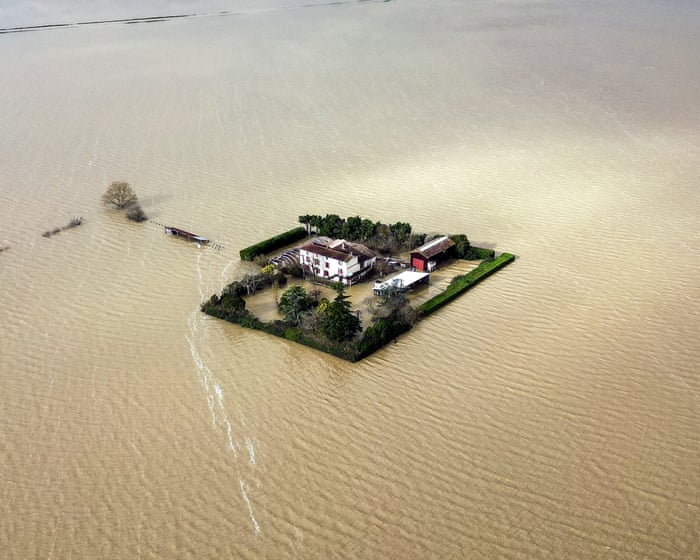
Francisco Zea Bravo, a math teacher involved in a book club and a rock band, and Antonio Morales Serrano, who owned a popular café and ice cream parlor, had dined with friends in Málaga on Saturday, December 27th. As they drove back to Alhaurín el Grande that night, heavy rain transformed the normally calm Fahala River into what the mayor later described as an “uncontrollable torrent.” Police discovered their overturned van the following day. After a distressing search, their bodies were recovered.
“We are accustomed to some flooding. Not a lot,” said Conchi Navarro.The headteacher of Los Montecillos secondary school, whom Zea Bravo was supposed to succeed upon her retirement at the end of the school year, said, “But since December, these borrascas [low-pressure storms] have come one after the other.”
For weeks, the quiet fallout of a broken climate has echoed around western Europe—a book club missing a member, a rock band without a bassist, a cafe lacking a pastry chef. The back-to-back storms that battered Spain have killed at least 16 people in neighboring Portugal. Soils across France have reached unprecedented saturation, with weather forecasters issuing flood alerts demanding “absolute vigilance.” Parts of the UK have broken records for the number of consecutive rainy days.
This is Europe’s new reality: underwater in winter, withered in summer. Yet even as weather extremes worsen, the voices of denial have grown louder and more influential.
“We’re moving toward self-destruction of the planet,” said Navarro, adding that at 60, she has witnessed the effects of climate change firsthand. “It’s not something ‘they’ told me; it’s something I’ve seen. How can anybody say this is an invention?”
The answer, particularly in the U.S., comes with breathtaking ease. President Donald Trump has ramped up his attacks on climate policy in recent weeks—withdrawing from the Paris Agreement again and repealing findings that underpin pollution controls—while promoting his “drill, baby, drill” policy globally. U.S. Energy Secretary Chris Wright, a former fracking executive, has pressured Europe to roll back methane standards and sustainability rules that could threaten American exports of liquefied natural gas. On Wednesday, he urged analysts at the International Energy Agency to “drop the climate” from its models.
Even in Europe, where polls show citizens overwhelmingly accept climate science and support action to stop planet-heating pollution, a quiet but deadly form of denial has emerged.
Far-right parties have gained ground across the continent, making fighting climate policy—aided by the fossil fuel-funded U.S. think tank, the Heartland Institute—their second priority after immigration. Centrist leaders, alarmed by their success and eager to placate polluting industries, are rolling back green rules with a vigor that has surprised even some lobbyists. This month, ahead of a meeting in Antwerp between European Commission President Ursula von der Leyen and business leaders, the EU’s carbon price—the cornerstone of its pollution-cutting efforts—found itself targeted by the powerful chemical industry.
All the while, evacuation alerts light up phones and rivers burst their banks as new storms form before the waters from the last have receded. Meteorologists named the storms that started the season in southern Europe in October and November: Alice, Benjamin, and Claudia. David, Emilia, and Francis led to a wet December. In January, five storms struck in quick succession—Goretti, Harry, Ingrid, Joseph, and Kristin—while February saw just as many—Leonardo, Martha, Nils, Oriana, and Pedro—in the first two weeks alone. The season is one storm shy of the record 17 that hit in 2023-24, with forecasters reaching the second half of the alphabet in far less time.
The storms lashing the Iberian Peninsula and the relentless rains in the UK result from a southward shift in the jet stream—a conveyor belt of fast-moving air—which has coincided with high pressure over northern Europe, blocking weather systems in place. Global heating amplifies these patterns.Warm air holds more moisture, which worsens the damage. When heavy rain falls on already saturated ground that hasn’t had time to dry, the risk of flooding skyrockets.
Scientists say European governments are ignoring the scale of the threat. Christophe Cassou, a climate scientist at the French National Centre for Scientific Research, stated that the recent flooding in France was unprecedented in its extent, caused by record-breaking rainfall since the beginning of the year.
“What is surprising is that the authorities are surprised by such an outcome,” he said. “We are not experiencing the worst possible scenario, but simply a probable one, entirely within the range of what climate simulations predict.”
In Spain, the consequences of such neglect are still fresh. On October 29, 2024, Empar Puchades listened to a lunchtime press conference where the president of Valencia claimed the storm over the region would soon pass. Puchades, a 70-year-old former healthcare worker, remained uneasy. She checked official weather data, concerned by the rainfall volume. Aware she lived on flat farmland in a heavily urbanized area, she called a friend in a village on higher ground, who warned her an “unimaginable flood” was coming.
Puchades alerted her neighbors and asked her middle son to avoid working the night shift. He insisted he had to cover for a colleague and left early instead. “If my son had left at his usual time, he would have been caught in the full force of the water,” she said.
The floods that evening killed 229 people in Valencia. The disaster sparked public outrage at authorities for delayed warnings and highlighted the harm fossil fuel pollution is causing even in wealthy nations. A study published in Nature Communications found that global heating increased the intensity of the rain by 21% and expanded the area receiving over 180mm of rain by 55%.
When the floods hit, Puchades took her dog upstairs and opened the shutters to see a wall of water—”not very high, but full of debris, making a strange noise with an unrecognizable smell”—approaching her home. It came slowly at first, then quickly. “I will always remember how fast it was,” she said.
Spain’s lack of preparedness mirrors Germany’s experience three years earlier, when climate-amplified rains killed 134 people in the Ahr valley after failed warnings. These disasters are among many that have led the EU’s scientific advisers to criticize Europe’s efforts to adapt to a hotter planet as “insufficient, largely incremental, and often coming too late.” In a recent report, they urged officials to prepare for a world 2.8–3.3°C hotter than pre-industrial levels by 2100—double the target set in the 2015 Paris Agreement—and to stress-test even hotter scenarios.
Maarten van Aalst, a member of the European Scientific Advisory Board on Climate Change and head of the Dutch meteorological agency, said climate risks would rise rapidly under such warming, but Europe still has a choice in how to manage them.
“Even with the milder but significant warming we’ve seen so far, we’re already experiencing extreme events that surprise us and kill people, events that might have been less deadly with better preparation,” he said. “I hope we will not reach 3°C… but there’s a significant chance the world at large will not meet its targets.”
Temperatures are inching closer to the 1.5°C threshold. The world has already warmed by about 1.4°C since pre-industrial times.Global temperatures have already risen 1.2°C above pre-industrial levels, and few experts believe the goal of limiting warming to 1.5°C is still achievable. As the impacts intensify, climate scientists emphasize that “every fraction of a degree” of further warming carries significant consequences.
Navarro, who once relied on Zea Bravo for support when school pressures grew overwhelming, said she will cherish his talkative nature and soothing demeanor. The school held a memorial for him in early January when the new term began, an event that left students quiet and still. After the “terrible” first two weeks following the floods, she noted they had started to heal.
“Now we wait for the summer fires.”
Frequently Asked Questions
FAQs Europe and the Climate Crisis
BeginnerLevel Questions
What does in a state of denial mean in this context
It means that despite overwhelming scientific evidence there is a tendency in European politics media and public discourse to downplay the severity urgency or consequences of the climate crisis or to believe that current efforts are sufficient when they are not
Isnt Europe a global leader on climate action
Yes in many ways Europe has some of the worlds most ambitious climate laws like the European Green Deal However leadership can sometimes mask internal contradictions policy gaps and a failure to meet its own targets fast enough which is what the criticism often focuses on
What are some examples of Europe ignoring the crisis
Examples include continuing to subsidize fossil fuels approving new fossil fuel infrastructure slow progress on insulating buildings intense lobbying from industries weakening climate laws and political campaigns that avoid discussing the necessary scale of change to avoid voter backlash
What is the climate crisis exactly
It refers to the serious and urgent problems caused by humanmade climate change including more frequent and severe heatwaves droughts wildfires storms flooding and sealevel rise which threaten ecosystems food security and human societies
Advanced Practical Questions
If Europe has the Green Deal how can it be in denial
The Green Deal is a crucial framework but denial can show up in its implementation This includes setting longterm targets without sufficient shortterm action making exceptions for powerful sectors relying on future technological fixes like carbon capture and failing to adequately address issues like consumptionbased emissions and agricultural reform
How does Europes climate policy conflict with its economic and energy security goals
This is a core tension For example after Russias invasion of Ukraine Europe rushed to secure alternative fossil fuel supplies locking in new infrastructure Theres also fear that stringent climate rules will harm competitiveness leading to policies like the Carbon Border Adjustment Mechanism to protect domestic industries
What role does media and public discourse play in this denial
Media often frames climate action as a cost rather than an investment gives disproportionate space to climate skeptics for balance and fails to connect extreme weather events directly to climate change Public discourse can focus on individual responsibility over systemic