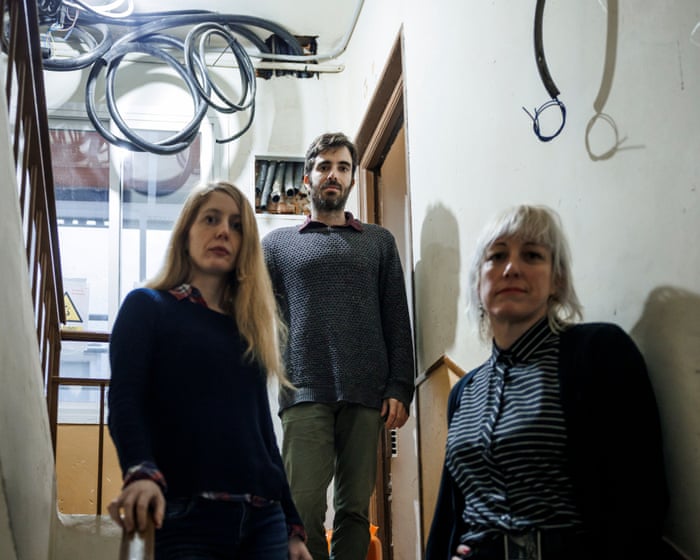
Two years ago, when the Madrid apartment building Jaime Oteyza had called home since 2012 was sold to an investment fund, a local tenants’ union quickly warned him what was coming.
First, the union said, all tenants would be told their rental contracts would not be renewed, no matter when they expired. Then, as the roughly 50 families in the building figured out their next steps, a series of construction projects would likely begin, increasing the pressure on them to leave.
“One by one, everything the union described started happening,” said Oteyza. “Construction work was the weapon they used to make our lives impossible—power cuts, leaks, constant noise, drilling through walls, ceilings collapsing onto stoves.”
Housing activists say this pattern is repeating across urban Spain, as investors look to profit from the country’s booming housing market. The goal is straightforward: to push out long-term tenants quickly and replace them with more lucrative tourist, short-term, or luxury rentals.
This practice has become known nationwide as acoso inmobiliario, or real estate harassment. It describes the many tactics used to deliberately worsen living conditions, forcing tenants to end their contracts voluntarily.
But within one ordinary building in Madrid’s Lavapiés neighborhood, tenants may have found a way to fight back.
Last year, a dozen residents, including Oteyza, took their case to court, arguing the construction was intended to coerce them into leaving early. In late 2023, a Madrid court agreed to hear the case, launching what housing campaigners call the country’s first preliminary investigation into real estate harassment.
For the building’s residents, this groundbreaking case has added another layer of complexity to their ongoing struggle. “It’s bittersweet,” said Cristina Gómez, who has lived there since 2020. The court’s decision was “reassuring, because it confirmed we’re not just imagining things,” she said. “But at the same time, this comes from a lot of suffering. It’s a terrible situation for everyone.”
The construction started in November 2022. As the work caused flooding in some apartments and made parts of the building inaccessible, residents saw it as a clear attempt by the new owners to avoid the costlier, slower process of evicting them individually through the courts.
The tenants said they tried to negotiate with the new owners—even offering at one point to buy the building for the same price the investment fund paid—while the company offered some tenants a few thousand euros to help them relocate.
“They were very tough, very long conversations,” said Gómez. “At no point did they accept anything other than us leaving the building.”
Noise levels soared as drills and jackhammers operated and rubble was cleared, said Oteyza. For those home during the day, it was a form of “psychological torture.” “It’s really difficult to live with that noise, eight hours a day, day in and day out.”
As a father of two young children, Oteyza also constantly feared for their safety. “There’s a real worry that there will be an accident,” he said. “A power tool left plugged in on the landing, or a hole left open in the courtyard. These are dangerous situations.”
As one tenant, who asked to be identified only as Nani, put it,“We’re resisting and we’ll continue to resist, but it’s really difficult,” she said. “But we have to do it—it can’t be that those with money can come and buy and sell buildings without caring about the lives of the people inside.”
On at least five occasions, police and firefighters were called to the building as tenants dealt with the fallout of construction work. About 15 months after it began, residents say roughly half of the tenants have chosen to leave.
Nani points out problems in the building caused by the work. Photograph: Pablo Garcia/The Guardian
This situation reflects what is playing out across Spain, said Alejandra Jacinto, a lawyer with the tenants’ union who helped draft the pioneering legal challenge. “From sending in eviction companies to carrying out construction works that cause damage, to putting glue in people’s locks, real estate harassment is a tool that is increasingly being used,” she said.
Both the legal challenge and the court’s decision to launch a preliminary investigation were trailblazing steps pushing back against this trend, she added. “I think it’s already sending a message that there’s no impunity and that not everything goes. You can’t act outside the law to achieve your goals.”
The court battle had made headlines across the country, offering a glimmer of hope as many in Spain struggle with soaring housing costs.
In January, campaigners in Barcelona announced that a local court had become the second to admit a case alleging real estate harassment. The case argues that the new owners of a five-floor building left tenants without a working lift for more than a month, stranding elderly tenants and those with mobility issues, including a wheelchair user, in an effort to force them out.
In Madrid, weeks after news broke of the court’s investigation, tenants said it had already had an impact. “Curiously enough, we noticed that when the case made headlines, they continued working but in a more orderly, systematic way and respecting noise levels,” said Oteyza.
Scaffolding has been erected as part of the work. Photograph: Pablo Garcia/The Guardian
In a statement to the Guardian, a legal representative for the building’s owner said the construction work aimed to improve accessibility, reinforce the building’s structure, and renovate the roof, calling these “essential measures to ensure the safety and habitability of the property.” The company said it had all necessary permits for the work.
The spokesperson said agreements had been reached with more than 30 tenants in the building, showing their “commitment to dialogue and the search for mutually agreed upon solutions.”
It added: “Aware of the inconvenience that this type of work can cause, and to minimise the impact on residents’ lives, the owner has offered alternatives from the outset to those directly affected, providing options for temporary relocation to other homes and accommodation adapted to their needs.”
At the building in Lavapiés, the tenants were bracing for a legal battle that could stretch on for months, if not years. But for Gómez, it was an absolute necessity. “What’s happening to us is something that occurs every day, all around us,” she said. “I think we need to show them that we’re willing to enforce the law, that we know our rights and are going to assert them.”
In a country where average rent has doubled in the past decade, it also felt like the only option, she added. “It’s not like I can just go somewhere nearby or to another neighbourhood—it’s impossible. So where does one go?”
Frequently Asked Questions
FAQs Psychological Torture Tenant Harassment in Spain
Basics Definitions
1 What is psychological torture in the context of Spanish housing
It refers to a sustained deliberate campaign by a landlord or entity to make a tenants life unbearable forcing them to abandon their home Its often called acoso inmobiliario
2 What does housing harassment actually look like
It includes illegal cutoffs of water electricity or gas constant unjustified visits or threats refusal to do essential repairs verbal abuse and changing locks illegally
3 Is this kind of harassment actually illegal in Spain
Yes While psychological torture is a strong descriptive term the behaviors constitute illegal harassment Specific laws against acoso inmobiliario vary by region and actions often violate tenants fundamental rights to housing and privacy
Rights Recognition
4 How do I know if Im being harassed or just having a bad landlord
The key is a pattern of deliberate escalating actions intended to pressure you to leave especially if your tenancy is protected by an old belowmarket rent contract
5 What are my first steps if I think Im a victim
1 Document everything Keep a detailed log with dates times and evidence
2 Formally communicate Send a burofax to your landlord stating the issues and demanding they cease
3 Seek immediate help Contact a tenants union or a local housing office
6 Can I stop paying rent if Im being harassed
No this is very risky Withholding rent without a court order can be grounds for eviction Always seek legal advice before taking any action that breaks your contract
Taking Action Legal Paths
7 Who can I report this to
Police File a report for coercion threats or illegal entry
Regional Housing Authorities They can investigate and sanction landlords