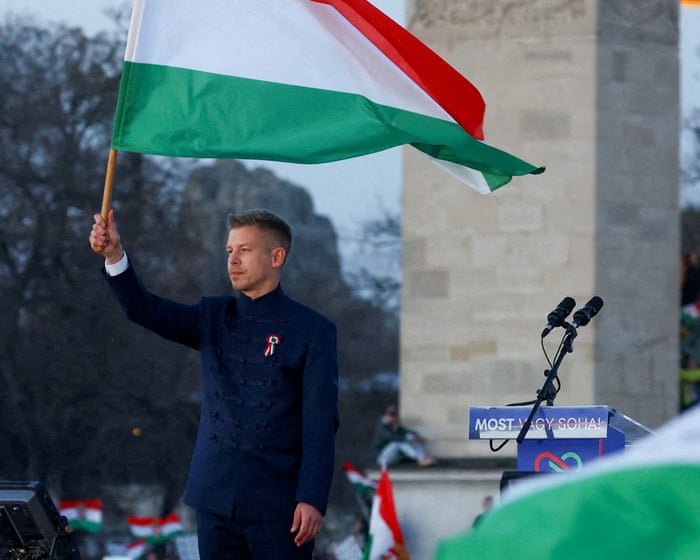
Growing up in Budapest, Péter Magyar had a poster of Viktor Orbán—then a leading figure in Hungary’s pro-democracy movement—hanging above his bed. Orbán was one of several political figures decorating his room, Magyar recalled on a podcast last year, reflecting his excitement about the changes reshaping the country after the fall of communism.
Now 45, Magyar is at the forefront of what could become another major political shift in Hungary: the potential removal of Orbán, whose 16 years in power have turned the country into what some call a “petri dish for illiberalism.”
Few could have foreseen Magyar’s rapid ascent with his Tisza party. “He has built an opposition movement at an amazing speed,” said Gábor Győri of the Budapest-based think tank Policy Solutions. “Never in post-transition Hungary have we seen a party rise this quickly.”
Those who know Magyar often describe him with a mix of admiration and criticism. Many applaud the powerful movement he has built and the discipline he demonstrates as he travels across the country, delivering up to six speeches a day. At the same time, they note he can be short-tempered and sometimes abrasive.
Others see him as the right person for this pivotal moment. “Like all politicians, he can be a difficult person,” said Tamás Topolánszky, a filmmaker who spent the past 18 months following Magyar for a documentary about broader changes in Hungarian society. Topolánszky described Magyar as authentic and passionate, though occasionally impatient. “I think Hungarians now see that this kind of energy was necessary to get us to this point.”
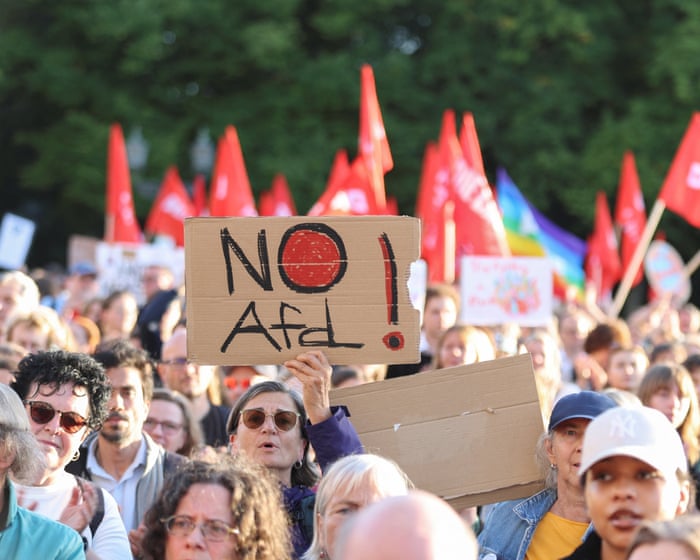
Through his camera, Topolánszky watched Magyar visit villages and towns across Hungary, gradually breaking through the apathy that had long defined the country’s politics. “The energy at these rallies was something I’ve never experienced before,” he said.
Magyar’s rise is all the more striking given his deep ties to Orbán’s Fidesz party. He has spent much of his life moving within its elite circles, counting figures like Gergely Gulyás, Orbán’s chief of staff, among his close friends. In 2006, he married Judit Varga, a former Fidesz justice minister. Magyar also served as a Hungarian diplomat in Brussels and held senior roles in state institutions.
He burst into the spotlight in 2024 after it was revealed that Orbán’s government—which had long built its brand on defending Christian families and protecting children—had pardoned a man convicted of helping cover up a child sexual abuse scandal. Varga, by then Magyar’s ex-wife, resigned along with Hungary’s president, Katalin Novák.
Magyar responded with a fiery social media post accusing Fidesz officials of scapegoating the two women, or as he put it, “hiding behind women’s skirts.”
He continued to speak out, shaking Hungarian society as a prominent insider exposing what he called a corrupt system. In his telling, Fidesz was a “political product” marketed to citizens while officials enriched themselves and consolidated power at the expense of ordinary Hungarians.
This message struck a chord, especially as many Hungarians struggled with rising living costs, deteriorating public services, and stagnant wages. After an estimated 35,000 people attended his first rally in Budapest, his movement gained momentum, drawing large crowds across the country and challenging Fidesz’s long-held dominance.In March 2024, Péter Magyar launched his political movement after a protest he led drew thousands. While his background as a former Fidesz member initially captured public interest, it has also complicated his new political career. In the documentary Spring Wind by Topolánszky, Magyar was asked, “Who are your friends now?” After a pause, he replied, “That’s a good question. It’s hard to say whether you have real friends in a situation like this.”
Although many across Hungary have enthusiastically supported Magyar and his Tisza party, some of his own voters remain skeptical. Anita, a 33-year-old from Kecskemét, said while walking her dog, “Magyar is not a saint, but Fidesz needs to go.” She admitted her vote for Tisza was a gamble, driven by a desperate hope that Magyar would prove fundamentally different from other Fidesz members. However, she felt she had no other choice, citing rampant corruption that has made Hungary the most corrupt country in the EU, diverting funds from public services and leaving ordinary Hungarians struggling. “Anything is better than this quiet death,” she said.
Topolánszky views Magyar’s unusual background as an asset, making him relatable in a country where the government’s deep influence over local politics, culture, and universities has left many afraid to speak out. “He’s an inside man who gave up everything—all the benefits—of going along with Fidesz,” the filmmaker said.
Despite over two years of campaigning and a 240-page election manifesto, the specifics of what Magyar would do in power remain vague. This is largely by design: he has run a tightly controlled campaign, sticking to his message to avoid giving material to the estimated 80% of Hungarian media controlled by Fidesz loyalists. “He is very much a dark horse,” said Győri. “We don’t know much about him.”
With the exception of migration—where he has vowed to take a harder line than Orbán by scrapping Hungary’s guest worker scheme—Magyar has committed to dismantling many of the most problematic aspects of Orbán’s agenda. He promises to restore democratic checks and balances, repair relations with the EU to unlock frozen funds, and crack down on corruption. He has also pledged to end dependence on Russian energy by 2035 while pursuing “pragmatic relations” with Moscow.
On Ukraine, Magyar would continue Orbán’s opposition to sending arms or fast-tracking EU membership for Kyiv. Still, Győri noted that resetting Hungary’s relationship with the EU wouldn’t require much: “I think what people underestimate is that if Hungary stops vetoing vital EU action in the European Council, that’s a major breakthrough. You don’t have to have Péter Magyar go out and say, ‘We’re enthusiastic about helping Ukraine or everything the EU does.'”
On other key issues, such as Orbán’s efforts to ban Pride events, Magyar has remained silent. “So gender and sexual minorities, he just doesn’t address,” said Győri. “Everybody assumes that he will be a lot friendlier on these issues than the Fidesz government was, and it’s probably true, but he just doesn’t talk about them. So this is speculation.”A major question hanging over the campaign is what a government led by Péter Magyar’s Tisza party could actually accomplish if it wins the election. After 16 years in power, Fidesz has filled the Hungarian state, media, and judiciary with loyalists; how these institutions would respond to a potential change in government remains unclear.
Furthermore, amending the constitution and key laws requires a two-thirds parliamentary majority. This means Tisza’s ability to transform Hungary could be limited even with a victory, should it fall short of that supermajority.
Despite these uncertainties, Hungarians have rallied to Magyar in huge numbers, according to Ákos Hadházy, an independent MP and longtime critic of Orbán. For many in the country, Magyar—flaws and all—now represents the best hope for rolling back the profound changes enacted by Orbán and his Fidesz party.
“When it comes to Péter Magyar, there are both question marks and exclamation marks,” Hadházy said. “But Hungarian society has accepted this.”
Frequently Asked Questions
Of course Here is a list of FAQs about Péter Magyar reflecting the questions people are currently asking in Hungary and abroad
Beginner Background Questions
1 Who is Péter Magyar
Péter Magyar is a former government insider and lawyer who has become a prominent opposition figure in Hungary He was previously married to Judit Varga a former Justice Minister and held positions in stateowned companies
2 What is his political movement called
His movement is called TISZA
3 Why is he in the news now
He gained national attention in early 2024 by publicly breaking with the ruling Fidesz party releasing recordings that alleged highlevel corruption and launching a movement that quickly gained significant popular support ahead of the European Parliament elections
4 What is his main message
His core message is anticorruption and the need for a complete change of the political elite criticizing both the longruling Fidesz party and what he sees as a failed fragmented opposition
Policy Position Questions
5 What are his main political goals
He advocates for restoring the rule of law eliminating systemic corruption reforming state institutions to be independent and improving Hungarys standing with the European Union
6 Is he leftwing or rightwing
His movement is difficult to place on a traditional leftright spectrum It focuses on centrist populist themes like justice anticorruption and national sovereignty aiming to attract voters from across the political divide who are dissatisfied with the current government
7 What is his relationship with the EU
He is proEuropean but critical of the current Hungarian governments conflicts with EU institutions He aims to secure EU funds by restoring trust and meeting ruleoflaw conditions positioning himself as a pragmatic partner for Brussels
8 How does he differ from other opposition parties
He presents himself as a completely new force untainted by past opposition failures He criticizes existing parties for being too focused on Budapest and for internal squabbles promising a new unified national movement
Practical Electoral Questions
9 How popular is he
Recent polls for the European elections show his TISZA movement in a strong second place behind the ruling FideszKD