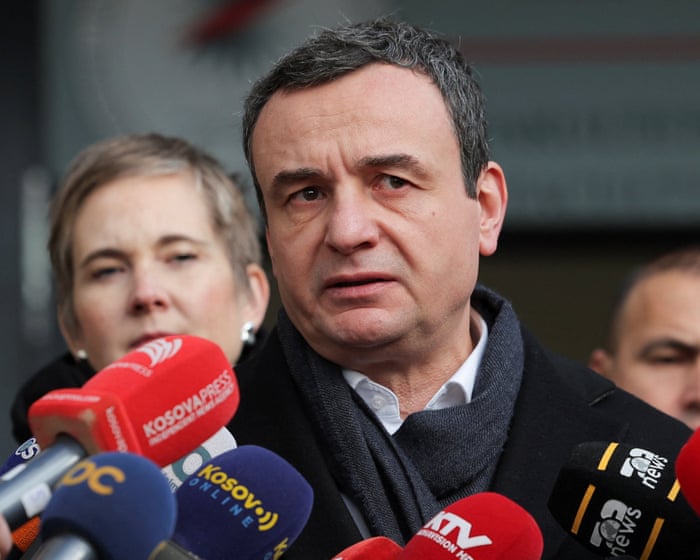
Voters in Kosovo are heading to the polls in an early parliamentary election, aiming to resolve a political stalemate that has paralyzed the small Balkan nation for most of this year.
The snap election was called after Prime Minister Albin Kurti’s ruling Vetëvendosje (Self-Determination) party could not form a government despite winning the most votes in a February 9 election. This marked the first time Kosovo has been unable to establish a government since declaring independence from Serbia in 2008, following the 1998-99 war that ended with a NATO bombing campaign.
While Kurti’s party is again the frontrunner, it remains uncertain whether it can secure a majority in the 120-seat parliament, as other mainstream parties have refused to form an alliance. Under Kosovo’s election laws, 20 seats are automatically reserved for ethnic Serb representatives and other minority parties.
Another inconclusive result would deepen the ongoing crisis. Kosovo has yet to approve a budget for next year, raising concerns about further damage to the already struggling economy of this nation of 2 million people.
Lawmakers are also due to elect a new president in March, as President Vjosa Osmani’s term ends in early April. If that process fails, another snap election would be required.
The main opposition parties—the Democratic League of Kosovo and the Democratic Party of Kosovo—have accused Kurti of authoritarian tendencies and of straining relations with Kosovo’s U.S. and European Union allies since he took office in 2021.
Kurti, a 50-year-old former political prisoner under Serbian rule, has adopted a firm stance in EU-mediated talks on normalizing relations with Belgrade. In response, the EU and U.S. have imposed punitive measures. He has also pledged to purchase military equipment to enhance security.
No reliable pre-election polls have been released. In the previous election, Kurti’s party won about 42% of the vote, while the two main rival parties together secured around 40%. Analysts note that even minor shifts in support in Sunday’s vote could decisively influence the future balance of power, though the outcome remains unpredictable.
Ilmi Deliu, a 71-year-old pensioner from the capital, Pristina, expressed hope that the election would bring change, warning, “otherwise we will end up in an abyss.” He added, “Young people no longer want to live here.”
Tensions with restive ethnic Serbs in northern Kosovo flared into clashes in 2023, injuring dozens of NATO-led peacekeepers. In a positive development, ethnic Serb mayors peacefully assumed power there this month following municipal elections.
Kurti has also agreed to accept third-country migrants deported from the U.S. as part of stringent anti-immigration measures from the Trump era. Authorities told the Associated Press that one migrant has arrived so far.
Kosovo has one of Europe’s weakest economies and is among six Western Balkan countries aspiring to join the EU. Both Kosovo and Serbia have been told they must normalize relations before progressing toward membership.
Frequently Asked Questions
Of course Here is a list of FAQs about Kosovos snap elections designed to answer questions from basic to more detailed
BeginnerLevel Questions
1 What are snap elections
Snap elections are general elections that are called earlier than scheduled They usually happen when a government collapses faces a major crisis or loses the confidence of the parliament
2 Why is Kosovo holding snap elections now
Kosovos government lost a noconfidence vote in parliament leading to its collapse The snap elections are an attempt to form a new stable government and resolve the ongoing political deadlock
3 When are the elections happening
The snap parliamentary elections are scheduled for February 14 2021
4 Who can vote in these elections
Citizens of Kosovo who are 18 years or older on election day and are registered to vote
5 Whats the main goal of these elections
The primary goal is to elect a new parliament which will then form a new government This is seen as a way to break the political stalemate address public concerns and move forward with governance and key policies
Intermediate Advanced Questions
6 What caused the political crisis in the first place
The crisis stemmed from a combination of factors public dissatisfaction with the governments handling of the COVID19 pandemic allegations of corruption and internal disputes within the ruling coalition that led to the loss of its parliamentary majority
7 Which are the main political parties running
The main contenders typically include
Vetvendosje The party that led the previous government
Democratic Party of Kosovo A major opposition party
Democratic League of Kosovo Part of the former ruling coalition
Alliance for the Future of Kosovo Another key opposition party
Serb List The main party representing the Serbian community in Kosovo
8 What are the key issues being debated in this election
Key issues include
Corruption and Rule of Law Fighting corruption and strengthening judicial independence