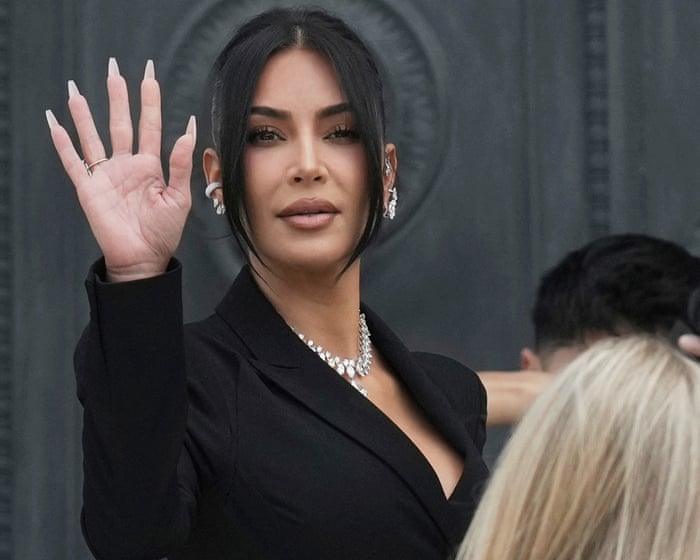
The pro-European, centre-right leader Péter Magyar has been sworn in as Hungary’s prime minister, officially ending Viktor Orbán’s 16-year hold on power.
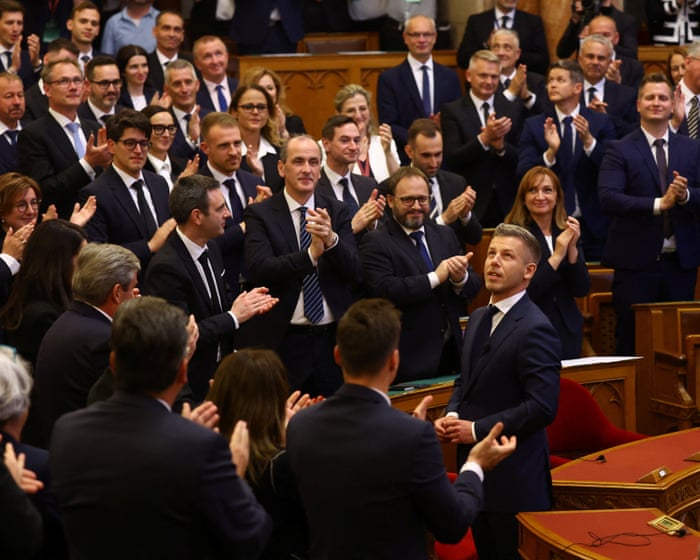
Saturday’s ceremony—where Magyar invited people to join him in “writing Hungarian history” and “stepping through the gate of regime change”—took place a month after his opposition Tisza party won a landslide victory in parliamentary elections.
The result sparked celebrations in Budapest and beyond, as Orbán and his populist, nationalist movement had long been held up by the global far right as a model to follow.
Early on Saturday, people began gathering in the square outside the country’s neo-Gothic parliament to watch the inaugural session on large screens. Every time Magyar appeared, the crowd cheered, while some booed lawmakers from Fidesz and the far-right Our Homeland party.
Many in the crowd had traveled for hours to be there. “This is the first time I feel good about being Hungarian,” said Erzsébet Medve, 68, who came from Miskolc in northeastern Hungary. “I feel like I could cry.”
As a school teacher, she had long watched in frustration as Orbán and his Fidesz government left the education system underfunded. “The government had enough money, but they didn’t spend it on schools.”
Sitting next to her, Marianna Szűcs, 70, said she hoped Hungary would become a more livable country. “Now we feel like our children and grandchildren have a future here.”
As she spoke, the crowd behind her erupted in cheers when the newly elected speaker of the house, Ágnes Forsthoffer, announced that the EU flag would be returned to the building after being taken down by Fidesz in 2014.
Szűcs said two of her children had to move abroad. Both lost their jobs, seemingly after she spoke out against the Fidesz government. “Now we hope they’ll be able to come home.”
The landslide victory—where Tisza won 141 seats in the 199-seat parliament—was a stunning outcome for Magyar, who until recently was a little-known former member of Fidesz’s elite. He burst into public view in early 2024 after turning on the party, exposing the inner workings of a system he described as corrupt and accusing officials of expanding their power and wealth at the expense of ordinary Hungarians.
The new parliament marks the first time since Hungary’s democratization in 1990 that Orbán—whose decades-long career saw him shift from pro-democracy activist to a Russia-friendly figure praised by the US MAGA movement—will not sit in parliament. Late last month, Orbán, 62, said he would instead focus on reorganizing his movement.
Magyar, 45, has vowed to use his large majority to undo the systems built by Orbán, who packed the country’s judiciary, media, and state institutions with loyalists as he sought to turn Hungary into a “petri dish for illiberalism.”
Beyond Hungary’s borders, Magyar has also promised to rebuild the country’s long-strained relationship with the EU and work with the bloc to unlock billions in frozen EU funds.
Hints of this change were woven into Saturday’s swearing-in ceremony: several anthems were played, paying tribute to Hungary’s EU membership, its sizable Roma minority, and ethnic Hungarians in neighboring countries.Lawyer Vilmos Kátai-Németh is set to become the country’s first visually impaired minister, taking charge of social and family affairs. More than a quarter of lawmakers will be women – a record high in the country’s post-communist history.
View image in fullscreen
Ágnes Forsthoffer is sworn in as the speaker of parliament. Photograph: Attila Kisbenedek/AFP/Getty Images
This echoed the actions Magyar has taken in the weeks since the election, as he tried to highlight the end of what he called Hungary’s “two-decade-long nightmare.” He promised to suspend broadcasts from state media that acted as Orbán’s mouthpieces, called on Orbán-era appointees to resign, met twice with EU officials, and returned millions of Hungarian forints donated to him by a supporter linked to Orbán.
The task facing Magyar and his government is enormous. His promises to fix the country’s crumbling public services will clash with a stagnant economy and a stubbornly high budget deficit. Meanwhile, it’s still unclear how the many Orbán loyalists in media, academia, and the judiciary will respond to change.
Even so, the mood in Budapest on Saturday was celebratory. At a Tisza booth, crowds lined up to buy party merchandise, while others wandered around waving Hungarian flags.
View image in fullscreen
Crowd gathered outside the Hungarian parliament building. Photograph: Leonhard Föger/Reuters
Even though left-leaning and liberal parties are set to be absent from parliament for the first time since 1990, Budapest’s liberal mayor quickly called on Hungarians to come together to mark the end of Fidesz’s hold on power and honor those who had long stood up to the system.
“Teachers fired, civilians and journalists humiliated, small churches torn apart,” wrote Gergely Karácsony – who has long clashed with Orbán – on social media. “We can finally leave this era behind us – but first, let us remember the everyday heroes and express our gratitude with a farewell to the system.”
Frequently Asked Questions
Here is a list of FAQs about Péter Magyar being sworn in as Hungarys prime minister ending Viktor Orbáns 16year rule
BeginnerLevel Questions
1 Who is Péter Magyar
Péter Magyar is a Hungarian politician and lawyer He was previously a member of the ruling party but later became a leading opposition figure He is now the new prime minister
2 When did Viktor Orbáns rule end
Viktor Orbáns 16year continuous rule ended when Péter Magyar was sworn in as prime minister
3 How did Péter Magyar win the election
He led a coalition of opposition parties and independent candidates under a new political movement promising to restore democratic checks and balances fight corruption and improve public services His campaign gained strong public support
4 What does this change mean for everyday Hungarians
Many Hungarians hope for less government control over the media and courts more transparency in public spending and better relations with the European Union It could also mean changes in how public money is managed
5 Is this the end of Fidesz entirely
No Fidesz is still a major political force and holds many seats in parliament However they are no longer in government so their influence is significantly reduced
IntermediateLevel Questions
6 What were the main reasons for Orbáns defeat after 16 years
Key factors included widespread public frustration with high inflation a costofliving crisis corruption scandals involving government officials and growing international isolation especially from the EU
7 What is the new governments first priority
The new governments first priority is to restart frozen EU funds that were blocked due to concerns over ruleoflaw and corruption They also plan to overhaul the judiciary and media regulatory bodies
8 How will this affect Hungarys relationship with the European Union
Relations are expected to improve dramatically Péter Magyar has promised to align Hungary with EU democratic standards which should unlock the suspended funding and reduce tensions over issues like migration and LGBTQ rights
9 What changes are expected in the media landscape
The new government plans to dismantle the progovernment media conglomerate and ensure public broadcasters are independent Independent journalism and opposition voices are expected to have more freedom