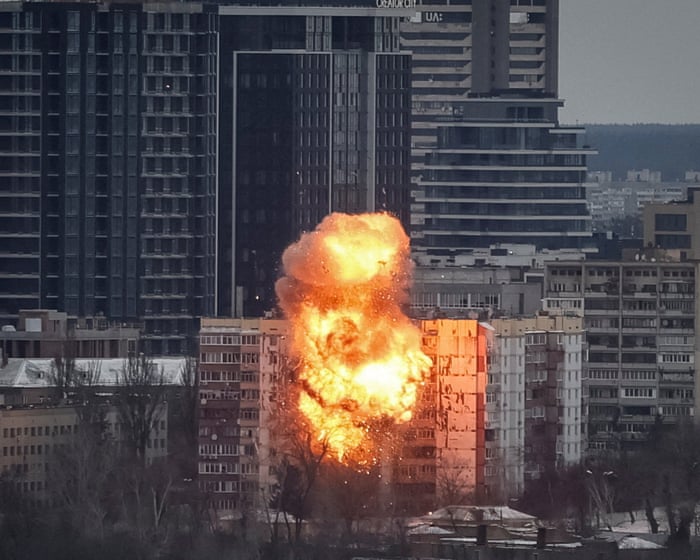
A third of Kyiv lost heating after a Russian drone and missile attack on the capital disrupted power supplies, leaving hundreds of thousands of people in freezing conditions.
Ukrainian President Volodymyr Zelenskyy stated that Moscow used nearly 500 drones and 40 missiles, including ballistic missiles, in the overnight assault. “The main target is Kyiv—energy facilities and civilian infrastructure,” he posted on X.
The intense strikes lasted 10 hours, killing one person and injuring two dozen others. They occurred as Zelenskyy traveled to Florida for a Sunday meeting with Donald Trump, who has proposed a plan to end the nearly four-year war that has claimed tens of thousands of lives.
Zelenskyy said he was on his way to the U.S. and would stop in Canada, where he and Prime Minister Mark Carney would hold a video call with European allies later on Saturday. European and Canadian officials have been working to support Zelenskyy in his dealings with Trump during negotiations.
European Commission President Ursula von der Leyen will join the call, a commission spokesperson said. Key issues include security guarantees and reconstruction for Ukraine, as well as territorial discussions concerning the Donbas region and the Zaporizhzhia nuclear power plant.
Zelenskyy argued that the overnight bombings demonstrate that international pressure on Russia is not enough. “If Russia turns the Christmas and New Year period into a time of destroyed homes, burned apartments, and ruined power plants, then this sick activity can only be met with truly strong steps,” he said. “The United States has this capability. Europe has this capability. Many of our partners have this capability. The key is to use it.”
Zelenskyy described his upcoming meeting with Trump in Florida as “specifically intended to refine things as much as we possibly can.” Speaking on Friday, he added that a proposed 20-point peace plan is “90% ready.” “Our goal is to bring everything to 100%,” Zelenskyy said. “As of today, our teams—the Ukrainian and American negotiating teams—have made significant progress.”
Reports suggest Zelenskyy has said he would need public approval if he fails to secure a strong position on territory.
Following Saturday’s attacks, Ukrainian Foreign Minister Andrii Sybiha stated that Russia’s “only response to peace efforts” was “brutal attacks using hundreds of drones and missiles against Kyiv and other cities and regions.” He noted that a third of the capital was without heating, with temperatures around 0°C (32°F).
The Russian strikes prompted Polish fighter jets to scramble, and two airports in southeastern Poland—Rzeszów and Lublin—were temporarily closed.
The latest peace efforts follow a flurry of diplomatic activity last weekend in Miami, where Trump’s envoy Steve Witkoff met separately with Russian and Ukrainian representatives, along with Trump’s son-in-law Jared Kushner.
The plan is seen as an updated version of an earlier 28-point document agreed upon several weeks ago between U.S. envoys and Russian officials—a proposal widely viewed as favoring the Kremlin’s demands.
Ukraine has sought security guarantees similar to NATO’s Article 5 mutual defense pledge in any peace deal with Russia, though it remains uncertain whether Moscow would accept such terms.
In a Friday interview with Politico, Trump said he expects a “good” meeting with the Ukrainian leader, though he did not elaborate further.Trump withheld support for Zelenskyy’s proposal, stating, “He doesn’t have anything until I approve it. So we’ll see what he’s got.”
Meanwhile, Russian Deputy Foreign Minister Sergei Ryabkov criticized Zelenskyy and European allies over their peace plan efforts during a television appearance on Friday. He emphasized that reaching an agreement would depend on Russia’s own efforts and the political will of the other side. Ryabkov noted that the current proposal, developed with Zelenskyy’s input, differs significantly from earlier points discussed by U.S. and Russian officials this month. He added, “Without an adequate resolution of the problems at the origin of this crisis, it will be quite simply impossible to reach a definitive accord.”
Frequently Asked Questions
Of course Here is a list of FAQs about President Zelenskyys meetings with European leaders amidst new attacks on Ukraine designed in a clear and natural tone
Basics Context
Q Why is Zelenskyy meeting with European leaders right now
A Ukraine is facing intense new Russian missile and drone attacks targeting its energy grid and cities Zelenskyy is urgently seeking more military aid political support and help with reconstruction
Q Which European leaders is he meeting
A He typically meets with key allies like the leaders of Germany France the UK and Italy as well as EU officials in Brussels The specific leaders change based on the summit or urgent diplomatic needs
Q Isnt it dangerous for him to travel during a war
A Yes its a significant security risk His travel plans are kept secret until he arrives These trips are considered vital for Ukraines survival so the risk is deemed necessary
Goals Outcomes
Q What does Ukraine want from Europe at this stage
A Primarily three things 1 More advanced air defense systems to protect cities and infrastructure 2 Longrange weapons to strike Russian logistics and 3 Guarantees on EU membership and funding for longterm stability
Q Whats the immediate ask following new attacks
A The most urgent request is for air defense missiles and systems The recent attacks aim to leave Ukrainians without power and heat so stopping these strikes is the top priority
Q Are these meetings just about asking for weapons
A Not just weapons They are also about solidarity and strategy Showing a united front with Europe is crucial to maintain political pressure on Russia and secure financial support to keep Ukraines government and economy running
Challenges Complexities
Q Why doesnt Europe just give Ukraine everything it asks for immediately
A European countries have to balance their own military stockpiles political consensus at home and concerns about escalating the conflict Each weapons transfer involves complex logistics and training
Q What are security agreements or guarantees that they discuss
A These are longterm bilateral treaties where individual European countries pledge ongoing military support training and cooperation