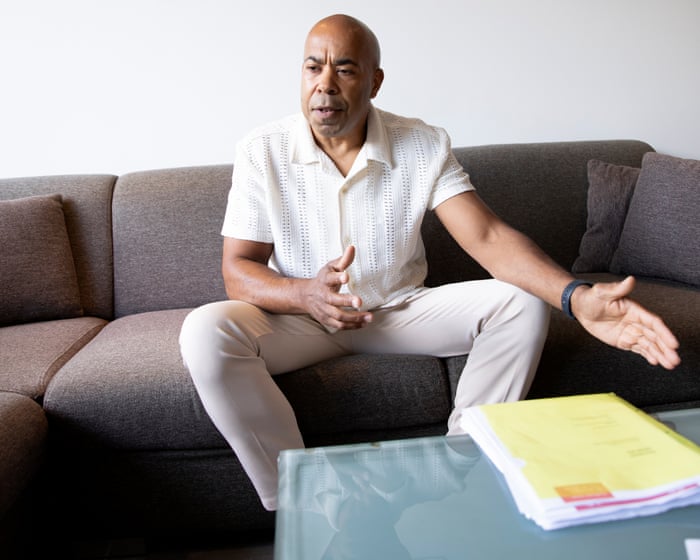
When Henri Duiker went to check on his 12-year-old son and his friend during their first “disco” swim evening alone, he was confused. Instead of being in the water, his son was standing alone by the desk at the Watergeus pool in Zoetermeer, the Netherlands. He didn’t have any ID to prove he was under 13, and pool staff told him he couldn’t swim—even though his friend, who was the same age and size, wasn’t asked for any documents.
As Duiker’s partner watched for 10 minutes, only children of color were asked to prove their age. “She saw that every white child was simply allowed to walk through, and every black child, without exception, was asked for their passport,” Duiker said, reflecting on that Friday evening in 2024. “And if they didn’t have it, they weren’t allowed in.”
Last month, he won a ruling from the Netherlands Institute for Human Rights: the company Optisport Zoetermeer, which runs the municipal pool, had used unlawful racial discrimination. The incident has sparked a reckoning in the city, with council members from three parties asking formal questions about how this could have happened.
It wasn’t an isolated case. Last week, the Dutch football association asked police to investigate online racist abuse aimed at World Cup players. And at an event marking the abolition of slavery, the Dutch prime minister, Rob Jetten, admitted that discrimination and racism are “still systematically present and deeply rooted.”
In Europe and North America, swimming pools have often become focal points for racial tension and exclusion. Last month, an open-air swimming venue in Germany was ordered to lift a ban on bathers who don’t speak German, or face possible legal action.
Duiker’s son was allowed in after he vouched for him, but Duiker said the incident was a reminder of an uncomfortable reality sometimes called the “Dutch paradox”: because of their own widespread rights and freedoms, some people don’t acknowledge that racism exists.
“People act as though the Netherlands is so tolerant,” Duiker said calmly. “Maybe it is… but it’s pretty awful to show children of 10, 11, and 12 that they are not equal. You are showing them that no matter what you do or how you live, you are never the same as a white child.”
Duiker complained to the pool management on the day of the incident. When they dismissed his formal complaint, he contacted the national anti-discrimination helpline, Discriminatie.nl, which referred him to the Netherlands Institute for Human Rights. The institute issues non-binding rulings that can be used in court.
Optisport argued in written evidence and at a hearing that the 10-minute observation period didn’t represent their random checking policy. But in a recent formal apology letter from the CEO, it told Duiker: “The specific control measure applied on the evening of 12 July 2024 was abolished after that date.”
Duiker, who has received hateful messages for speaking out in Dutch media, believes his country needs to take reports of unequal treatment more seriously. “People in the Netherlands act as though things are fine, and the worst part is that when it happens to you, you hardly dare to say anything,” he said. “Because the first thing they say is: ‘Oh, he’s playing the racism card again.’ The people who don’t want to see it are not going to see it.”
In 2019, the UN special rapporteur E Tendayi Achiume was fiercely criticized after describing the “Dutch paradox,” where equality and tolerance are seen as national values, but people of minority ethnic origins are often seen as “neither truly nor wholly Netherlanders.”
Three years later, the then finance minister, Marnix van Rij, admitted that institutional racism played a role in tax office fraud risk selection. This was part of a childcare benefits scandal that falsely accused thousands of parents of fraud.This issue hit families with dual nationality the hardest, according to the government.
In Zoetermeer, a deputy mayor has met with Duiker, and two liberal progressive councillors, Shaniqua Monsels and Yasir el Achkar, are determined to bring this issue to the forefront.
“At first, we weren’t sure whether to address this publicly or behind the scenes,” El Achkar said. “But Duiker made it clear that many more children were being discriminated against, and he wanted it to be visible—to them and to society—that he fought and we all won. We thought that was very powerful.”
The council and the swimming pool management company have accepted the ruling. The municipality of Zoetermeer said in a statement: “We are deeply saddened to hear that a child was treated unfairly, which is completely unacceptable. We are an inclusive city where all residents, especially children and young people, feel welcome, safe, and are treated equally—and where there is no room for discrimination.”
Albert Arp, the CEO of Optisport, said everyone should feel equally treated in the roughly 400 sports facilities his company runs in the Netherlands and Belgium. “We take this ruling seriously,” he said. “In response, we have reviewed our procedures for access and age verification. We believe such checks must always be done carefully, objectively, and in a way that can be verified. We have reached out to the family involved and offered our sincere apologies.”
Duiker would have preferred the apology two years ago, before the political and media attention. “I have Surinamese parents, I am a Dutchman… but 53 years later, I’m still seen as a foreigner by some people,” he said. “This is about my son and all the other children who don’t dare to fight back.”
Frequently Asked Questions
Here is a list of FAQs about the race discrimination case involving a childs swimming lesson and the Dutch paradox
BeginnerLevel Questions
1 What is the Dutch paradox in simple terms
Its the contradiction where the Netherlands is seen as a tolerant progressive country on the world stage but many people of color living there experience everyday racism and discrimination
2 What happened in the swimming lesson case
A child was reportedly denied access to a swimming lesson or treated unfairly because of their race The specific details vary by report but it involved a swimming school or instructor discriminating against a child based on their skin color or ethnic background
3 Why is this one case such a big deal
Its a very clear concrete example of the Dutch paradox in action It shows that discrimination isnt just a theoretical problemit happens to real kids in everyday activities like swimming lessons which is supposed to be fun and safe
4 Is racism a big problem in the Netherlands
Yes many studies and personal accounts show that racism is a significant issue especially in housing employment education and public spaces The Dutch paradox highlights how the countrys selfimage as tolerant can make it harder to address this problem
5 Who was affected in the swimming case
A child from a racial or ethnic minority background The case drew attention because it involved a young child in a seemingly innocent activity
Advanced Deeper Questions
6 How does the Dutch paradox specifically make discrimination worse
It creates a denial effect Because the country prides itself on tolerance people often dismiss or minimize racism when its reported This makes victims feel unheard and makes it harder to prove discrimination in legal or social settings
7 What legal protections exist in the Netherlands against race discrimination
The Dutch Constitution prohibits discrimination The Equal Treatment Commission handles complaints However proving discrimination in court can be very difficult and penalties are often seen as too weak to deter offenders
8 Does this case reflect a wider issue in Dutch institutions
Yes Research shows that discrimination occurs in schools housing and sports clubs