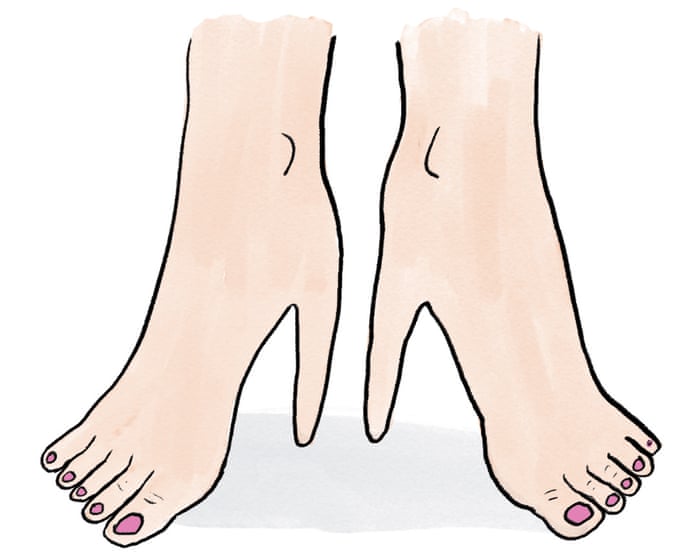
“If you had asked me that 15 years ago, I would have said: ‘Absolute nonsense—it’s all genetics, and shoes aren’t responsible for any problems,'” says Andrew Goldberg, a consultant orthopaedic foot and ankle specialist at the Wellington Hospital in London. But seeing 3D scans of how people’s feet look while standing in their shoes completely changed his mind.
He compared two scans of a person’s feet—one barefoot and one in high heels—and the difference was striking. In the heels, the toes were crowded together, the big toe showed a bunion, and the smaller toes were clawed, gripping for balance.
“You can imagine that after a few hours your feet ache, and once you take the shoes off, your toes go back to normal,” he says. “But if you wear heels eight hours a day, every day, for years, things start to stay in that position.” Over time, the strain causes stretching of soft tissues, bunions, hammer toes—where the toes remain clawed—and eventually, wear-and-tear arthritis.
All shoes, Goldberg explains, influence foot shape to some degree, gradually pushing the toes closer together and narrowing the foot’s profile. Tight or pointed shoes make this worse, and many people wear shoes that are too small for them.
If you wear high heels, Goldberg recommends simple daily foot exercises, such as picking up objects with your toes or walking barefoot on your tiptoes for a minute, to keep your feet flexible and your muscles strong.
Ultimately, he says moderation is key: “If you wear heels for a dinner party, no problem. But don’t wear them all day, every day. The pain you feel at the end of an evening in heels is no surprise—you’re putting a lot of stress on your poor feet.”
Frequently Asked Questions
FAQs Does Wearing Heels Change the Shape of Your Feet
Q1 Is it actually true that high heels can change the shape of your feet
A Yes it can be true Wearing high heels frequently and for long periods can lead to permanent changes in the structure and shape of your feet over time
Q2 How exactly do heels cause these changes
A Heels force your feet into an unnatural position your toes are pushed forward and crammed into the toe box your arch is excessively raised and your body weight is shifted onto the ball of your foot This constant pressure and misalignment can deform bones tendons and ligaments
Q3 What are the most common foot shape changes caused by heels
A The most common issues are
Bunions A bony bump that forms at the base of the big toe
Hammertoes Toes that curl downward instead of pointing forward
Mortons Neuroma A thickening of nerve tissue often between the third and fourth toes causing pain
Pump Bump A bony enlargement on the back of the heel
Q4 Will wearing heels just occasionally cause permanent damage
A Occasional shortterm wear is less likely to cause permanent shape changes for most people However it can still lead to temporary pain blisters and strain The risk of permanent deformation increases with frequency duration and the height of the heel
Q5 Can these changes be reversed
A Earlystage changes like mild inflammation may improve by switching to supportive flat shoes However established bony deformities like advanced bunions or hammertoes are often permanent without surgical correction
Q6 Are some heels worse than others for your feet
A Yes Generally the higher and skinnier the heel the worse it is Shoes with a narrow pointed toe box are also more damaging than those with a rounder wider toe area A thicker lower heel is a better option
Q7 What can I do to minimize damage if I love wearing heels
A