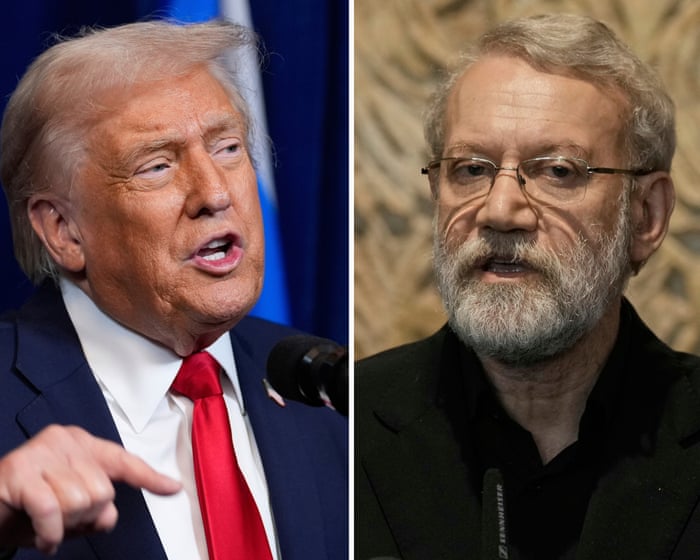
Donald Trump has threatened to intervene in Iran if its government kills protesters, leading senior Iranian officials to warn that any U.S. interference would cross a “red line.”
In a social media post on Friday, Trump stated that if Iran were to shoot and kill demonstrators, the U.S. would “come to their rescue.” He added, “we are locked and loaded, and ready to go,” without clarifying what that might entail.
Protests in Iran have now entered their sixth day, marking the largest unrest since 2022, when the death of 22-year-old Mahsa Amini in police custody sparked nationwide demonstrations. The current wave was triggered by an unprecedented drop in the national currency on Sunday, with the Iranian rial falling to about 1.4 million to the U.S. dollar, worsening an already struggling economy.
Seven people have been killed, including a volunteer for the Basij security force. Videos have shown security forces carrying shotguns, with the sound of gunfire in the background.
In response to Trump’s threat, Ali Shamkhani, an adviser to Supreme Leader Ayatollah Ali Khamenei, warned that Iran’s national security is a “red line, not material for adventurist tweets.”
“Any intervening hand nearing Iran’s security on pretexts will be cut off with a regret-inducing response,” Shamkhani posted on X.
These threats come just days after Trump said the U.S. could strike Iran if it was found to be rebuilding its nuclear program, further escalating tensions between the two countries.
Another senior Iranian official, Ali Larijani, secretary of Iran’s Supreme National Security Council, accused the U.S. and Israel of involvement in the protests—a common claim by officials in response to demonstrations.
“Trump must realize that U.S. intervention in this domestic matter will lead to destabilization of the whole region and the destruction of American interests,” Larijani wrote on X. “The American people must know that Trump is the one that started this adventure, and they should pay attention to the safety of their soldiers.”
Iran has previously threatened to target American soldiers stationed in the Middle East, and in June it attacked Al-Udeid airbase in Qatar after the U.S. struck Iranian nuclear enrichment sites.
The current protests have taken place in Tehran and spread to other cities, such as Isfahan in central Iran. Shopkeepers have closed their stores in protest, and students have occupied campuses to voice their grievances. While economic conditions are the main concern, demonstrators have also chanted anti-government slogans and denounced what they call government corruption and mismanagement.
Iranian President Masoud Pezeshkian initially invited protest leaders for talks, adopting a less confrontational approach than authorities did during the violently suppressed 2022 protests. Pezeshkian said he had instructed the government to listen to the protesters’ “legitimate demands.”
However, the recent deaths of demonstrators could signal that authorities are taking a harder line as protests continue. A statement from the Iranian Revolutionary Guards Corps on Monday warned of a harsh response to any foreign interference or “sedition” in the country.
As Iranian authorities deal with protests at home, they have also tried to counter U.S. accusations that they are reconstituting their nuclear program. Iran has stated that it is no longer enriching uranium anywhere in the country and has signaled openness to negotiations with the West.
Frequently Asked Questions
Of course Here is a list of FAQs about the Iranian officials warning to President Trump regarding the protests structured from beginner to more advanced questions
Beginner Definition Questions
1 What is the red line Iran is talking about
A red line is a figurative boundary that if crossed will trigger a severe and definite response In this case Iran is warning the US not to directly support or intervene in the ongoing domestic protests within Iran
2 Who exactly gave this warning to Trump
The warning came from several senior Iranian officials including military commanders and figures within the Islamic Revolutionary Guard Corps which is a powerful branch of Irans armed forces
3 What protests are they referring to
They are referring to waves of domestic protests within Iran often sparked by economic hardship social restrictions or political discontent The specific context can change but the warning is about any US involvement in Irans internal affairs during such periods
4 What does intervene mean in this context
Intervene could mean the US providing overt moral support material aid cyber support orin the most extreme interpretationany form of military action
Context Motivation Questions
5 Why would Iran issue this warning publicly
Iran does this for two main reasons to deter the US from getting involved by threatening consequences and for domestic propagandato frame the protests as being stirred up by foreign enemies rather than genuine internal dissent
6 What could Irans severe response be
Iran has historically suggested asymmetric responses such as targeting US interests or allies in the Middle East through proxy forces cyberattacks or escalating tensions in strategic waterways like the Strait of Hormuz
7 Is this a new kind of threat from Iran
No its a longstanding principle of Irans foreign policy They consistently declare that foreign interference in their internal matters is unacceptable and will be met with retaliation
8 How has the US or Trump responded to such warnings in the past
Responses have varied Sometimes US officials have issued strong rhetorical support for protesters while stopping short of direct intervention At other times they have imposed new sanctions on Iranian officials or entities
Advanced Strategic Questions