Ter Apel is a quiet Dutch town near the German border that tourists seldom visit. It lacks charming old windmills or cannabis coffee shops, and on a recent trip, it was too early for tulips. When foreigners do arrive, it’s usually for one reason: to seek asylum at the Netherlands’ largest refugee camp, which houses around 2,000 desperate people from across the globe.
Some, like Eritreans and Somalis, are escaping war; Syrians say it’s still unsafe to return home after the fall of Assad. But over the past year, they’ve been joined by an unexpected new group: Americans who say they’ve feared for their lives since Donald Trump returned to the White House.
Their presence puzzles many at the camp. “My dream is to go to America or the UK. America is paradise to me,” said Usama, a 21-year-old Libyan-Algerian lingering by the main gate. “You can work, you can make a million if you have a good idea. Why are they coming here?”
It’s a reasonable question. According to Dutch immigration authorities, 76 Americans applied for asylum in the Netherlands last year, up from nine in 2024. Unlike the UK, the Netherlands doesn’t house asylum seekers in hotels or private homes. Instead, they stay in fenced-off camps—officially called reception centers—scattered around the country.
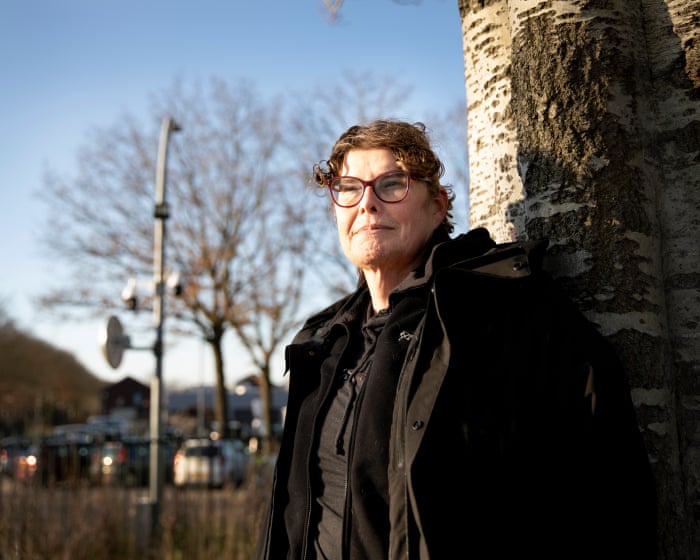
Many of the American refugees, like 47-year-old software engineer Jane-Michelle Arc from San Francisco, are transgender. Last April, she flew into Amsterdam’s Schiphol Airport and, through tears, asked a customs officer how to claim asylum. “They laughed because: what’s this big dumb American doing here asking about asylum? Then they realized I was serious.”
Arc says the U.S. had become so hostile toward trans people that she stopped leaving home “unless there was an Uber waiting outside.” She reported being harassed on the street and in women’s restrooms, and decided to leave after a frightening incident where she believed a woman was trying to run her over with a truck.
The customs officer gave her a train ticket to Ter Apel and told her to report to the Immigration and Naturalisation Service (IND). Her first few days were difficult, confined to a small, graffiti-covered room with what she feared were bodily fluids on the walls. In some ways, she was lucky to be indoors—in recent years, overcrowding has sometimes forced new arrivals to sleep in tents outside.
Ter Apel isn’t a prison, but it resembles one, surrounded by fences with guards at each gate. Residents can come and go but must be in their rooms each morning for bed checks. After an initial stay in the central reception area, asylum seekers are moved to different low-rise blocks, where they receive a small food allowance to cook their own meals.
For Arc, that meant being transferred to what she calls “the queer block”—similar to student housing, where all LGBTQ+ asylum seekers are placed. There, sharing meals in communal kitchens and smoking outside, she found common ground.
She explained that they all feared the police, their governments, and their fellow citizens. “We were in danger from the people around us. And, ironically, all of us had once seen America as a place we wanted to live—a land of opportunity. That’s still true, but it was surprising, sad, and validating to hear stories from a trans man from Tehran and a trans woman from Libya that were so similar to my own.”Arc understands how her decision might appear to others. “I often hear people say, ‘You’re an idiot for coming here from America.’ They’ll ask, ‘Did you ever consider moving to California?’ I tell them, ‘Well, I lived in San Francisco,’ and they respond, ‘Oh, that’s a paradise for gay people.’ But for trans people, especially trans women, it’s different. My experience in San Francisco—aside from the robot taxis—was no different from the experiences of people I knew from Libya, Iran, Morocco, and Algeria.”
Trans men also face danger in the United States, according to Ashe Wilde, another American who has been living in Ter Apel since late October. He transitioned in 2019 and says anti-trans hatred has only increased since then, particularly with Donald Trump’s return to the political scene. Trump was re-elected using an attack ad that stated, “Kamala Harris is for they/them. Trump is for you.”
In his first speech on inauguration day, Trump declared, “As of today, it will henceforth be the official policy of the US government that there are only two genders—male and female.” He signed an executive order denouncing “ideologues who deny the biological reality of sex,” effectively erasing federal recognition of transgender identities.
“That was hugely shocking,” said Wilde, 40. “Massachusetts is one of the most liberal states and one that’s really trying to preserve our identities across the queer spectrum, and I was still met with pushback.” He added that people increasingly equate being transgender with pedophilia. “I was called a pedo and a groomer.” He also claims to have faced physical altercations.
Arc began her transition at the end of 2012, changed her ID to female the following year, and had bottom surgery in Thailand in 2014. However, Trump’s re-election meant the loss of anti-discrimination protections in employment, housing, and healthcare. When her passport expired, a new one would list her as male again. So she left.
“This is the dumbest thing I’ve ever done,” she said in a cafe in Ter Apel. “And I did it because I was afraid for my life. I didn’t do this in secret. I talked to everyone I knew. I said, ‘I’m planning to do this wildly stupid thing.’ Everyone told me, ‘I don’t love this for you, but there is no other option.'”
Ter Apel is not a prison, but it resembles one, surrounded by fences with guards at every gate.
She could have applied for a tech job in the Netherlands and then for a work visa, but that would have taken too long, she explained. Instead, she chose the drastic option of seeking asylum, leaving everything behind to live in a grubby refugee camp. She estimates there are between 35 and 50 other trans asylum seekers from the United States in the Netherlands, though the Dutch government does not keep statistics on transgender applicants.
The chances of Americans being granted asylum are very low, according to Marlou Schrover, a professor of economic and social history at Leiden University who studies the Dutch immigration system.
Schrover explained that the UN refugee convention has very strict conditions. Refugees must not only prove they faced persecution in their home country but also show that they sought help from local authorities and were denied protection. “And after that, you have to see if there is a safe alternative within your country.”
Even being beaten by the police is not sufficient grounds. “Of course, African Americans might say, ‘Look, I’m beaten up in the street by police…'””So I can claim refugee status in the Netherlands based on this. The claim has to be really strong.”
For a claim to succeed, the U.S. would need to start detaining transgender people specifically for their gender identity, explained Shrover. “If the U.S. moves toward imprisoning people, treating them very badly solely because of their gender identity, with no other reason for their imprisonment, then the situation would definitely change.” However, she added, simply denying someone the right to list their chosen gender on a passport is far from sufficient.
Shrover noted that Dutch authorities are also very hesitant to declare the U.S. an unsafe country and risk provoking Trump. They consider: “How will it look? How will the Americans respond? We can’t do this to our most important ally by saying they don’t have a functioning democracy.”
According to the Dutch ministry of asylum and migration, U.S. passport holders are granted asylum only in exceptional cases. A government spokesperson said that in recent years, “a few dozen” children with U.S. passports—mostly dependents of Yemeni, Turkish, and Syrian parents—have received asylum in the Netherlands.
So far, no American has been successful since arriving during Trump’s second term. Among those refused and facing deportation is Lisa Gayle Carter-Stewart, who fled Montana with her 14-year-old transgender child, Nox, last April.
“It was automatically rejected because America is considered a safe country of origin,” said Carter-Stewart. “Nox even told the IND during their interview, when asked what they would do if forced to return to America, ‘I will kill myself.’ None of that was considered in their decision.”
Carter-Stewart shared that Nox has attempted suicide three times at the Ter Apel asylum center. “They are not doing well. Nox stays in our room 24/7. They don’t go outside, not even on sunny days.” Still, she insists Nox does not want to return: “Nox has said they’re glad we’re not in the U.S. anymore.”
Earlier this month, they were moved to a more family-friendly refugee camp near Leiden while awaiting their appeal hearing. “I would love if we got a residence permit, I could work again, and we could return to a normal life,” she said. “I want Nox to feel it’s okay to be themselves and not feel judged every time they walk through a door.”
Trans women fear a terrible fate if returned to the U.S., said Arc. “My guess is that upon re-entering the U.S., we would be detained by ICE or customs, placed in detention with men, leading to us being harmed or killed. The method of execution is incarceration. I don’t think the U.S. government wants to murder me specifically. I think they don’t care if I am murdered, and I believe they think I deserve it if I’m killed in custody.”
For Wilde, a forced return would mean a forced detransition. Access to hormones has already become difficult in the U.S., he explained: “By 2027, there won’t be access via government healthcare, so you’d only have it through private providers. Without hormones, you’re basically forced to detransition. I can’t go back to that… I’ve been free for almost six years. I can’t imagine trying to stuff myself back into the person I used to be… I don’t know about physically, but emotionally, mentally, spiritually, I would absolutely be dead.”
Frequently Asked Questions
FAQs I Feared for My Life Transgender Refugees Escaping Trumps America
Understanding the Basics
What does transgender refugee mean in this context
A transgender refugee is a transgender person who has fled the United States to seek safety and asylum in another country because they faced severe persecution discrimination or violence due to their gender identity particularly during the Trump administration
Why did some transgender people feel they had to leave America
During the Trump presidency numerous policies were enacted or proposed that rolled back protections for transgender people in healthcare the military housing and schools This created an environment where many feared increased violence loss of medical care and statesanctioned discrimination making them feel unsafe and unwelcome in their own country
Which countries did they flee to
Many sought asylum in countries with stronger LGBTQ protections such as Canada New Zealand Australia and several nations in Western Europe
Process and Legal Aspects
How does someone apply for asylum as a transgender person
The process involves proving a wellfounded fear of persecution in their home country based on their membership in a particular social groupin this case being transgender They must apply in the country of refuge providing extensive documentation personal testimony and evidence of the threats they faced
Is it difficult to get asylum approved
Yes it is extremely challenging Applicants must provide compelling evidence that they faced specific serious threats and that their home government was unable or unwilling to protect them The success rate varies significantly by country and individual case
What kind of evidence do they need to provide
Evidence can include police reports medical records documentation of hate crimes or harassment testimonies from friendsfamily records of discriminatory laws or policies and personal statements detailing their experiences and fears
Challenges and Realities
What are the biggest challenges after leaving
Challenges include navigating a complex and stressful legal asylum process potential detention separation from family and community language barriers finding transcompetent healthcare and dealing with trauma and isolation in a new country
Do they face discrimination in their new countries too
While many destination countries have better legal protections transgender refugees can still face social stigma bureaucratic hurdles and difficulties accessing culturally competent services They are not always free from discrimination
Can they ever return to the US
If granted