By January 8, Iran’s anti-regime protests, which began in late December, had spread across the country, with reports indicating that security forces had killed at least 45 people. Over the next three days, the regime appeared to launch a brutal crackdown on protesters, now estimated to have resulted in more than 5,000 deaths.
When I arrived at the hospital in Tehran on the night of Thursday, January 8, the sound of the city had already changed. Just hours earlier, doctors and patients were still sending me photos on WhatsApp—pellet wounds to the back, hands, and head. These were painful and frightening injuries, but survivable. They were the kind of wounds that could be treated, suggesting the violence still had limits. Then, at eight o’clock, everything went dark. Internet, mobile phones, messages, maps—all gone.
Minutes later, the gunfire started. From around 8:10 or 8:20 p.m., I could hear shots echoing through the streets, along with screaming and explosions. I was called into the hospital. By the time I arrived, it was immediately clear that we were no longer dealing with the same situation.
The patients arriving now were not hit by pellets—they had been shot with live ammunition. War bullets. These were not warning shots. These were bullets designed to pass through the body, entering on one side and exiting from the other.
I am a surgeon who mostly deals with torso injuries, and that night, the operating rooms filled with wounds to the chest, abdomen, and pelvis. I did not see injuries to arms or legs—others handled those—but I saw the injuries that determine whether someone lives or dies within minutes. These were injuries with no margin for delay and no room for error. Many of the shots had been fired from close range, causing severe, and in some cases, catastrophic damage.
Very quickly, the hospital became a mass casualty zone. We did not have enough of anything: not enough surgeons, nurses, anaesthesiologists, operating rooms, or blood products. Not enough time. Patients kept arriving faster than we could treat them. Stretchers lined up, and operating rooms were used over and over again.
In a hospital that would normally perform two emergency surgeries in a night, we carried out about 18 operations between 9 p.m. and 6 a.m. When morning came, some patients from that night were still on the operating table.
There was no pause, no moment to step back and assess. You moved from one patient to the next, from one operating room to another. I have worked through earthquakes and seen mass casualties after major accidents, but I have never experienced anything like this. Even in disasters, you might receive 20 or 30 injured patients over several hours. That night, and the night after, it was hundreds: gunshot wounds, severe trauma, one after another.
The exhaustion was total—physical, yes, but even more so, mental. As surgeons, our job is to save lives. That night, we were saving people who had been shot by their own government. That contradiction stays with you. You keep operating because you have no choice, because people are still arriving, because stopping is not an option—but part of you is breaking.
While in the operating room, I heard weapons that do not belong on city streets. I heard the sound of DShK [Soviet-designed] machine guns. Later, I saw them mounted on the backs of pickup trucks moving through the city. I am describing what I heard and what I saw, not what caused specific injuries, but the atmosphere was unmistakable. This was not policing. This was something else.
As the night went on, it became impossible to even think about counting the dead. There was no way to collect accurate numbers. The volume of casualties far exceeded the capacity of the hospitals, the staff, and the infrastructure.People were afraid to come to the hospital. They knew what would happen afterward. From experience, once things are considered “under control,” hospitals get official letters from security agencies demanding patient information—names, details, injuries. If administrators refuse, they face serious consequences. This system existed long before these protests.
During those days, many injured people chose not to come at all. Instead, they called me. My phone rang constantly whenever there was even a brief signal. People spoke in code, terrified the calls were being monitored.
The calls weren’t only about young adult protesters. They were about a 16-year-old child, an elderly man in his 70s, people who had simply been in the street. You didn’t need to be demonstrating to be shot. You only needed to be there.
By Friday morning, I was still in the operating room. Some patients from the night before were still undergoing surgery. Later that day, I had to travel to a city in central Iran. The city I drove through looked wounded. Metro stations were burned or shattered, their slanted glass structures destroyed. A route that normally takes less than 10 minutes took nearly two hours.
When I arrived, the situation was the same: friends working in hospitals there told me the night had been catastrophic. One colleague said the on-call surgeon couldn’t cope and that several doctors had to operate continuously. In one hospital, 13 abdominal and chest surgeries were performed in a single night.
Even private hospitals, where gunshot victims are usually nonexistent, were overwhelmed.
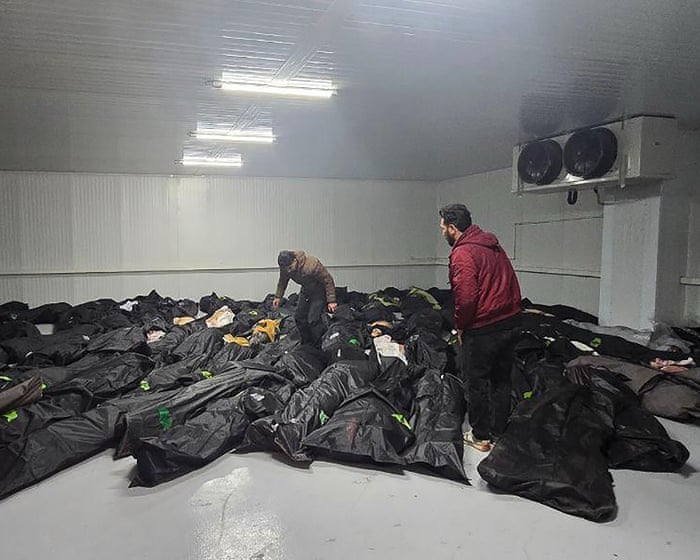
I don’t have official numbers—no one does yet. But I know hospital capacity. When a small hospital that normally sees one death in 24 hours receives eight bodies in one night, when medium hospitals receive 20—people who likely died before reaching the hospital—you understand what is happening. When you know how many hospitals a city has and what their capacities are, you can estimate.
In a city of about 2 million people, I believe more than 1,000 may have been killed in a single night; across Iran, I would estimate more than 20,000. These are purely estimates, based on my experience and bed capacity, not official statistics.
In one street, I saw blood pooled in a gutter, nearly a liter, with a trail stretching several meters along the ground. Someone who loses that much blood doesn’t survive long enough to reach a hospital.
As time passed, the violence escalated step by step. On Thursday night, I heard mostly individual shots. On Friday night, I heard automatic fire.
The level of violence did not resemble policing—it felt like wartime rules applied to civilians.
Families continued to call. Many were terrified not only of their injuries but of what would happen if they sought care. The hospital, which should be a place of safety, had become a place of fear.
The scale of what happened in those days cannot be fully conveyed: the destruction, the volume of injuries, the silence imposed by communication blackouts, the exhaustion of medical staff. The sense that something fundamental had broken.
My words are not enough to describe what happened. But I know this: what took place was far beyond anything the public has been told. And most of it happened in the dark.
Based on testimony given to the Guardian’s Deepa Parent and the Center for Human Rights in Iran. While there have been no formal or official death toll figures, the US-based…According to the Human Rights Activists News Agency, an estimated 5,002 people have been killed. This total includes 4,716 demonstrators, 203 people affiliated with the government, 43 children, and 40 civilians who were not participating in the protests.
Frequently Asked Questions
Of course Here is a list of FAQs based on the doctors account from Iran designed to cover a range of inquiries from basic to more advanced
BeginnerLevel Questions
1 What is this story about
This is an account from a doctor in Iran who witnessed the violent aftermath of a protest They described seeing a large amount of blood on a street indicating serious injuries or potential loss of life
2 Why is the doctors description considered harrowing
The image of blood pooled in a gutter and streaked for meters is a visceral shocking detail that conveys the scale and severity of the violence moving it from a statistic to a tangible human tragedy
3 What does this scene suggest happened
The description strongly suggests that one or more people were severely injured or killed at that location The trail indicates that someone was moved or dragged while bleeding heavily
4 Why are doctors often sources for this kind of information
Doctors and medical personnel are often on the front lines treating casualties They have direct eyewitness evidence of the human cost of violence and are typically seen as credible neutral sources focused on health and facts
Advanced Analytical Questions
5 What is the significance of a doctor speaking out publicly
It carries significant weight and risk In repressive environments medical oaths to do no harm can compel doctors to bear witness Their testimony challenges official narratives that may downplay violence but it also puts them at risk of retaliation
6 How does this specific detail counter common official narratives
Official statements might describe isolated incidents or limited force This graphic measurable detail provides concrete evidence of intense sustained violence that is hard to dismiss or minimize
7 What are the potential consequences for the doctor who gave this account
They could face intimidation arrest loss of medical license imprisonment or worse Their account is an act of tremendous courage
8 Beyond the immediate violence what does this scene imply about the protest environment
It suggests that emergency medical access might have been blocked or delayed and that there may be a climate of fear preventing people from immediately aiding the injured
9 How do firsthand accounts like this fit into broader human rights documentation
They are crucial