You know you’re in a city that takes fashion seriously when even the Virgin Mary is dressed head to toe in designer clothes. Just a short walk from Antwerp’s old town, with its ornate medieval guild houses and cobblestone streets, you’ll find the baroque church of St. Andrews. Like many of the city’s Catholic churches, it has beautiful stained glass windows, an intricately carved wooden pulpit, and more artworks by Flemish masters than you can count. But we’re here to admire a different kind of art.
In a quiet chapel, an elegant 16th-century wooden statue of the Madonna is wearing not her usual blue cloak, but a dress made of pale, gauzy fabric, trimmed with a collar of white pigeon feathers. It was custom-made by famous Belgian fashion designer Ann Demeulemeester. It’s a bold choice, but one that fits perfectly in a city where a love of fashion seems woven into everyday life.
It wasn’t always like this. In the 19th century, this poor neighborhood was known as the “parish of misery” – a reputation that lasted well into the 1980s. That’s when a young designer named Dries van Noten bravely decided to open a shop on Nationalestraat, across the street from his grandfather’s tailor shop. Nearly four decades later, the beautifully restored art nouveau building, with its curved windows, marble floor, and chandeliers, sits at the heart of Antwerp’s lively Fashion District. (It was renamed, probably because “Misery District” was a harder sell for the tourist board.)
“You have to understand that there was nothing here at all before this shop opened. It changed everything,” says Yentl, a guide who is taking my daughter and me on a walk through some of the area’s key fashion spots and shopping streets.
The young Belgian designers won over the international fashion press with their talent, originality, and confidence. Van Noten and Demeulemeester are both part of the “Antwerp Six” – a group of bright young graduates from the city’s Royal Academy of Fine Arts who burst onto the international fashion scene in the late 1980s. Along with their peers, Walter van Beirendonck, Dirk Bikkembergs, Dirk van Saene, and Marina Yee, they are credited with breathing new life into a fashion world that had been dominated for decades by Paris, Milan, and London.
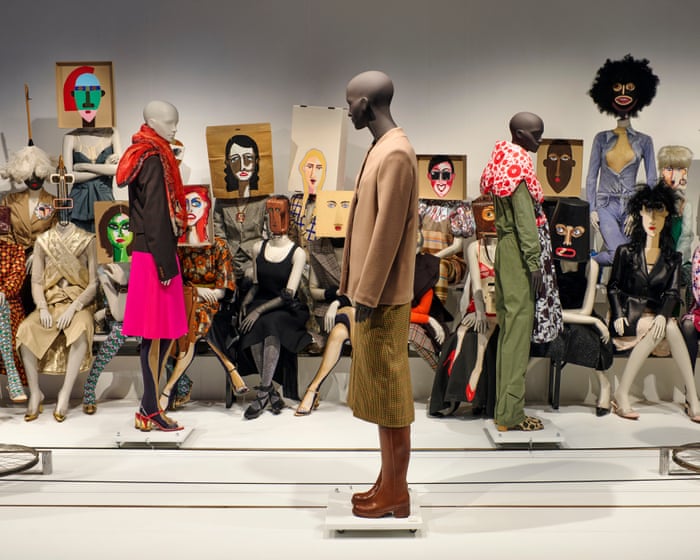
Their story is being told in a major new exhibition at MoMu, Antwerp’s world-class fashion museum, just a few doors down from Van Noten’s flagship store. The retrospective, running until January 2027, marks the 40th anniversary of the group’s first trip to London in 1986. Back then, they piled into a rented van and caught a ferry from Ostend to show their debut collections at the British Designer Show in Olympia. The young Belgian designers won over the international fashion press and buyers with their talent, originality, and nerve – creating their collections on a tight budget, often from recycled materials, prioritizing self-expression over marketability, holding fashion shoots in abandoned parking lots, and making their own flyers and posters.
Even though the foreign press liked to call them the Antwerp Six (much easier than typing out all those long Flemish names), they were never a formal group. It’s nice to see that the exhibition gives each designer their own individual space. From the bold, colorful creations of Van Beirendonck to the dark drama of Demeulemeester’s black-and-white palette, the displays are as thought-provoking and imaginative as the clothes they feature. They combine film projections, recorded interviews, a moving conveyor belt of mannequins, and an evocative soundtrack.Since 1884.
Photograph: Joanne O’Connor
Leaving the exhibition and stepping into the spring sunshine, it’s clear that the influence of this pioneering group went far beyond fashion and still lives on in the city. On Nationalestraat, modern designers sit alongside kilo stores, where second-hand clothes are sold by weight. At Labels Inc, you can browse pre-loved pieces from well-known Belgian designers like Raf Simons and Martin Margiela, or check out the featured collections from the city’s newest fashion graduates. Nearby, Kammenstraat and Steenhouwersvest are filled with vintage shops, streetwear brands, and independent labels like Arte Antwerp, which specializes in sleek, urban menswear inspired by graphic design, art, and architecture. Even if you can’t tell a Bikkembergs bag from a Belgian waffle, it’s impossible not to feel inspired.
“The Antwerp Six taught people how to be entrepreneurs and follow their inner voice,” says designer Tim van Steenbergen, who trained with Dries van Noten and later founded the social enterprise and sustainable fashion label ReAntwerp. “They showed that if you want to do things differently, you can.”
Launched in response to the huge amount of textile waste produced by the fashion industry, ReAntwerp sells a range of beautifully tailored, limited-edition classics—from shirts to trench coats—using leftover fabric from designers like Van Noten and Christian Wijnants. The enterprise also provides training, employment, and support to refugees, who make the clothes in the on-site workshop. “I wanted the clothes to have as much meaning and value for the people who make them as for the people who buy them,” says Van Steenbergen. “We have worked with refugees from Afghanistan, Syria, Pakistan, Palestine, Brazil, and Costa Rica. Our common language is textiles.”
Don’t miss the panoramic views across the river and sprawling dockyards from the MAS museum’s roof terrace.
It’s a fitting motto for a city whose wealth was built, in part, on the textile trade. In the 16th century, Antwerp was Europe’s largest river port, with shipments of English wool, Italian silks, Indian diamonds, Portuguese spices, and West Indian sugar moving up and down the River Scheldt. The riches from this trade were poured into the elaborate guild houses and civic buildings that surround the Grote Markt, the city’s main square. The story of Antwerp’s port is told at the MAS museum, housed in a strikingly modern 10-story building in the dockside Eilandje district. Don’t miss the panoramic views from the roof terrace, or the chance to snack on street foods from around the world at the Wolf Sharing Food Market, located in an old warehouse with a waterside terrace.
View image in fullscreen: The Brabo fountain and ornate guildhalls of Grote Markt, Antwerp’s main square. Photograph: Bruno Silva/Alamy
During its golden age, Antwerp was not only a major commercial hub but also an artistic and intellectual powerhouse, home to painters like Anthony van Dyck, Pieter Bruegel the Elder, Clara Peeters, and Peter Paul Rubens. You can see a collection of their works at the Royal Museum of Fine Arts, but nothing compares to seeing four of Rubens’ huge altarpieces in person at the imposing Cathedral of Our Lady.
The artist’s house and studio are now closed for major renovation, but after a long day of sightseeing and shopping, it was a relief to sit quietly among the displays of tulips and spring flowers in the Italian-style formal gardens, which are still open to the public. We also stumbled upon some extraordinary family portraits by Rubens at the Plantin-Moretus Museum, the former home and workplace of nine generations of a family who completely revolutionized printing. The first atlas, countless scientific books, and beautifully illustrated Bibles were produced on the wooden printing presses here.Some of these date back to the 1600s. With its dark paneled walls, leaded windows, and creaky floorboards, it’s an atmospheric and fascinating place where time seems to have stood still.
Amazing Antwerp: 10 ways to get the most out of Belgium’s cultural gem
Read more
We have just enough time for one last bolleke beer and a shrimp croquette in the sunny square next to our hotel, the charming Hotel ’t Sandt, before we need to check out and catch the tram to Antwerp’s central station. From there, it’s a 45-minute train ride to Brussels, where we’ll board our Eurostar home. The hotel is set in a beautifully restored 17th-century mansion with polished wooden floors, a spiral staircase, and beamed ceilings. Over the years, it has served many different purposes: a banana warehouse, a custom house, a soap factory, and a sculptor’s studio. Today, it makes a perfect base for exploring the city—friendly, stylish, and wearing its history well, much like Antwerp itself.
The Antwerp Six exhibition runs at MoMu until 17 January 2027. Admission is €13 per adult and free for under-18s. The trip was provided by Visit Antwerp. Double rooms at Hotel ’t Sandt start from €217 per night.
Frequently Asked Questions
Here is a list of FAQs about A fashion lovers guide to Antwerp Europes alternative style capital
BeginnerLevel Questions
1 Why is Antwerp considered a fashion capital
Antwerp is famous for the Antwerp Sixa group of avantgarde designers who graduated from the Royal Academy of Fine Arts in the 1980s They put the city on the map for edgy conceptual fashion making it a hub for alternative style
2 What makes Antwerp fashion different from Paris or Milan
Its less about luxury glamour and more about deconstruction asymmetry and intellectual design Think oversized silhouettes raw edges and a wearable art vibe rather than classic elegance
3 Im not a designer Will I still enjoy shopping in Antwerp
Absolutely You dont need to be an expert The city has a mix of highend concept stores and affordable vintage markets so anyone can find unique statement pieces
4 What is the Antwerp Six
They are six designers who revolutionized fashion in the 1980s with their radical nonconformist designs
5 Where is the best area to shop for fashion in Antwerp
The Modekwartier around the Nationalestraat and Kammenstraat Its packed with independent boutiques flagship stores of the Antwerp Six and vintage shops
IntermediateLevel Questions
6 Can I visit the Antwerp Fashion Museum on a budget
Yes MoMu is affordable and offers deep insight into Belgian fashion history Check their schedule for temporary exhibitions on specific designers
7 What is the best way to find vintage gems in Antwerp
Head to Kloosterstraat or Rosier 41 for curated secondhand pieces For a bargain try the Vintage Market at the Vrijdagmarkt on Fridays
8 How do I dress to fit in with the local fashion crowd
Think effortlessly