Mountains have always offered an escape from the grime of life at sea level, if not a kind of purification. The rugged terrain, the crisp air, the brilliant glare of sunlit snow—up high, everything seems stripped down to its essence. The Winter Olympics often lean into this myth of purity, but rarely has this four-yearly cultural climb felt as clarifying as it does now. Milano Cortina has launched us into heights seemingly untouched by the compromises that plague sports below, delivering images so vivid and sharp they also reveal how ugly—and morally murky—most non-Olympic team sports have become over the past four years.
As a TV spectacle, this Olympics has been defined by what’s missing as much as what’s there. No gambling ads, no live odds cluttering the screen, no win-probability trackers, no awkward segments where hosts joke about betting markets. For weary viewers, these Games have been a equal mix of delight and relief. Freed from clutter and noise, sport can still be a thing of wonder, mystery, agony, and beauty. Who would have thought?
Clearing away that noise has made room for what matters: the athletes’ efforts, their daring contortions and breathtaking risks. It has also opened up an acoustic space, letting us hear the percussion of bodies hurled against mountains, onto tracks, and across ice. The crispness of these Games is as much about sound as sight.
That’s not to say NBC’s coverage has been perfect. Commentators still talk too much, camera drones whine annoyingly even as they capture stunning footage, and the network’s urge to explain every rule means we now know more about curling’s hog line than we ever wanted. But in the many moments when the action speaks for itself, the sound design has added a layer of wonder. The Olympics have entered the ASMR era—but instead of nails tapping on chip bags or spoons stirring goop, we get the most compelling sound of all: the sound of people striving.
Motion, steel, fiberglass, and ice form the basic Winter Olympic soundscape, but here the audio is so detailed we catch the smallest gestures: the click of a helmet strap in monobob, the tap of ski poles at the start of a downhill run, the snap of gates in slalom, the thud of a fall in ice dance, the rhythmic pump of a mogul skier’s knees.
What explains this sonic richness? Science tells us sound grows fainter at altitude—a horn blast is softer atop Everest than at sea level. But thinner air may also create a stickier soundscape; some research suggests languages spoken at higher altitudes use more ejective consonants, which have a guttural, textured quality. Whatever the science—and I’m no expert—the real reason for Milano Cortina’s sound quality may be less about physics and more about money. For these Games, NBC has invested in immersive microphones and onsite production trucks to bring a rich, textured soundscape into our living rooms. More money in sports broadcasting meansFunding should go toward worthwhile things like this, not partnerships with AI and gambling companies that no sensible fan wants. In speed skating, the skaters’ scramble at the start of each team race creates a metallic clash, like the sharp ring of parries in Olympic fencing. The brutality of ice hockey—perhaps the most overwhelming winter sport to the ears—comes through in the crack of puck against stick, the unified roar of ten players charging across the ice, and the warped thud of collisions into the glass.
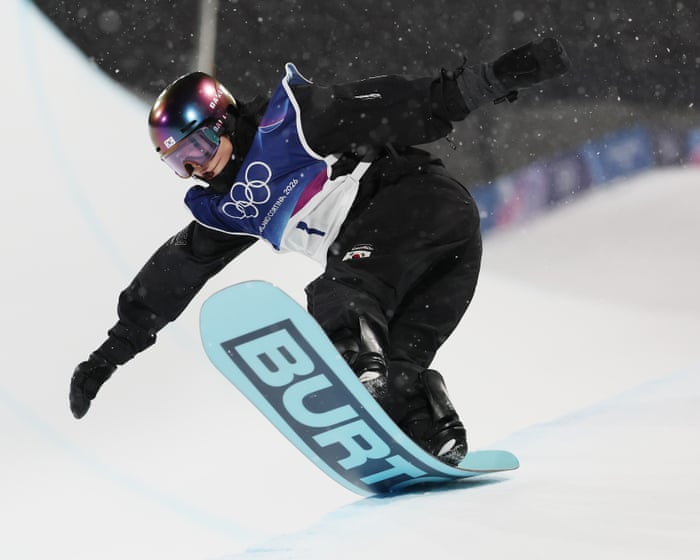
Sound has been as vital as sight to the most thrilling moments of these Games: the soft touch of Choi Gaon’s landings in her final halfpipe run, or the leathery scrape of Johannes Høsflot Klæbo’s skis as he sprinted up the last rise of the skiathlon, a clear audible sign of his dominance over the gasping contenders behind him. Even the silences have been amplified in this high-fidelity spectacle—like the pause after the video review verdict in the 1500m short-track final, a small masterpiece of theater broken by the official’s wry smile as he skated away to the crowd’s eruption.
Then there are the stranger sounds, the unexpected acoustic journeys. In skeleton, the drag of a face shield on the ice produces a cosmic vibrato, faintly like a Star Wars lightsaber being drawn. The building drill of a ski jumper’s long descent sometimes brings to mind a pot of milk boiling over—a frothy rush that gives way to the quiet of flight, ending with the padded clap of skis meeting snow. The pulpy thrash of cross-country skiers striding and poling across the flats? Like a kind of juicing. The furious squelch of curling brooms as sweepers strain to guide the stone? It’s the closest sport comes to the sound of biting into halloumi.
Curling’s takeover of roughly 90% of the Olympic broadcast (a rough estimate I just made) is even better thanks to the detailed team talks, shouted commands, and trash talk picked up by the ice mics. No other sport makes instructional yelling (“Hold the line, hold the line HARD HARD HARD—HAAAAAAARD!”) so aggressively audible; no other sport offers such a rich vocabulary of grunts.
Despite the problems and controversies that still follow the IOC, the 2026 Olympics have shown sport at its most lighthearted and charming. Even the great conspiracies and embarrassments—the disputed ice dance judging, the contested touching on the curling hog line, Sturla Holm Lægreid’s tearful apology after winning biathlon bronze, the condom shortage—feel quaintly homespun compared to the industrial-scale greed of modern professional sports, like a throwback to an era of artisanal corruption, innuendo-filled intrigue, and après-ski mischief.
Adding to these happy vibes is the TV soundtrack of drags, snaps, pops, and stops—a hypnotic mix that has made Milano Cortina a marvel for the ears as much as the eyes.
Frequently Asked Questions
FAQs Winter Olympics as an ASMR Paradise
Q What does ASMR mean in this context
A ASMR stands for Autonomous Sensory Meridian Response Its the pleasant relaxing tingling sensation some people get from specific sounds or visuals Here it refers to the soothing repetitive sounds of winter sports
Q What are some classic Winter Olympic ASMR sounds
A Think of the rhythmic shush of skis on snow the crisp crunch of a skaters edges on ice the soft thud of ski poles planting the gentle whoosh of a bobsled or the focused silence of a biathlete aiming
Q I dont get ASMR tingles Will I still find this relaxing
A Absolutely Even without the physical tingles many people find these focused repetitive natural sounds inherently calming and meditative They can reduce background mental chatter
Q Why are Winter Olympics sounds particularly good for ASMR
A They often combine repetitive motion crisp natural textures and athlete focus The sounds are usually clean rhythmic and lack jarring unpredictable noise creating a perfect soundscape
Q Are there specific events known for great ASMR sounds
A Yes Crosscountry skiing biathlon figure skating curling and ski jumping are top contenders
Q Whats the benefit of watching the Olympics for ASMRrelaxation
A It can lower stress by providing a focused auditory escape The combination of soothing sounds with the visual grace and precision of athletes can be a powerful form of mindfulness
Q Where can I find the best audio to experience this
A Look for official Olympic footage on streaming services or YouTube Search for terms like Olympics ambient sounds no commentary highlights or sounds of Highquality headphones enhance the experience
Q A common problem is loud commentary ruining the sounds Any tips