It was supposed to be the highlight of an almost endless run of success: the 70th anniversary of the world’s biggest and still-growing live music event, held in a city rich in both dramatic and musical history.
But as Vienna gets ready to host this year’s Eurovision Song Contest—starting Tuesday and ending with Saturday’s grand final—it will be hard to find much joy outside the power ballads performed on stage.
Because of boycotts over Israel’s participation, the musical event will go ahead without Spain and the Netherlands, traditionally the fifth and sixth biggest financial contributors to Eurovision, as well as Ireland, the joint record-holder for most wins, Slovenia, and Iceland.
This is an unprecedented moment in the contest’s 70-year history and could have long-term effects on a show that is already under pressure to justify its costs while public broadcasters face budget cuts.
“In the long run, financing Eurovision is going to get harder and harder as publicly funded broadcasting comes under attack across Europe,” said Irving Wolther, a cultural historian and longtime observer of the contest. “In that context, the political disputes certainly don’t help.”
The 2025 grand final in the Swiss city of Basel was watched by a record 166 million people worldwide. But last year’s 3 million increase in viewers is likely to be wiped out this year because the contest is under a media blackout in some countries that are boycotting Israel’s participation.
The final will not be broadcast in Ireland, Slovenia, or Spain, where nearly 5.9 million viewers tuned in to the show in 2025. Instead, Spanish broadcaster RTVE will air its own musical special, while viewers in Ireland will see the animated family comedy Mummies, and those in Slovenia will watch a series of programs about Palestine.
Viewing figures are also expected to drop in the Netherlands and Iceland, where national broadcasters are showing the event but have chosen not to send their own musical contestants.
The three countries returning to Eurovision after skipping recent years—Bulgaria, Romania, and Moldova—are unlikely to give the organizing European Broadcasting Union (EBU) another televised milestone to boast about.
The political dispute has spread through the contest’s fan communities. One fan site, Eurovision Hub, will not cover the event, announcing at the end of last year that “we no longer feel aligned with the contest in its current state.”
“It feels like the buildup this year has been a bit of an anticlimax,” said Paul Jordan, a historian of the contest who said he has seen friendships formed through a love of Eurovision torn apart by the political row. “Eurovision is meant to be joyful. But this year it feels a little sad.”
The five breakaway nations announced their boycott last December, after Israel was cleared to compete before participating broadcasters could vote on its inclusion.
This brought to a head a tense standoff that had been building since the Hamas attack on October 7, 2023, and Israel’s subsequent bombardment of Gaza. Critics accuse the EBU of double standards, since Russia was banned from Eurovision after its full-scale invasion of Ukraine in 2022.
In time for Eurovision’s 70th anniversary, the EBU recently announced the format’s expansion into the Asian market, with the first Eurovision Song Contest Asia set to take place in Bangkok, Thailand, on Saturday, November 14.
For Vienna, Eurovision’s director, Martin Green, has promised a spectacular show.The event will celebrate the contest’s “unique ability to bring people together across borders and generations.” A new feature on the official Eurovision app will give dedicated fans access to archival information, including voting results and contestants from the past seven decades.
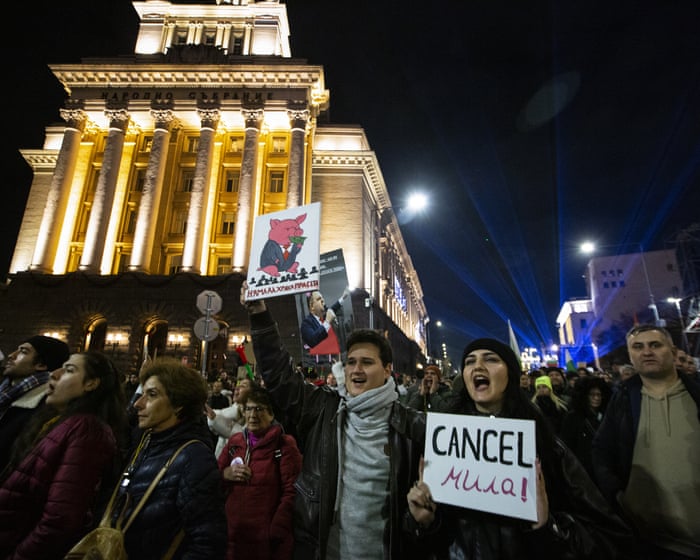
But it’s unclear whether apolitical nostalgia will be the main feeling on the streets of Vienna as Saturday’s final approaches. Alongside the contest’s two semi-finals on Tuesday and Thursday, the Austrian capital will host rallies both supporting and opposing Israel’s participation.
Around 3,000 protesters are expected at a rally in Resselpark on Friday to mark Palestinian Nakba Day, honoring the more than 700,000 Palestinians who fled or were forced from their homes during the 1948 war surrounding Israel’s creation.
On the day of the grand finale, Vienna police said they expect about 3,000 people to join a protest march under the slogan “Solidarity with Palestine.” A counter-demonstration called “12 points against anti-Zionism – for Israel’s participation at Eurovision” has been registered for 50 to 100 participants.
According to a recent survey for the Austrian newspaper Der Standard, only 26% of those asked agreed that the song contest “brought Europe closer together,” while 52% said hosting the event was too expensive for Austria.
In the last two editions, geopolitics has shown up not only in protests around the contest venues but also in the songs performed on stage.
In 2024, the Israeli contestant Eden Golan was allowed to compete by the EBU after changing the lyrics to her song Hurricane. Its original title, October Rain, was thought to reference the Hamas attacks of October 7 and was banned for breaking rules on political neutrality.
The country’s 2025 contestant, Yuval Raphael, survived the Nova festival attack, and the lyrics of her power ballad New Day Will Rise seemed to reference her traumatic experience.
In both editions, Israel performed well in the public vote, but the Israeli government’s heavy promotion of its acts on social media drew criticism.
Voting rule changes for the 2026 edition mean the maximum number of votes will be cut from 20 to 10 per payment method, such as online, text message, or phone call.
In Vienna, Israel will be represented by 28-year-old Noam Bettan. The announcement of his song, Michelle, initially sparked speculation that it might refer to Michelle Rukovicin, a female soldier seriously wounded in the October 7 attacks who was left in a coma but later recovered and married her long-term partner last year.
However, the song’s actual lyrics, sung in French, Hebrew, and English, make that theory seem unlikely, as they deal with the performer’s “toxic love” for a woman he calls “the queen of problems.”
Bookmakers have Israel’s entry as fifth favorite, with Finland’s dramatic ballad Liekinheitin, by Linda Lampenius and Pete Parkkonen, leading the field. Other potential winners include Greek rapper Akylas’s upbeat party anthem Ferto and Danish singer Søren Torpegaard Lund’s Før Vi Går Hjem.
The British entrant, Look Mum No Computer, is seen as having only a slim chance of winning, with his song Eins, Zwei, Drei priced at 80/1 with William Hill.
Frequently Asked Questions
Here is a list of FAQs about the situation in Vienna regarding boycotts and blackouts disrupting Eurovision 2026 preparations written in a natural conversational tone
1 Whats going on in Vienna with Eurovision 2026
Vienna is supposed to host Eurovision 2026 but there are major protests and boycotts happening Some groups are upset about the host city choice and there have been power blackouts that are messing up the construction and planning for the event
2 Why are people boycotting the Eurovision preparations
The main reasons seem to be political Some artists and activist groups disagree with Austrias recent policies or the specific venue chosen They are refusing to perform or participate in promotional events to make a statement
3 What does blackout mean in this context
It means actual power outages Reports say that either due to technical sabotage from protesters or strain on the grid from halted construction parts of the city have lost electricity which is delaying work
4 Is the whole Eurovision 2026 event in danger of being canceled
Its too early to say its canceled but its definitely in trouble The organizers are scrambling to fix the power issues and convince artists to join If the boycotts grow and the blackouts continue there is a real risk the event could be moved or postponed
5 Who is leading the boycott
Its a coalition of local activist groups and some international artists who were rumored to be hosts or performers They havent named one single leader but they are coordinating online to urge others to pull out
6 How does a power blackout actually stop preparations
You cant run heavy machinery test lighting rigs or power computer systems for ticket sales and stage design without electricity Even a few days of blackout can push back the tight construction schedule by weeks
7 Could the host city be changed this late
Technically yes but its a nightmare The European Broadcasting Union would have to find another city with a ready venue hotels and infrastructure Its happened before but its very rare and expensive
8 What are the practical tips for fans who already bought tickets
Don