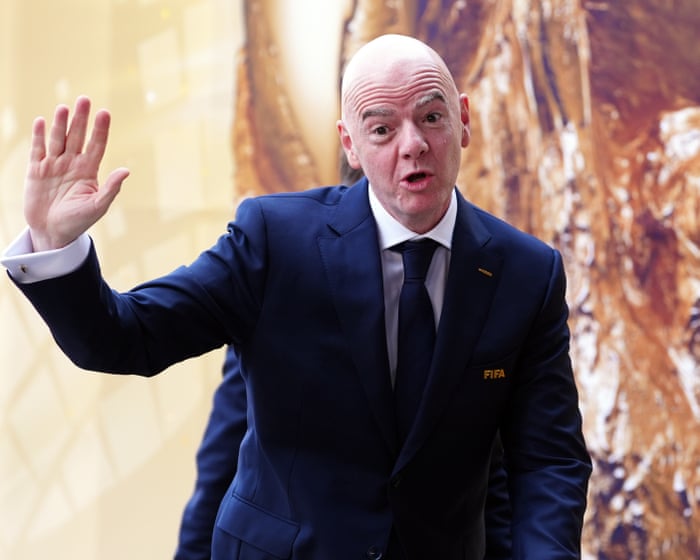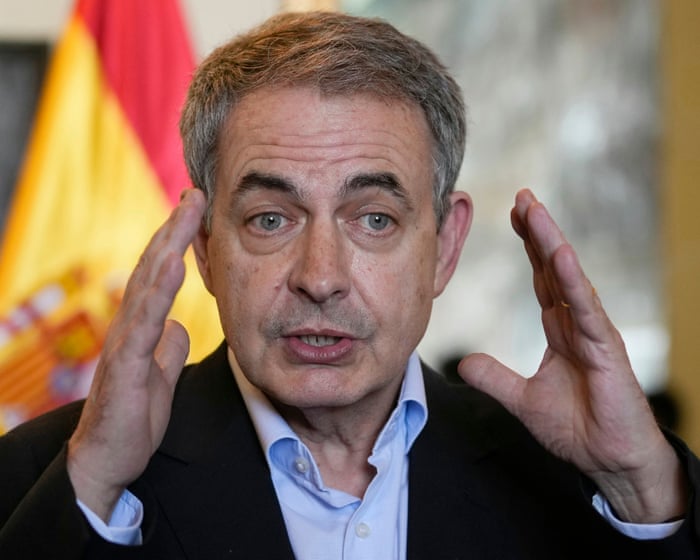
Former Spanish Prime Minister José Luis Rodríguez Zapatero is under investigation for alleged influence-peddling and other offenses, as part of a probe into the state bailout of a Venezuela-linked airline during the Covid pandemic. Zapatero, a socialist who led the country from 2004 to 2011, has been ordered to appear before Spain’s highest criminal court, the Audiencia Nacional, on June 2.
While other former and current Spanish prime ministers have been called to testify in corruption cases, this marks the first time a former prime minister has been placed under criminal investigation.
The case is part of a broader inquiry into the €53 million (£46 million) state rescue of Spanish airline Plus Ultra in March 2021. Prosecutors are looking into whether the company made “inadequate use” of the public funds approved for the bailout, and anti-corruption police are investigating whether the airline used the rescue money to launder funds from Venezuela through France, Switzerland, and Spain.
According to the investigating judge, Zapatero is alleged to have overseen “a hierarchical structure of influence peddling” aimed at “obtaining economic benefits through intermediation and exerting influence on public bodies in favor of third parties, mainly Plus Ultra.”
In a statement released on Tuesday, the court said the judge had authorized police to search Zapatero’s office, as well as those of three other companies.
Spanish police searched Zapatero’s office on Tuesday after receiving judicial approval. Photograph: Rodrigo Jimenez/EPA
Zapatero released a video in which he insisted on his innocence and expressed his willingness to cooperate with the investigation.
“I want to reaffirm that all my public and private activities have always been carried out with full respect for the law,” he said, adding that he had never taken “any action” related to the airline’s bailout.
Zapatero’s denials echoed his testimony before a Senate committee in March, where he stated he “never received any commissions from Plus Ultra.” However, he did tell the committee that he had done some consultancy work for his friend Julio Martínez Martínez, a businessman who worked with Plus Ultra and was arrested by anti-corruption officers in December last year.
Testifying before the Senate committee in February, Plus Ultra’s president, Julio Martínez Sola, insisted that the bailout had been carried out in full compliance with the relevant laws. “There was no exceptional procedure outside the norm; there was no preferential treatment or undue interference; there was no illicit aid,” he said. “It was a regulated process with controls, reports, and very strict conditions that have been met. Nobody gave us anything for free.”
Zapatero’s socialist successor as prime minister, Pedro Sánchez, is facing a series of corruption allegations involving his family, his party, and his administration.
Last month, Sánchez’s wife, Begoña Gómez, was charged with embezzlement, influence-peddling, corruption in business dealings, and misappropriation of funds at the end of a two-year investigation by a judge in Madrid. The prime minister’s younger brother, David Sánchez, is also facing trial this month on charges of influence-peddling.
Both Gómez and David Sánchez deny any wrongdoing, and the prime minister has accused his political and media opponents of smearing and targeting his family.
Two senior former figures in Sánchez’s government are on trial for alleged corruption. The prime minister’s former right-hand man, ex-transport minister José Luis Ábalos, is accused—along with his former aide Koldo García and businessman Víctor de Aldama—of taking kickbacks on public contracts for sanitary equipment during the Covid pandemic. Ábalos and García, who deny all charges, are facing sentences of 24 years in prison.The sentences are 19 years and 19 years respectively, while Aldama, who has already admitted his role in the alleged scheme, faces a seven-year sentence.
The Socialist Party issued a statement supporting Zapatero on Tuesday, calling him a pioneering prime minister whose “two terms were defined by an ambitious program to expand rights, equality, and social protection.” It added, “The right and the far right have never forgiven him for these advances.”
The opposition conservative People’s Party described Zapatero as “Sánchez’s muse” and said, “The link between Spain’s two most recent socialist prime ministers is corruption … this indecency must end.”
Frequently Asked Questions
Here is a list of FAQs regarding the criminal investigation into a former Spanish prime minister linked to a 53 million airline bailout
BeginnerLevel Questions
1 Who is the former Spanish prime minister being investigated
The investigation involves Mariano Rajoy who was Prime Minister of Spain from 2011 to 2018
2 Why is he being investigated
He is being investigated for his alleged role in approving a 53 million state bailout for the airline Air Europa during the COVID19 pandemic The court is looking into whether this was a political favor or involved criminal mismanagement
3 What is the 53 million bailout
It was a rescue loan from the Spanish governments SEPI to keep Air Europa from going bankrupt because of the pandemic The money was meant to save jobs and keep the airline flying
4 Is he in jail
No He is under criminal investigation but he has not been charged or arrested The investigation is to determine if a crime was committed
5 When did this happen
The bailout was approved in 2020 The criminal investigation was opened in late 2023 and is ongoing
Intermediate Advanced Questions
6 What specific crime is being alleged
The investigation focuses on prevarication and embezzlement The court wants to know if Rajoy used his position to push through a bailout that wasnt justified or if the money was misused
7 Why is this case controversial
Critics say the bailout was rushed and unusually large for a single airline They also point out that Air Europa was already in financial trouble before COVID and that Rajoys party had close ties to the airlines owners the Hidalgo family
8 How does this relate to the airlines merger with Iberia
The bailout was crucial because Air Europa was trying to merge with Iberia The state loan kept Air Europa alive so the merger could go ahead Some argue the bailout was a backdoor way to save a failing private business rather than a public necessity
9 What is Rajoys defense
Rajoy claims he acted in the public interest to protect jobs and the tourism sector