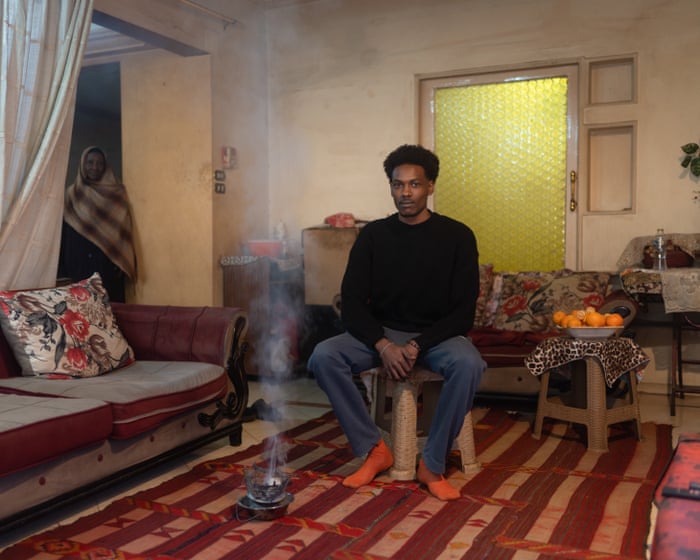
An estimated 1.3 million Sudanese refugees are living in Cairo. Most fled from neighboring Sudan after the civil war broke out in April 2023. Instead of finding the safety and security they hoped for, they say life in the Egyptian capital has become a nightmare.
“The situation here is so hopeless that I’m now getting ready to try crossing to Europe again. I haven’t told my mother yet because I don’t know if she could handle losing another child,” says Nadir*, 26. Like other Sudanese people interviewed for this story, he prefers not to use his real name.
The war has killed at least 150,000 people and forced about 4.5 million to flee Sudan to Chad, South Sudan, Libya, and Egypt. The World Health Organization has called it the world’s worst humanitarian disaster.
Once in Egypt, Sudanese war refugees have faced racism and what the UN describes as an “intensifying campaign of arbitrary arrests and human rights violations.” There has been a surge in deportations of Sudanese nationals since late 2025. The UN says these deportations reportedly happened without checks to see if individuals were at risk of torture or harm.
“Here in Egypt, you’re trapped like a criminal. There’s so little hope for the future that you start to lose yourself,” says Nadir, pointing to his swollen hand as he tries to open and close it repeatedly. “I had to defend myself after being attacked on the street because of my skin color.”
This growing hostility is pushing more Sudanese refugees to consider leaving Egypt. Some hope to return to Sudan, but more often they try to cross the Mediterranean to reach Europe.
Nadir says he already made one dangerous attempt to reach Italy by boat through Libya. He says he was convinced to go with his closest friend and 20 others, but the group was kidnapped by smugglers in Libya. They were held captive for seven months before being released and making their way back to Egypt. Nadir says his friend did not survive.
In Egypt, Sudanese refugees risk being detained if they can’t show a residence permit when arrested. This can happen even if they just left it at home while stepping out briefly to buy water, says Omar*, 25, who has had friends disappear without contact.
“Two weeks ago, I was warned about a big police checkpoint nearby. I’ve been trying to reach a close friend for days, but I haven’t heard from him since,” he says.
Finding affordable housing in Cairo is also a struggle for many Sudanese, who are often seen as having money from abroad. Yassin*, 23, who has cared for his three younger sisters since their father died earlier this year, says it doesn’t make sense that Sudanese war refugees, who have often lost almost everything, are still treated by some landlords as nothing more than walking wallets.
“The money we get to support ourselves is almost all spent on rent,” he says.
These conditions force many Sudanese refugees into informal jobs. “Washing dishes, cleaning, working in a carpet shop—I’ve done all these jobs over the past few years,” says Ya.View image in fullscreen
Yassin: ‘We want to help the Egyptian economy, but… we’re stuck in limbo’
However, without legal status in Egypt, they are vulnerable to exploitation. Some employers reportedly pay below the minimum wage. Yassin says the owner of a carpet shop employed eight Sudanese workers and threatened to report one of them to the authorities after he tried to quit.
“We would like to contribute to the Egyptian economy, but as long as we don’t have legal status, our lives are so restricted that we’re left in limbo,” says Yassin. He says that if it weren’t for his responsibility to care for his three young sisters, he might also try to cross to Europe.
“For now, staying indoors and avoiding all risks seems like the best option,” he says.
View image in fullscreen
The dusty streets of Faisal in Cairo
* Names have been changed
Frequently Asked Questions
Here is a list of FAQs about Sudanese war refugees leaving Egypt for Europe written in a natural conversational tone with clear and direct answers
BeginnerLevel Questions
1 Why are Sudanese refugees leaving Egypt to go to Europe
Many are leaving because they face three major problems in Egypt extreme poverty and lack of jobs increasing racism and discrimination and a real fear of forced disappearances or arbitrary detention
2 What kind of racism are they facing
Refugees report being verbally abused denied housing or jobs because of their nationality and sometimes physically attacked Theres a growing sense that they are not welcome which makes life very hard
3 What does forced disappearance mean in this context
It means people are being taken by authorities or armed groups and their families dont know where they are They are often held without charge or trial This fear is a major reason people feel unsafe
4 Is it easy for Sudanese refugees to get a visa to Europe
No its very difficult Most dont have valid passports or the money for legal visas Instead they often rely on dangerous smuggling routes across the Mediterranean Sea
5 Why dont they just stay in Egypt
For many Egypt is no longer a safe or viable option They cant find work to feed their families they face daily discrimination and they live in constant fear of being arrested or disappearing
IntermediateLevel Questions
6 How does the situation in Sudan affect the decision to leave Egypt
The war in Sudan is the root cause People fled the war to Egypt but now the conditions in Egypt are so bad that they feel they have to take another dangerous journey to find real safety and a future in Europe
7 What are the main dangers of the journey from Egypt to Europe
The journey is extremely risky Refugees often travel through Libya which is very dangerous and then try to cross the Mediterranean in overcrowded unseaworthy boats Many drown are kidnapped for ransom or die from dehydration
8 How does the Egyptian government treat Sudanese refugees
Officially Egypt is a host country but many refugees say the government has become more hostile There are reports of police harassment strict residency requirements and a lack of protection from discrimination The forced disappearances are blamed on both state and nonstate actors