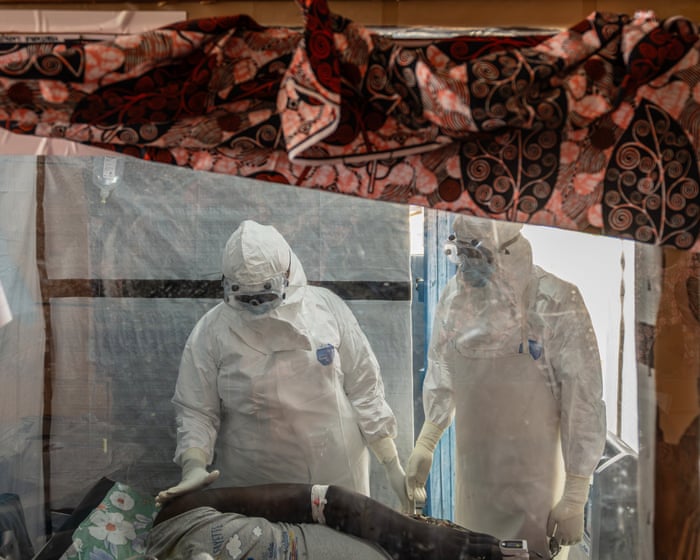
France’s health ministry has confirmed the first case of Ebola in the country, involving a doctor who returned from a humanitarian mission in an area affected by the outbreak in the Democratic Republic of the Congo. The patient was moved to a specialized facility and is in stable condition. The ministry stated, “All necessary precautions, including isolating the patient, were taken upon his arrival in France, and he was transferred to the hospital under secure conditions to prevent any risk of contamination.” Authorities are now tracing the patient’s contacts, who will need to self-isolate at home for 21 days. The ministry noted that the risk to the general public in Europe is very low.
The outbreak is centered in Ituri province in northeastern DRC, where authorities are working to control the spread of the virus. As of June 21, the DRC health ministry reported 1,048 confirmed cases and 267 deaths, with 112 people recovering. Neighboring Uganda has recorded 20 cases and two deaths. The World Health Organization declared the outbreak on May 15 and two days later labeled it a public health emergency of international concern. Experts believe the virus was circulating undetected in the DRC for weeks before, suggesting the actual scale of the outbreak may be much larger than the confirmed cases indicate.
The humanitarian response has been complicated by aid cuts and conflict in North and South Kivu provinces, south of Ituri, where the Rwanda-backed M23 rebel group operates and Ebola cases have also been found. On Tuesday, WHO official Abdirahman Mahamud said this outbreak has the highest number of confirmed cases in its first month compared to any previous Ebola outbreak. He noted that local resistance to the response in the DRC, which included attacks on hospitals and treatment centers, is decreasing. “More and more communities are aware of the Ebola risk and are asking for tools to support and protect themselves,” he said.
The current strain is the rare Bundibugyo virus, which has no vaccine or approved treatment. Modeling by the US Centers for Disease Control and Prevention suggests this could become the largest outbreak on record. The previous largest was in West Africa from 2014 to 2016, infecting over 28,000 people and killing more than 11,000. This is the DRC’s 17th Ebola outbreak since the virus was first detected there in 1976. Scientists believe it spreads to humans from infected African fruit bats and then between humans through direct contact with blood or body fluids of an infected person or someone who died from the disease. Initial symptoms include fever, exhaustion, muscle pain, headaches, and a sore throat, which can progress to vomiting, diarrhea, abdominal pain, a rash, and impaired kidney and liver function.
A US citizen treated for Ebola in Germany recovered and was discharged earlier this month after testing negative for the virus since May 30. The US government wants to build an Ebola quarantine facility for its citizens in Kenya, which has never had any Ebola cases. However, Kenya’s health minister said on Tuesday that construction of this highly controversial facility would stop after a high court order that authorities initially ignored.
Reuters contributed to this report.
Frequently Asked Questions
Here is a list of FAQs about the confirmed Ebola case in France written in a natural tone with clear simple answers
1 What exactly happened
A French doctor who was working in the Democratic Republic of the Congo tested positive for Ebola after returning to France This is the first confirmed case of Ebola in the country
2 Where is the patient now
The doctor is being treated in a specialized isolation unit at a military hospital in Paris
3 Is this a new outbreak in France
No This is a single isolated imported case It is not a new outbreak The doctor likely contracted the virus while treating patients in the DRC which is currently dealing with its own outbreak
4 How did the doctor get Ebola
The doctor was working in an Ebola treatment center in the DRC The virus is spread through direct contact with the blood or body fluids of a sick person Its likely he was exposed while caring for patients
5 Is there any risk to the general public in France
The risk is extremely low The doctor was diagnosed quickly and isolated immediately French health authorities are tracing and monitoring everyone who had close contact with him to prevent any spread
6 What are the symptoms of Ebola
Symptoms usually appear 2 to 21 days after exposure They include sudden fever severe headache muscle pain weakness fatigue vomiting diarrhea and unexplained bleeding or bruising
7 Can you catch Ebola from a person who isnt showing symptoms
No People with Ebola are not contagious until they begin to show symptoms This is why the doctor was isolated as soon as he felt unwell
8 How is Ebola treated
There is no specific cure but supportive care greatly improves survival There are also experimental treatments and vaccines that can be used in an emergency
9 Is there a vaccine for Ebola
Yes An effective vaccine exists and has been used in the DRC and other affected areas It is given to healthcare workers and people at high risk of exposure
10 Why is this case making headlines if the risk is low
Its newsworthy because its the first time Ebola has