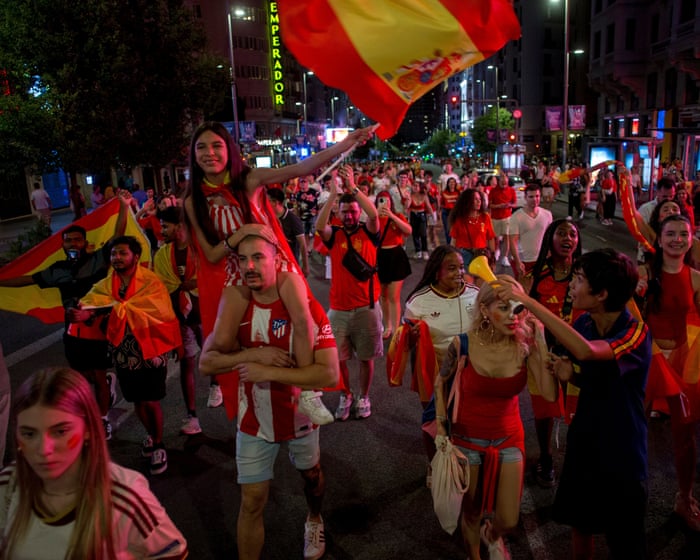
Just after midnight, cheers erupted from the lit-up apartment blocks in my neighborhood in central Madrid. Hours later, people of all ages were still out in the streets in the middle of another tropical night—and not just because it was warm, with temperatures hovering near 30°C. In the large pedestrian square, Plaza de Olavide, fans had gathered around screens. Some sat on the ground while children and dogs ran around. A girl played on the swings, her Spanish-flag cape fluttering as she swung back and forth.
Argentinian Lionel Messi jerseys were everywhere in the crowd. Many fans also gathered at a nearby Argentinian bar. That’s not too surprising, considering more than 400,000 Argentinians live in Spain. Messi, whose life and career are deeply tied to Barcelona, is a football hero in Spain too.
It was the same across the city and throughout the country. Barcelona had one of the largest public gatherings, with more than 30,000 people watching on a giant screen set up by the city council. Catalonia is the home region of stars like 19-year-old Lamine Yamal, the national team’s most promising player. Spain’s team reflects the country’s regional diversity. Several players come from the Basque Country, which was once a reluctant supporter of the national team. One player, Aymeric Laporte, was born in France. Their backgrounds are as diverse as the population.
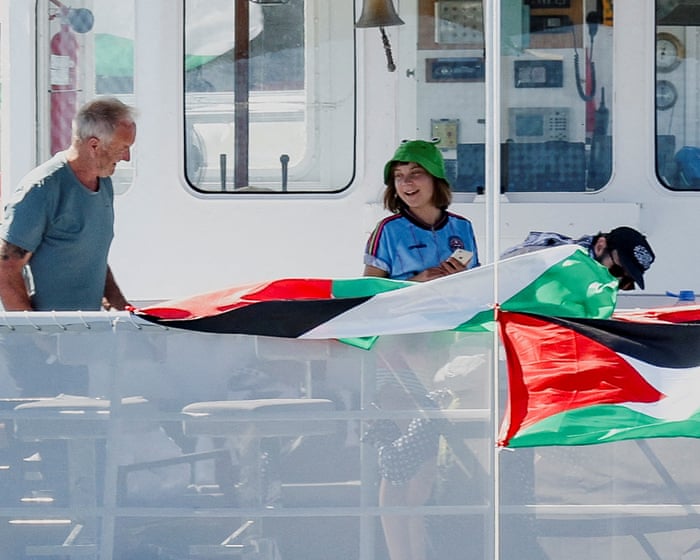
It was hard not to agree with Ferran Torres, who scored the extra-time goal that brought us victory, when he said his achievement belonged to “47 million people, not just me or my teammates.” But it felt like the success belonged to many more people around the world—from Gaza, where Spain has come to represent solidarity with the Palestinian cause, to Brazil.
The celebratory mood was just as strong three years ago when we gathered to watch the women’s national team win the World Cup. But the joy was overshadowed by sexual harassment and misogyny after the Jenni Hermoso case.
Sixteen years ago, I watched Spain’s first World Cup victory among late-night crowds in Brussels, where I lived at the time. That night felt joyful, but those were painful times. I was covering the eurozone crisis, which hit Spain harder than almost anywhere else. A burst property bubble and soaring unemployment left many people feeling hopeless.
This win feels more complete. The country itself is in a better place, despite the deep political polarization and widespread dissatisfaction that often dominate public debate. Spain’s economy has become one of the strongest in the developed world, and its cities feel more prosperous, confident, and dynamic than many in Europe.
The national team is young, diverse, and relentlessly professional. The cheers in Lavapiés, one of Madrid’s most diverse neighborhoods, felt significant in a country where more than 10 million people—about 20% of the population—were born abroad.
Spain’s players also showed maturity under pressure. The clarity with which Yamal responded to former prime minister Mariano Rajoy’s racist comments about the French national team stood out, especially compared to the crudeness of a supposedly experienced politician.
The contrast between football’s power to promote integration—something this team seems to fully understand—and the constant partisan battles dominating public life in Spain couldn’t be sharper.
The message repeated most often by the coach, Luis de la Fuente, and his players is simple and powerful: “We are a team. We embrace diversity while working together towards a common goal.” Spain’s greatest strength on the pitch isn’t individual brilliance, but a cohesiveness that becomes greater than the sum of its parts. Ironically, that sense of shared purpose and collective responsibility is perhaps what Spanish public life needs most.Life feels like it’s missing the most important part.
Skip past newsletter promotion
Free newsletter | Weekly
Sign up to This is Europe
The most pressing stories and debates for Europeans – from identity to economics to the environment
Preview latest
Enter your email
Sign up
After newsletter promotion
Yet even if football’s impact seems fleeting and unimportant, especially in tough times, its incredible appeal can spark a shared spirit. At its best, it builds solidarity and friendship. At its worst, it can fuel violence and disrespect, as Argentina’s team sadly showed before, during, and after the match.
Everyone sees what they want in the Spanish national team—whether it’s nationalism, diversity, or just great football. Of course, not every message is inclusive, but the mix of fans on the streets, regardless of age, background, or gender, reminds us of football’s immense power to bring very different people together.
These days, I keep thinking about the motto of the country that hosted the World Cup final: E pluribus unum – out of many, one. Those words reflected the thinking of the US founding fathers. They believed the ideals of the Declaration of Independence would unite people from very different backgrounds, without needing centuries of shared religions, cultures, and wars like in Europe.
Unity in diversity remains a painfully unfulfilled ideal in the US and much of the world—including Spain. But at least for one night, amid the chants, honking horns, and fireworks, you could hope that somehow it’s still possible.
María Ramírez is a journalist and deputy managing editor of elDiario.es, a news outlet in Spain.
Frequently Asked Questions
Here is a list of FAQs based on the article Vamos España Why this World Cup victory for Spain feels so different from the others María Ramírez
BeginnerLevel Questions
1 What is this article about
Its about Spains womens soccer team winning the 2023 World Cup and why this victory is more significant and emotional than past Spanish soccer wins
2 Why does this win feel different from Spains mens World Cup win in 2010
Because the womens team won despite facing major internal conflicts a lack of support from their federation and a fight for equal treatment The 2010 mens win was seen as pure sporting glory while this one feels like a victory against the system
3 Who is María Ramírez
She is a Spanish journalist and writer likely the author of the article or opinion piece being discussed
4 Was there drama or problems within the Spanish womens team before the World Cup
Yes Many players had publicly resigned from the national team because of poor conditions and conflicts with the coach and federation The article highlights how they overcame this chaos to win
5 Is this a happy story or a sad one
Its a triumphant but bittersweet story The win is joyful but it also highlights the ongoing struggle for equality and respect in Spanish womens soccer
AdvancedLevel Questions
6 What specific problems did the Spanish womens team face leading up to the World Cup
Players complained about toxic coaching lack of professional facilities poor travel arrangements and being undervalued compared to the mens team Fifteen players even sent emails refusing to play until changes were made
7 How did the team manage to win despite those problems
The article suggests the players channeled their frustration into unity on the field They developed a strong rebellious bond and played for each other not for the federation Key players like Aitana Bonmatí and Jenni Hermoso led by example
8 What does the article say about the Spanish football federations role
It criticizes the federation for not supporting the womens team properly and for creating a hostile environment The victory is seen as a win despite the federation not because of it