“Invincible.” That’s how Vladimir Putin described Russia’s newest ballistic missiles back in 2018. In 2022, he used them to strike across Ukraine, hitting command centers, critical infrastructure, and airfields. Then, in 2023, Ukraine received Patriot air defense systems from its international partners. The US-supplied missile interceptors proved to be an effective shield against Russian attacks.
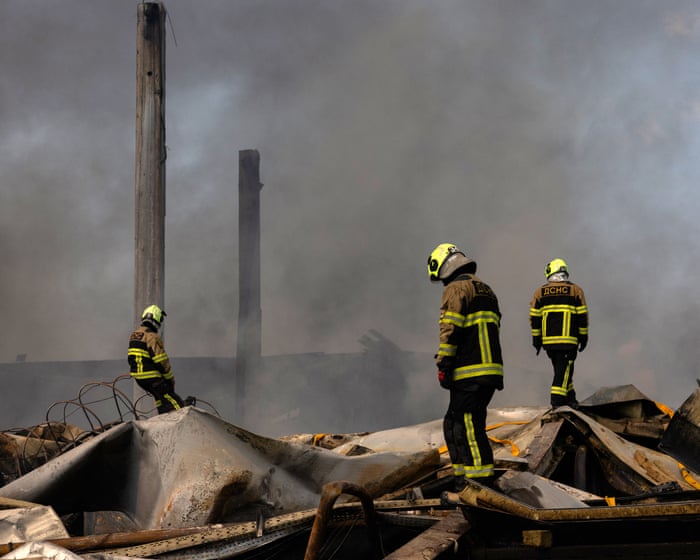
But this year, supplies of Patriot missiles have run out, and Kyiv is feeling the consequences. Intercept rates have dropped from over 70% to zero, so night after night, Russia hits Ukraine’s infrastructure without fear of retaliation. This tragedy was predicted long ago, and there are no quick solutions.
While the military story of the war has often been about cheap, mass-produced Ukrainian weapons overwhelming Russia’s expensive military hardware, most of the serious damage from Russia’s long-range strikes has come from cruise and ballistic missiles. Ukraine’s defense efforts have suffered because it lacks the means to counter them. Stopping ballistic missiles is neither simple nor cheap.
To intercept a tactical ballistic missile like Russia’s Iskander, a defense system needs to be extremely advanced. The target comes down from the upper atmosphere at more than five times the speed of sound. The incoming missile also maneuvers through the air rather than following a predictable path. The defense system must track the missile’s exact position and relay that to the interceptor, allowing it to adjust course while climbing against gravity. Building the radars, data links, and interceptors for this task requires massive research and development. Across NATO, most countries have been happy to let Washington invest for decades to make the Patriot system capable.
The US and licensed manufacturers in Germany and Japan can produce about 840 Patriot interceptors a year. Around 240 of these are older, larger PAC-2 interceptors, which climb close to the target and then explode—meaning they must carry a warhead all the way there. The other 600 are PAC-3s, which are smaller and fly directly into the target. The latter is more effective but needs even more precise navigation. The former can also be used against other types of targets.
Russia produces about 750 Iskander missiles a year and is looking to increase that number. It also uses air-launched Kinzhal ballistic missiles and repurposed air-defense missiles for strikes, along with its arsenal of cruise missiles and drones. To have a high chance of success, it’s generally recommended to fire two to three interceptors at each ballistic missile. When you also consider that the launchers can only protect a relatively small area, and Ukraine is a huge country, it becomes clear that Kyiv would ideally need three to four times the annual global production of Patriot missiles to defend itself. That’s why supporting countries have had to give their own stockpiles to Ukraine.
Even before the US decision to attack Iran, western allies were worried about depleting their own stocks by sending Patriot missiles to Ukraine, knowing it would take a long time to be resupplied. The US attack on Iran—which led Tehran to fire ballistic missiles across the Middle East—has created a severe global shortage. While Russia usually fires fewer than 10 ballistic missiles in a single attack, Iran has launched over 170 a day during the current and last year’s conflicts. Some of Iran’s missiles were also advanced. In one case, it took 17 Patriot interceptors to stop a single missile. And Iran has many more missiles in storage.Amid the war in Ukraine, the fleeting moments of despair and salvation I witness are what truly tell the story | Charlotte Higgins
Read more
The key point is that Ukraine won’t get enough Patriot systems between now and winter to protect its critical infrastructure, no matter if some countries make a political show of releasing a few more from their reserves. At this stage, Kyiv has to prepare for a winter with major power outages and needs to spread out and strengthen essential services like water, sanitation, electricity, and heating.
Kyiv is pushing the US to activate Starlink satellite navigation over Russian territory so its drones can hunt down Russian missile launchers. But, as the US recently saw in Iran, carrying out such a mission across a large area is extremely tough. Another approach Kyiv is taking is to target the production of Russia’s ballistic missiles. These factories are heavily protected. To succeed, Ukraine’s allies will need to boost funding and industrial capacity for Ukraine’s growing cruise-missile industry, or revisit the idea of providing systems like Germany’s Taurus (which Berlin held back due to fears of escalating the conflict).
But the real takeaway is that NATO members have seriously failed in their defense planning. The numbers have been clear since before 2022, yet they haven’t invested enough to expand Patriot production or develop alternatives like the Franco-Italian SAMP-T. This level of complacency is devastating for Ukraine right now, and it also leaves Europe vulnerable in the future. It’s still striking that Europe—watching these events unfold right on its borders—has stayed so inactive.
Jack Watling is a senior research fellow for applied military sciences at the Royal United Services Institute.
Frequently Asked Questions
Here is a list of FAQs about Ukraines Patriot missile situation written in a natural tone with clear direct answers
General Background Questions
Q What exactly is a Patriot missile system
A Its a highly advanced Americanmade surfacetoair missile system Think of it as a superpowered shield that can shoot down incoming enemy missiles planes and drones before they hit their targets Its one of the most effective air defense systems in the world
Q Why are Patriots so important for Ukraine right now
A Russia frequently attacks Ukrainian cities and infrastructure with ballistic and cruise missiles Patriots are the only system Ukraine has that can reliably shoot down Russias most dangerous ballistic missiles Without them cities power plants and military bases are much more vulnerable to devastating strikes
Q I keep hearing that Ukraine is running low What does that actually mean
A It means Ukraine is running out of the interceptor missiles that the Patriot launchers fire Its like having a great car but no gas The launchers are fine but the ammunition to stop incoming threats is nearly exhausted
Q How did Ukraine get Patriots in the first place
A The United States Germany and the Netherlands donated the systems to Ukraine They were delivered in 2023 after intense negotiations marking a major shift in Western military support
The Problem Urgency
Q Why cant Ukraine just make more Patriot missiles themselves
A They cant The technology is incredibly complex and secret The missiles are made by American companies like Raytheon and the manufacturing process takes a long time Ukraine doesnt have the industrial capacity or the technical expertise to build them domestically
Q What happens if Ukraine completely runs out of Patriot interceptors
A It would be a disaster for their air defense Ukrainian cities would be left largely defenseless against Russian ballistic missiles which are very hard to shoot down with other systems It would likely lead to more civilian casualties and severe damage to the power grid and infrastructure
Q Why is it so hard for the West to just send more right away