The UN has warned that the El Niño climate phenomenon is “supersizing before our eyes.” According to the latest forecasts, it is almost certain to break temperature records.
This El Niño is likely to be the strongest in at least 1,000 years, adding extra heat to an atmosphere already warming rapidly due to global heating. Together, these factors mean 2027 is expected to “blow apart” the previous record and become the hottest year ever recorded.
What is a ‘super El Niño’ and what could it mean for the global climate?
Read more
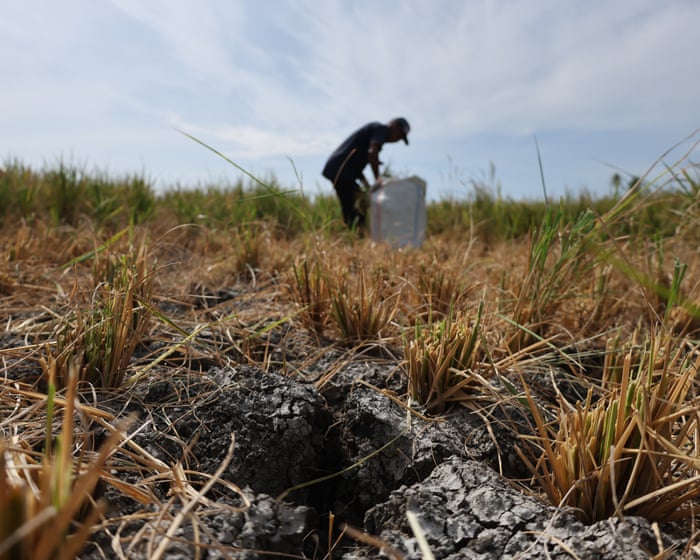
The rising heat from El Niño is already causing problems, from worsening wildfires in Indonesia to weakening vital monsoon rains in India. Its effects will spread worldwide, bringing higher fire risks to Australia and more severe floods to South America. In August, the World Food Programme said El Niño could push around 50 million people into acute hunger.
The climate crisis, driven by fossil fuel pollution, is already intensifying extreme weather and causing deaths. This summer, Europe experienced its most extreme heatwave on record, leading to at least 35,000 deaths. El Niño will amplify these impacts further, with the event’s scale described as “truly mind-blowing” and a “Godzilla-level” occurrence.
El Niño is a natural climate cycle where wind shifts over the Pacific raise ocean temperatures and release vast amounts of heat into the atmosphere. The latest data, from Monday, shows ocean temperatures at the heart of El Niño are 2.6°C above the 30-year average. This is already close to the highest anomaly ever recorded in satellite data—3.1°C in 2015—and there are still months to go before the expected peak.
Temperature anomalies graph
That peak is forecast to reach about 4°C in November, based on the average of 14 different models. Zeke Hausfather, a climate analyst, said that data from coral, tree rings, and historical records suggest no El Niño has reached this level in the last thousand years. Any temperature anomaly above 0.5°C is classified as an El Niño.
Another worry is that recent research shows global heating is now making El Niño cycles stronger, which in turn worsens the impacts of the climate crisis.
“El Niño is being supersized before our eyes,” said UN Secretary-General António Guterres. “The science leaves no room for doubt: the planet is in uncharted waters, and those waters are heating up. The world is in the danger zone of extreme weather. The race now is between rising risks and our commitment to take climate action and protect people. We must win that race.”
Forecast temperature anomalies
“El Niño has the potential to deliver a massive blow to communities and economies across the world,” said Celeste Saulo, Secretary-General of the UN’s World Meteorological Organization (WMO). “We are already seeing disruption and devastation from droughts and floods, and we expect these impacts to increase as El Niño intensifies.”
“Never before in the 50-year history of the WMO have we launched such a major mobilization with national meteorological and hydrological services, who are on the frontline of delivering forecasts and services to save lives and livelihoods. We have no time to lose.”
Skip past newsletter promotion
Free newsletter | Weekly
Sign up to Down to Earth
The planet’s most important stories. Get all the week’s environment news—the good, the bad, and the essential.
Enter your email
Sign up
After newsletter promotion
The WMO’s El Niño updates are the world’s most authoritative forecasts, based on a consensus of models from climate prediction centers globally. The latest update, published on Thursday, said El Niño is firmly established and will intensify into a “very strong event” in the coming months, with “big impacts” including floods, drought, and extreme heat continuing well into 2027.Ocean surface temperatures were an extraordinary 8°C above average during July and early August.
Chris Jaccarini, from the Energy and Climate Intelligence Unit in the UK, said: “Extreme weather around the world has driven up food prices, hitting the poorest the hardest. This isn’t just about the food we import, but also what we grow at home.”
“After five heatwaves and widespread drought, British arable farmers are now facing the worst harvest on record in 2026. And yet, without action, these could be the good years. Unless we rapidly cut emissions and strengthen resilience, the impacts of climate change will keep getting worse, with El Niño amplifying the trend every few years.”
The Guardian’s climate forum 2026
On Tuesday, 20 October, join Damian Carrington and our panel of experts, including Prof Andy Haines, Katie White MP, Asad Rehman, Shruti Suresh, Gareth Thomas, and Amy Fairman, for an evening focused on hope and solutions. Book tickets here or at guardian.live.
Frequently Asked Questions
Here is a list of FAQs about the UNs warning of a recordbreaking El Niño written in a natural tone with clear simple answers
General Beginner Questions
1 What exactly is El Niño
Think of it as a giant pool of warm water that sloshes over to the eastern Pacific Ocean every few years This warm water changes how air moves above the ocean which messes with weather patterns all around the globe
2 Why is the UN warning about it growing before our eyes
The UNs weather agency is watching the ocean temperatures rise faster than expected They are seeing the conditions strengthen in realtime and early data suggests this could become one of the strongest El Niños ever recorded
3 What does a recordbreaking El Niño mean for normal people
It means extreme weather is more likely Depending on where you live that could mean severe droughts massive floods hotterthanusual temperatures or stronger storms It disrupts farming water supplies and can even affect the price of food globally
4 When is this El Niño supposed to hit its peak
Typically these events build up through the summer and reach their maximum strength between November and January The UN is warning that the impacts will be felt most strongly during that winter period
5 Is climate change causing this El Niño
El Niño is a natural weather pattern that has always happened However scientists say climate change is making the effects worse The extra heat already in the atmosphere from global warming means the natural heat of El Niño is added on top leading to more extreme temperatures and heatwaves
Advanced Impact Questions
6 How is the UN measuring this to know it will be recordbreaking
They monitor sea surface temperatures in the central and eastern Pacific If the temperature rises more than 2 degrees Celsius above the average for that region its considered a super El Niño The current data is tracking close to those historic highs similar to the massive events in 1997 and 2015
7 What specific weather disasters are we likely to see
Its a tale of two extremes Expect heavy rainfall and flooding in parts of South America and the southern US Conversely expect severe drought and wildfires in Australia