Hasan Piker calls it the bus driver test: “You get on a bus and you have 30 seconds to explain whatever online phenomenon took place to the bus driver without them looking at you and saying, ‘Get off the fucking bus.'” He says most online discourse, no matter how heated, fails this test. A prime example is an incident last weekend when someone on a Dublin street asked to take a picture with Piker, then held up a photo of his dog and shouted “Free Kaya!” Forget the bus driver; explaining the significance of that event alone could take the rest of this article. The broader point is that there’s often a jarring overlap, or more frequently a disconnect, between the online and offline worlds.
Piker finds himself in this in-between space more and more these days. Until recently, the 34-year-old was known mainly to the deeply online, particularly Americans in their 20s and 30s, largely due to his presence on the streaming platform Twitch, where he has 3 million followers. But since Donald Trump’s election, Piker has become a sought-after voice in “the real world” for his views on the beleaguered political left, especially concerning that intensely scrutinized demographic: young men.
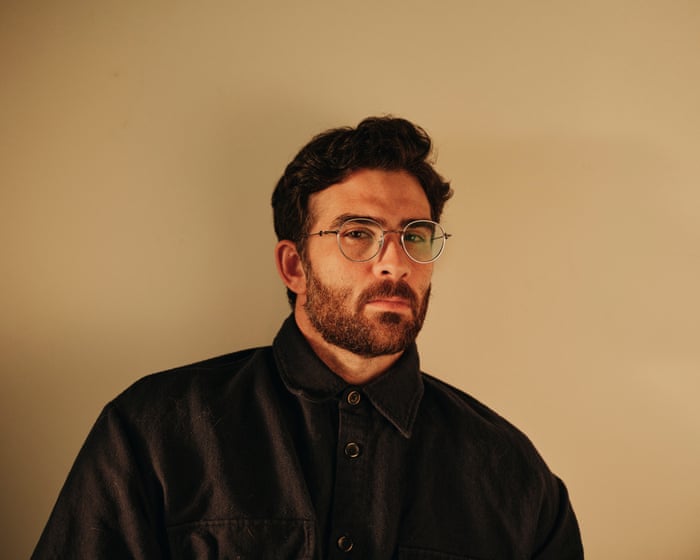
Predictably, this also makes Piker a favorite target of the political right. His enemies have plenty to dislike: his outspoken political views, his Turkish Muslim background, and his alliances with progressive politicians like Zohran Mamdani, Alexandria Ocasio-Cortez, and Ilhan Omar (all of whom have appeared on his show). But they also resent that Piker—tall, muscular, fashionable, and handsome—is far too alpha to fit leftist stereotypes. He hasn’t shied away from leveraging his physique in shirtless, sometimes even pantless, magazine photoshoots or social media selfies, sparking articles with headlines like “30 sexy pics of Hasan Piker that prove the only thing hotter than his takes is his bod.” He’s often labeled as “the Joe Rogan of the left” (yawn), “the AOC of Twitch,” or a “himbo gateway drug to leftist thought,” though none of these quite capture him.
“I’ll be honest, I had no idea this is what I’d be doing,” says Piker from his Los Angeles studio. “If someone had asked me if I ever thought I’d become a Twitch streamer, I’d have said, ‘What is Twitch?’ The concept of a YouTube influencer didn’t even exist when I was growing up.” It’s morning, and he’s preparing for his daily 11 a.m. show. He typically broadcasts live for seven or eight hours straight, speaking off the cuff about current events, lifestyle stories, what he’s up to, playing video games, reacting to memes and media clips, and interacting with the constant stream of messages scrolling in the top left corner of the screen.
It’s a communal experience—a good hang, you might say. It also sounds exhausting. He estimated that in 2020, he spent 42% of the entire year livestreaming. “I’ve cut it down to seven hours a day, but sometimes I still do eight. And on top of that, I take Sundays off now.” He’s already running late this morning. As we continue talking, his Twitch chat begins filling with posts asking, “Where the hell is he?”
Establishing himself on Twitch, a platform primarily for livestreaming video games (and owned by Amazon since 2014), was a conscious decision, Piker says. His media career started with The Young Turks, the progressive online news network co-founded by his maternal uncle, Cenk Uygur. Piker’s parents are Turkish immigrants, and he grew up between New Jersey and Istanbul before studying political science and communication at Rutgers University. He graduated to hosting his own show on The Young Turks in 2016—earning the nickname “Woke Bae” in the process—but in 2018, he decided to go solo on Twitch to counterbalance what he saw as the overThe space was plagued by overwhelmingly right-wing, often racist, misogynistic, and xenophobic views. “There’s a lot of ideological diversity among gamers, developers, and consumers,” he says. “But unfortunately, the market for political expression in this hobby is so heavily dominated by the right, and that’s the same for pretty much everything.”
Take physical fitness, for example. It’s now assumed that any young man who goes to the gym is likely to fall under the influence of Andrew Tate and other figures from the ‘manosphere.’ “This creates a weird attitude where a lot of liberal or progressive people look at these spaces and think, ‘Why is everyone such a right-winger?'” he says. “And I don’t think that’s the case. It’s just what it looks like on the internet.”
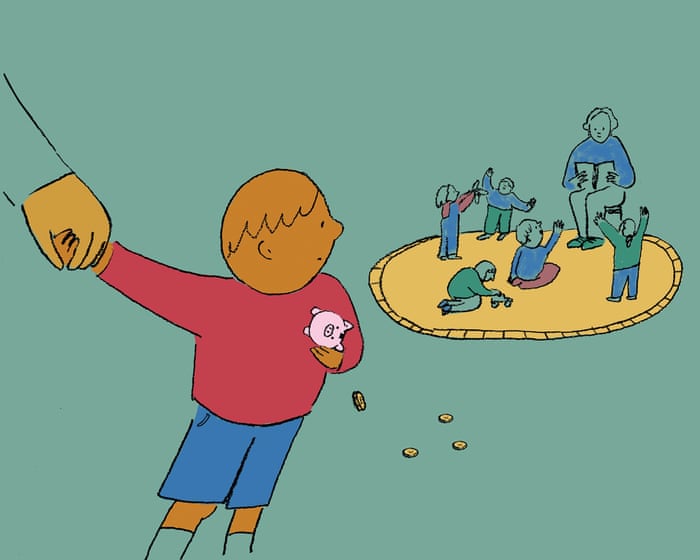
Piker says this is the problem with the American left in general: they’ve conceded so many cultural spaces to the right. “You still have to market your ideas… but they just completely gave up on all notion of marketing or branding. They think these are bourgeois concepts. But unfortunately, it’s actually doubly important to try and engage people and make these sorts of politics more appealing, because there is a century of anti-socialist thought deeply baked into the American collective consciousness, whether from Red Scare propaganda or the modern version of that, which basically tells children, ‘Sharing is caring is actually communism.'”
Piker is consistently critical of the Trump administration on his show, especially its foreign and immigration policies, but he is no loyal Democrat. Even before the 2024 presidential election, Piker was not optimistic about their prospects, lamenting how little Kamala Harris and the Democrats were really offering, how they were losing young men, and how much better organized the Trump campaign was online. He describes his own politics as broadly social democrat and “empathy-first.” “My position is actually the normal position in most of the world, but it’s a very abnormal position that many Americans have not encountered.”
One danger of Piker’s relaxed, relatable, long-form commentary style is that he occasionally goes too far, giving his opponents ammunition. He has been suspended from Twitch four times for perceived offensive content, including once for calling a white person a “cracker.” Most notoriously, in 2019, during a broader critique of American foreign policy, he said that “America deserved 9/11,” a comment seized upon by Fox News and other outlets. Piker later apologized and said the language was inappropriate, but the association with being a “Muslim communist terrorist” has never gone away. The 9/11 comment resurfaced earlier this year during the New York mayoral race in an attack ad against Mamdani, whom Piker supported early on.
Likewise, Piker’s vocal support for Palestinians and condemnation of Israel and Zionism have led to accusations of antisemitism (Piker says he has never criticized Jewish people). He has also been ridiculed for expressing admiration for China after a trip there last month. “Regardless of its flaws and repressive attitudes towards certain groups, they have achieved something phenomenal in greatly improving the material conditions of the average Chinese person,” he tells me.
Piker doesn’t seem particularly fazed by any of this. “I have no issues getting vilified by people on the right. I love when my enemies hate me,” he says. “It is what it is: they talk shit; what are you gonna do?”
The hate constantly threatens to spill over.However, things are different offline. In May, Piker—an American citizen—was held for two hours by U.S. border agents upon returning from France. He said they questioned him about his views on Trump and Gaza before releasing him. “I think they did it because they know exactly who I am, and they wanted to put the fear of God into me,” he remarked. In September, Trump ally Laura Loomer posted on X: “Hopefully today President Trump can negotiate the permanent deportation of Hasan Piker back to Turkey. It’s time for him to go home.” Piker’s reply was brief: “I was born here, dumbass.”
This level of hostility helps explain the “Free Kaya!” incident in Dublin. While it might not make sense to an outsider, it highlights the strange blend of Piker’s offline and online reality. It began during an October Twitch stream when his dog Kaya—often seen sleeping in the background—suddenly yelped, just as Piker was reaching for something off-camera. Conspiracy theorists quickly claimed he had activated a shock collar on the dog, branding him cruel. In reality, Piker explained that Kaya had “clipped her foot” on something while he was reaching for a can of Zyn nicotine pouches. He even held up the dog’s collar on camera to show it wasn’t a shock collar. Despite this, his critics continued to attack him, scouring past streams for “evidence” of animal abuse and turning “Collargate” into a meme. Even PETA issued a statement: “Hasan Piker has denied using a shock collar on his dog, and we hope that’s true…” This led to the ambush by a stranger in Dublin.
Piker took the encounter in stride—he’s often recognized in public. He simply said, “Nice to meet you,” and nothing else happened. Online, however, the encounter was clipped from his livestream with his reply edited out. “They wanted to make it look like I was shocked and devastated,” he said. “But that didn’t happen in real life, so they had to manipulate the footage.” Even if it seems trivial, this kind of online outrage is constantly manufactured, amplified, and fed into the anti-Piker feedback loop. “Even us having this conversation will probably lead to others saying, ‘We got to him—he’s really shaken, so we should do it again.’”
This, he says, captures the difference between the offline and online worlds: “It’s very hard to sustain that level of negative energy in real life without coming off as hysterical and odd. Online interactions create an environment where you can be as hostile and ruthless as you want. But in the real world, if you act like that, most people will look at you and think, ‘What the hell is wrong with you?’”
That Dublin encounter was relatively low-stakes since Piker was in Ireland to receive an award from Trinity College. In the U.S., he feels less safe. The assassination of Charlie Kirk in September was a shocking example of where online hate can lead. Piker and Kirk were contemporaries—even mirror images in some ways. They had debated on stage before and were scheduled to debate again in two weeks when Kirk was shot at an outdoor event at Utah Valley University. Piker watched the incident unfold in real time on his livestream, his reaction shifting from disbelief to horror as followers sent him updates and video clips (which he did not broadcast).
Piker still does real-life livestreams in the U.S. “I can’t let fear guide my life,” he said. “I’ve gotten death threats for the last 12 years. It peaked during the Charlie Kirk situation, but at the end of the day, it’s just an unfortunate part of being in this space.” Unhealthy parasocial relationships can develop, where viewers feel an intense, one-sided connection, but Piker continues to navigate both worlds despite the risks.He acknowledges that such intense fan attachments come with the territory, “and they can very quickly turn into unhealthy, stalker-style relationships. The love can turn into hate in an instant.”
So, is there a way to foster healthy parasocial bonds? “I try to steer people back toward real-world activities, like organizing. Just being around and talking with other people is profoundly important. It’s unbelievable that we even have to discuss this.”
Does he follow his own advice—the guy who broadcasts from his room all day? “I’m live for eight hours a day; you’re absolutely right,” he admits. “But every moment I’m not online, I’m out in the real world. I don’t shy away from going outside, visiting third spaces like public parks, and constantly spending time with my ‘normie’ friends—people who don’t even have Instagram accounts. That’s how I try to stay grounded.” He has plenty of allies in the streaming world too, but he largely keeps his offline life private.
Having been so prescient about the 2024 election, how does Piker view the next few years in U.S. politics? “Things change fast, but if you look for glimmers of hope, it’s the left candidates who are really galvanizing the public,” he says, referring to progressive figures like Mamdani, AOC, and Omar—his own generation. “We have to lean into that, because it feels like a matter of life or death now, like the death of democracy. If Democrats continue blocking left-flank candidates, I foresee the political climate turning very, very dark. It already has, and it will likely get worse. I’ll do everything I can to avoid that outcome.”
The American left could arguably use someone like Piker—genuine, sharp, a skilled communicator with a loyal following, and easy on the eyes. But he doesn’t sound tempted. He makes occasional appearances on panels, podcasts, and even TV, but he isn’t drawn further into traditional media, partly due to editorial constraints and because “the audience is moving in my direction, away from legacy publishers.” Unless things shift dramatically, he has no plans to change course. “I’m just taking everything one day at a time.” Perhaps he’s more effective right where he is—battling it out in what many see as hostile territory.
Above all, he still clearly loves it: “I find a lot of emotional fulfillment in what I do.” As he speaks, he keeps one eye on the clock and his message feed. It’s nearly 11:30. “Right now my offline chat is freaking out that I’m not live yet.” Another marathon stream awaits, and he’s eager to begin.
This piece was amended on 11 December 2025. An earlier version stated that Hasan Piker had 3 million subscribers on Twitch; that should have said followers.
Frequently Asked Questions
Frequently Asked Questions About Hasan Piker
BeginnerLevel Questions
Q Who is Hasan Piker
A Hasan Piker is a popular political commentator and live streamer known for his progressive and socialist viewpoints He streams primarily on Twitch and creates content on YouTube
Q Why is he so prominent on the left
A Hes become a major voice by explaining complex political issues in an accessible often humorous way to a large online audience particularly younger viewers He blends entertainment with political education
Q What does he thrives on the backlash mean
A It means that criticism and attacks from his opponents often fuel his content and engagement He frequently addresses and rebuts his critics on stream which can draw more attention to his arguments and grow his audience
Q What are his main political beliefs
A He advocates for democratic socialism including policies like Medicare for All strong labor unions wealth redistribution and systemic critiques of capitalism and US foreign policy
Q Where can I watch his content
A His primary platform is Twitch where he streams daily Clips and full segments are also uploaded to his YouTube channel
Advanced Detailed Questions
Q How did Hasan build such a large audience
A He combined a background in traditional media with the interactive longform format of live streaming His consistency charisma and ability to react to and explain news events in realtime helped him build a dedicated community
Q What are some common criticisms of him
A Critics from both the right and some on the left often accuse him of being a champagne socialist or hypocrite due to his wealth of oversimplifying issues or of fostering a divisive or overly aggressive online community
Q How does he handle the criticism about his personal wealth
A He argues that living in a capitalist society doesnt invalidate his critique of it and that he advocates for systemic change that would apply to him He also points to his unionized staff and significant donations to mutual aid and progressive causes
Q Can you give an example of how backlash boosts his platform
A When prominent critics like mainstream news hosts or conservative figures