Hungary’s Prime Minister, Viktor Orbán, has accused Ukrainians of plotting to attack his family, as a bitter standoff between Kyiv and Budapest continues.
Orbán and his allies appear to be using the dispute for maximum political gain ahead of next month’s election, which could end his nationalist government’s 16-year rule.
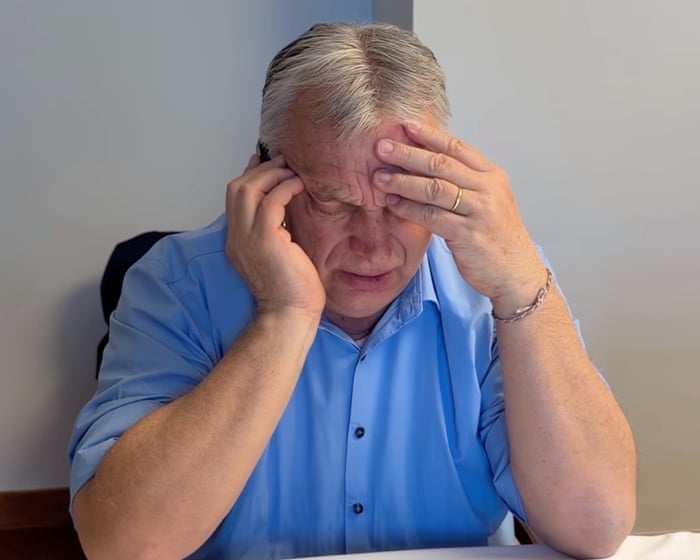
In a video released on Wednesday night, Orbán is shown speaking to his daughters on the phone. “I’m sure you’ll see on the news that the Ukrainians have threatened not only me but you as well,” he said, appearing emotional. “My kids and my grandkids… We have to take this seriously but we must not be scared.”
Orbán was apparently responding to comments by Hrihoriy Omelchenko, a retired politician who served in Ukraine’s SBU security service in the 1990s. A marginal figure known for making outlandish claims, he threatened Orbán in a televised interview this week, suggesting vigilantes could target the Hungarian leader if he did not change his anti-Ukrainian stance.
Earlier, Volodymyr Zelenskyy had threatened to “give this person’s address to our armed forces” while speaking about Orbán, comments that reportedly prompted European allies to ask the Ukrainian president to tone down his rhetoric.
Orbán has long been the most pro-Russian leader among EU nations, leading to strained relations with Kyiv. With polls showing him up to 20 points behind challenger Péter Magyar ahead of next month’s parliamentary elections, Hungary’s anti-Ukraine campaign has intensified.
The latest tensions were triggered by Ukraine’s claim that it would take several weeks to repair an oil pipeline transporting Russian oil to Hungary, which was reportedly damaged in a Russian drone attack.
In response, Orbán vetoed further EU sanctions on Russia and an additional €90 billion loan for Ukraine. Last Friday, in an escalation that shocked Kyiv, Hungary’s anti-terrorism police impounded a convoy of two armored cars belonging to Oschadbank, Ukraine’s state savings bank, and arrested the seven Ukrainians accompanying it.
The convoy was transporting tens of millions of euros in cash and 9kg of gold bars from Vienna to Kyiv, in what Ukraine described as a routine government cash transfer that Hungarian authorities had been notified about. Budapest suggested the money was being laundered. The seven men were held incommunicado for over 24 hours before being driven to the border with Ukraine and deported. The money and gold remain in Hungary.
“Every aspect of the procedure was unlawful, in particular the withholding of legal assistance,” said Lóránt Horváth, the men’s Hungarian lawyer. One of the seven, who has diabetes, was taken to hospital during interrogation. “He did not know exactly which hospital, as he was transported in handcuffs and with a hood over his head.”
According to Ukraine’s foreign ministry, the man was taken to hospital after being “forcibly injected with a drug, after which his blood sugar level rose sharply and hypertension began.” Horváth said he had no information about a forcible injection but noted he was only able to speak to his clients by phone because authorities denied him access.
The Ukrainian foreign ministry stated that “psychological and physical pressure was exerted on the detainees” throughout their detention. A security source in Kyiv said authorities were stunned after debriefing the men upon their return, claiming Hungarian officials had tried to pressure them into making a confession video.”Underhanded tactics can be aggressive, but these seem like Russian-style methods,” the source said.
This week, officials from both countries continued to exchange accusations over the incident. Ukraine’s Foreign Minister, Andrii Sybiha, wrote: “The mask has slipped… They openly admit to taking hostages and stealing money to demand ransom. Such actions must be called by their name: state terrorism.”
His Hungarian counterpart, Péter Szijjártó, dismissed Sybiha’s accusations as “pretty pathetic” and said he should answer questions arising from the incident: “Why did they bring a huge amount of cash to Hungary? What did they intend to spend this money on? Is this the money of the Ukrainian war mafia?”
With the Hungarian election set for April 12, there is ample time for further escalation. This week, the Financial Times reported that a Kremlin-aligned think tank has drafted plans for a disinformation campaign to boost Orbán’s re-election chances. Orbán has been one of the few EU leaders advocating for maintaining positive relations with Moscow, and Szijjártó has visited Russia 14 times since the full-scale invasion of Ukraine in 2022.
Orbán has claimed that a victory for his opponent would drag Hungary into the war on Ukraine’s side, while portraying himself as a peace candidate who remains neutral in the conflict.
“Is Zelenskyy forming a government, or am I? And if we only have these two options, I suggest myself,” Orbán told supporters at a rally on Wednesday in the town of Vecsés.
Frequently Asked Questions
FAQs Viktor Orbáns Claim of Family Threats from Ukrainians
BeginnerLevel Questions
1 What did Viktor Orbán claim happened
He stated that his family has received threats from Ukrainians as Hungarys election campaign intensified
2 Who is Viktor Orbán
He is the longserving Prime Minister of Hungary and the leader of the Fidesz party
3 Why would Ukrainians threaten him
Orbán has maintained a controversial relationship with Ukraine often criticizing its government opposing EU sanctions on Russia and blocking some EU aid to Ukraine which has created significant tension
4 Has this been proven
As of now Orbán has made the claim publicly but no specific evidence has been provided to the public and Ukrainian officials have denied any involvement
5 What has Ukraine said about this
Ukrainian officials have firmly denied the allegations calling them absolute lies and a provocation
Advanced Contextual Questions
6 Why is the timing of this claim significant
It was made during a heated election campaign in Hungary Such claims can be used to rally domestic support by presenting the leader as a defender of the nation under external pressure
7 What is the historical context of HungaryUkraine relations under Orbán
Relations have been strained for years primarily over the rights of the ethnic Hungarian minority living in western Ukraine Orbáns government accuses Ukraine of restricting their cultural and language rights
8 How does this relate to Orbáns stance on the RussiaUkraine war
Orbán has pursued a policy often seen as the most Russiafriendly in the EU and NATO He has repeatedly called for a ceasefire and negotiations framing the war as a conflict Hungary must stay out of which directly opposes Ukraines position and that of most Western allies
9 Could this be a political strategy
Analysts and opponents suggest it could be By claiming to be a victim of foreign threats a leader can strengthen their strongman image distract from domestic issues and consolidate their voter base ahead of an election
10 What has been the international reaction