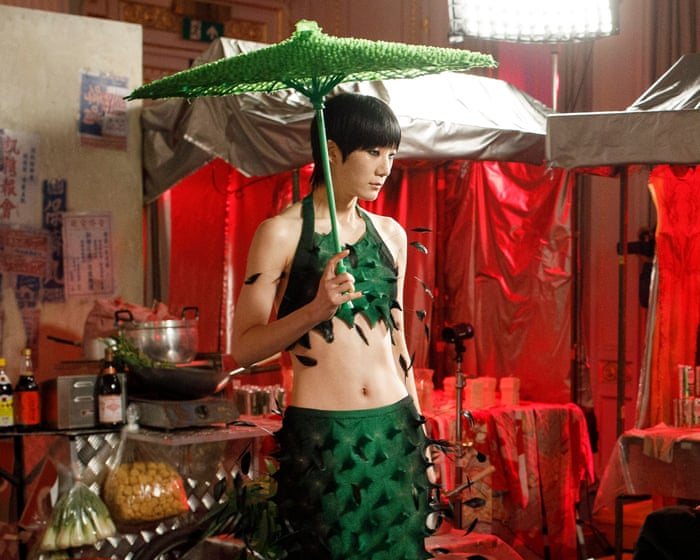
“If you reach out and run your fingers along this skirt, you’ll feel soft feathers appliquéd onto it,” says fashion designer Chet Lo. “The skirt is emerald green with black panels on the sides and is designed to fit very closely to the body.” Lo is speaking to a group of six guests before his London Fashion Week show, giving them a sneak peek of his new collection, which will soon be revealed on the catwalk.
The group stands gathered around Lo, listening carefully as he guides them through each piece, pausing to pass around items ranging from jackets with spiky back panels to form-fitting knitted dresses. The chance to feel each garment is essential for this group: everyone present has low vision or is blind.
This “touch tour” was organized by Making Fashion Accessible, an initiative from the nonprofit Hair & Care, founded by celebrity hairstylist Anna Cofone in 2019. The initiative aims to promote greater inclusivity in the fashion and beauty industries.
After the tour, guests are invited to sit in the front row at Lo’s show, where they are given headphones to listen to audio descriptions of each look on the catwalk, along with a booklet containing fabric samples from each piece.
“I am fully blind, so I got so much out of it,” says Jane Manley, a data analyst at the Royal National Institute of Blind People. “As someone with no usable sight, I focus on feeling the energy in the room and hearing people’s reactions as a model walks by. I can connect that energy with the swatch booklet and the audio description to build a picture of each look in my mind.”
Livi Deane, a model and beautician who lost her right eye to cancer at age 12, says that without the fabric samples, she would “struggle to see the texture, as my depth perception is quite poor. With the swatch booklet and audio descriptions, I feel like I’m not missing out on anything.”
Disability activist Catrin Pugh describes the experience as giving her back “the feeling that vision loss takes away.” Pugh’s vision was affected by a 2013 accident that left her with 96% burns. “I have enough vision that I can roughly see the general silhouette of a look on the catwalk and maybe the colors. So I used the fabric swatches when I sensed there was some detail I was missing. Being able to feel, imagine, and sense the detail opened up the whole show for me, so I felt completely part of it.”
Cofone, who has worked with clients like Dua Lipa and Lana Del Rey, credits growing up with a blind father as the inspiration behind the initiative. “There’s this preconceived idea that a blind or low-vision person won’t care about how they look, but that couldn’t be further from the truth,” Cofone says. “I saw firsthand, as my father was losing his eyesight, how dressing well really helped him maintain his identity and independence.”
Cofone began by hosting hair and self-care workshops for blind and low-vision women, later expanding her efforts to make Fashion Week more accessible. “When you think about fashion as a whole, especially catwalk shows, they are so not inclusive. I was already working in the industry…”I started chatting with my team about features we could implement to help blind and low-vision guests visualize the looks. Cofone launched Making Fashion Accessible in 2024 and has since partnered with designers like Roksanda, Erdem, and SS.Daley.
Lo has been involved from the start. The New York-born, UK-based designer is known for his tactile pieces, worn by celebrities like Doja Cat and Kylie Jenner. “Low-vision and blind people are a demographic that’s really overlooked in the industry,” says Lo. “Many wrongly assume they can’t enjoy fashion because they experience clothes differently. I wanted to show other designers how easy it is to include this group. It’s not hard to consider their needs.”
The “purple pound,” representing the spending power of disabled people and their households, was estimated at £274 billion in 2023. Yet this group is often overlooked, especially in fashion. Physical stores can be hard to navigate, and websites often lack detailed image descriptions that help shoppers visualize a garment’s look and fit. Adaptive features like braille tags for colors and fabrics, or easy fastenings like magnets instead of buttons, are also frequently ignored by both luxury and high-street brands.
“I’ve always loved clothes,” says Lucy Edwards, a disability activist and content creator who lost her sight at 17 due to a rare genetic condition. “Fashion was part of my identity, and suddenly I couldn’t access it. It’s also a big part of our culture, and I felt I’d lost that too.” At Lo’s show, Edwards’ guide dog, Miss Molly, sits beside her. She loves the feathered looks for being “massively tactile.” She compares the touch tour to how she shops: “I feel for the neckline cut, whether a piece is cut on the bias, the stitching, or sleeve length.”
Vix Seffens, a brand strategist with a vision impairment from Stargardt’s disease, calls the event “a multi-layered sensory experience.” Stargardt’s is a genetic eye condition. “I had normal eyesight until I was 11, then it began to deteriorate,” Seffens explains. “I can’t drive, recognize people unless they’re right in front of me, or read a newspaper. I need things on screen to be large and zoomed in.” For her, the touch tour and fabric swatches help form a clearer picture of what’s on the catwalk.
“I’m so used to looking at things and not really seeing them,” Seffens says. “Attending the show is like solving a puzzle in your mind. You’ve felt the fabric, so you know its weight and movement. I also get to see the colors up close. Then you hear the audio, and all those pieces come together. Suddenly, the experience of the show becomes so much richer.”
Edwards says that attending fashion week and hearing from Lo directly makes her feel more daring.I used to avoid mixing colors and textures because I was following some made-up fashion rule in my head. Now, it feels like we can do whatever we want and be whoever we want to be. That’s what fashion week is all about. I lost my sight through no fault of my own, so why should I stand here and say, “Oh, I’ll just accept not feeling like myself”? I don’t have to do that in 2026.
Frequently Asked Questions
Of course Here is a list of FAQs about making London Fashion Week more accessible for visually impaired guests based on a photo essay concept
General Concept Definitions
Q What does it mean to make a fashion show accessible for visually impaired guests
A It means creating ways for people who are blind or have low vision to experience the event beyond just sight This includes providing detailed verbal descriptions tactile experiences and considering sound and scent
Q Isnt fashion just a visual thing How can you experience it without sight
A Fashion is multisensory Its about the texture of fabrics the sound of materials moving the structure of a garment and the atmosphere of a show Accessibility highlights these oftenoverlooked elements
Q What is a photo essay in this context
A Its a series of photographs that document the accessible features and experiences at the event The images would be paired with detailed alttext descriptions so that the story is also accessible online
The Experience Features
Q What specific things were offered to visually impaired guests at this event
A Likely features included Tactile tours audio description of the live show programs in braille or large print and trained guides to assist
Q How does audio description at a fashion show work
A A trained describer speaks into a microphone describing the key visual details in realtime between the music and applause They might describe a models walk the cut and color of an outfit or the dramatic set design
Q What could you actually touch during a tactile tour
A Guests might feel fabric swatches explore the beading or embroidery on a garment feel the weight and drape of a material or even touch accessories like hats or structured bags
Q Was the music and sound part of the accessible experience
A Absolutely The soundscape is a huge part of the shows mood Designers might choose music that complements the texture of the clothes and this becomes a key part of the experience for everyone
Benefits Importance
Q Who benefits from these changes besides visually impaired guests
A Everyone Tactile