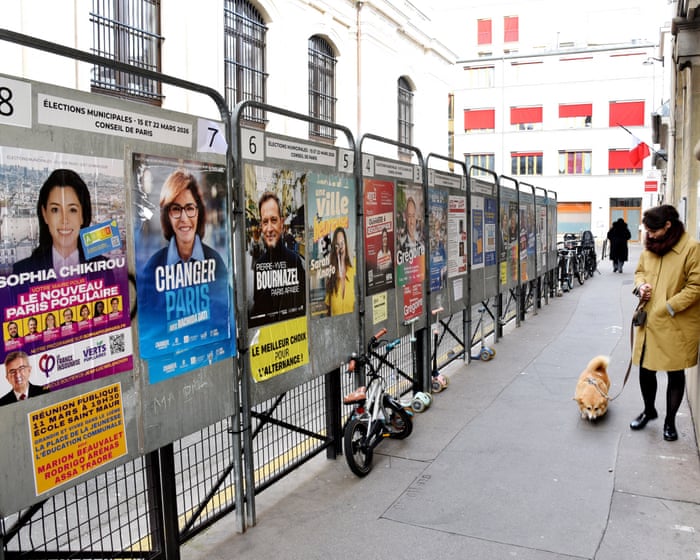
In a race that is expected to be decided by just a few thousand votes, every single vote matters—including those of Paris’s disgruntled dog owners, for the candidates vying to become the city’s next mayor.
Both frontrunners in Sunday’s second-round vote, left-wing candidate Emmanuel Grégoire and former conservative culture minister Rachida Dati, have promised a range of dog-friendly measures if elected, and for good reason. In the last city council elections in 2020, the winner, outgoing Socialist mayor Anne Hidalgo, beat her closest rival, Dati, by about 57,000 votes. This year’s race is predicted to be even closer, and Paris is home to more than 100,000 dogs.
“That’s something like 170,000 votes,” said Loïc Amiot of Paris Condition Canine, an umbrella group of 10 dog-owners’ associations in the capital that has published a manifesto calling for better treatment of the city’s dogs.
“Today, bans are the rule and permissions the exception. We aim to reverse that,” Amiot said, noting that of roughly 550 parks and open spaces in Paris, only 165 allow dogs on leads, and the city has just 43 enclosed areas where dogs can run freely.
Sensing an electoral opportunity, Grégoire has launched an entire Instagram account dedicated to dogs, HotdogswithEmmanuelGrégoire, featuring various dogs busily “charming the future mayor of Paris into opening more dog runs.”
Not to be outdone, Dati, who is running again, has been photographed cuddling dogs in multiple social media posts, saying they have “not found their rightful place in the city” and promising to “expand access everywhere, on and off the lead, in dedicated runs … All over.” Several other candidates have also pledged dog-friendly policies.
The race for Paris city hall, held by the Socialist Party since 2001, appears too close to call. Grégoire, a former deputy mayor, comfortably won the first round with 38% of the vote, followed by Dati with 25.5%. The radical left’s Sophia Chikirou came third with 11.7%.
The two other second-round qualifiers, centrist candidate Pierre-Yves Bournazel (11.3%) and far-right candidate Sarah Knafo (10.4%), both withdrew after last Sunday’s first round. Bournazel merged his list with Dati’s, while Knafo urged her voters to “defeat the left” by backing the conservative candidate.
As a result, for Grégoire’s left-green alliance to retain city hall, they may need to rely on centrist Bournazel voters who are hesitant to support Dati, as well as Chikirou voters concerned that a vote for the radical left could hand victory to the right.
Paris is one of the world’s most dog-dense cities, with an estimated 2,857 dogs per square kilometre. Dati, the mayor of the 7th arrondissement, has hosted “doggy drinks” and advocates for “shared spaces” so people can “bring their pets along freely, without bother or judgment.”
Grégoire has also promised more outdoor spaces and subsidised vet visits, and—like Chikirou—plans to allow dogs on all public transport. Currently, dogs may travel on the Métro if muzzled or in a basket, but only assistance dogs are permitted on buses or trams.
Bournazel had similarly committed to creating more dog runs, especially along the Seine, while Knafo proposed dog-friendly taxis. “Dogs are our friends, not a detail of urban planning,” Bournazel said. “They live in our…”We all live together in the city.
The Crufts winner’s conviction for animal cruelty has led to complaints being filed with Channel 4.
Dogs have long been part of political life in France, with every president since Charles de Gaulle owning at least one. However, Marine Le Pen, leader of the far-right National Rally, is famously a cat person and even earned a cat breeding diploma in 2021.
A February poll by Ifop showed 58% of voters considered animal welfare a priority. But while walking her Jack Russell terrier near the Square d’Anvers in the 9th arrondissement—where a “caniparc,” or dog run, will soon open—Hélène Rix remained skeptical.
“Paris really isn’t a great city for dogs, far from it,” she said. “I’ve been fined in parks three or four times. But let’s be honest, this is just politicians looking for votes. And given everything else going on, am I really going to vote based on a policy toward dogs? I don’t think so.”
Frequently Asked Questions
Of course Here is a list of FAQs about the caninefocused proposals in Pariss mayoral race written in a natural conversational tone
FAQs Pariss Doggy Campaign Promises
Beginner Definition Questions
1 What are Doggy Drinks Is this a joke
No its a real proposal Doggy Drinks refers to the idea of setting up dedicated water fountains for dogs in parks and public spaces across Paris They are essentially hydration stations designed specifically for our fourlegged friends
2 What does subsidized vet visits mean
It means the city government would help pay for part of the cost when you take your dog to the veterinarian This could work like a discount or a cityfunded voucher to make basic healthcare more affordable for pet owners
3 Why is this suddenly a big issue in the mayoral race
Paris has one of the highest densities of dogs in Europe Candidates are focusing on practical quality of life issues for both residents and their pets Addressing dog welfare and public cleanliness is a way to connect with a huge number of voters
Benefits Goals
4 Whats the main benefit of public dog water fountains
They keep dogs hydrated during walks which is healthier and safer especially in summer heat It also discourages dogs from drinking from potentially dirty puddles or pestering cafe patrons for water making the city more pleasant for everyone
5 How would subsidized vet visits help the city
The goal is to improve overall animal welfare by ensuring more dogs get preventative care and necessary treatments Healthier dogs mean fewer strays reduced risk of disease spread and potentially lower longterm costs for animal control
6 Wouldnt this just encourage more people to get dogs
Proponents argue its more about supporting responsible ownership for the dogs already in Paris The policies are aimed at current pet owners not necessarily incentivizing new ones
Common Concerns Practicalities
7 Isnt this a waste of taxpayer money Shouldnt we focus on human issues
Candidates supporting these ideas argue that city budgets can address multiple priorities They see pet care as a human issue affecting millions of residents daily lives mental wellbeing and public hygiene Its framed