Esta foi uma Copa do Mundo cheia de personagens, moda ousada e provocações. Vimos Thomas Tuchel pulando pelo vestiário da Inglaterra como um adolescente em sua primeira festa para todas as idades, e Iván Barton mandando Miguel Almirón para fora do campo como se o estivesse condenando à morte. Mauricio Pochettino e sua camisa de US$ 500 trouxeram energia nova e inspiração para os guarda-roupas de homens de meia-idade e redondinhos em todos os lugares. O "vai se foder" amigável do brincalhão Javier Aguirre para Anthony Gordon levou as relações entre México e Inglaterra ao ponto mais caloroso desde a paz mediada pelos britânicos que encerrou a Guerra dos Pastéis de 1839.
Erling Haaland mostrou que é possível ser um tubarão na frente do gol e o Scooby-Doo assim que a bola entra na rede — provando que nada no futebol é tão importante que não possa abrir espaço para uma comédia online boba. Até Harry Kane, um homem que muitas vezes parece ter sido treinado pela mídia desde o útero, ganhou vida breve e emocionantemente.
Toda Copa do Mundo precisa de um herói cult. Em 2026, temos o coração apaixonado à beira do campo, Sebastián Beccacece.
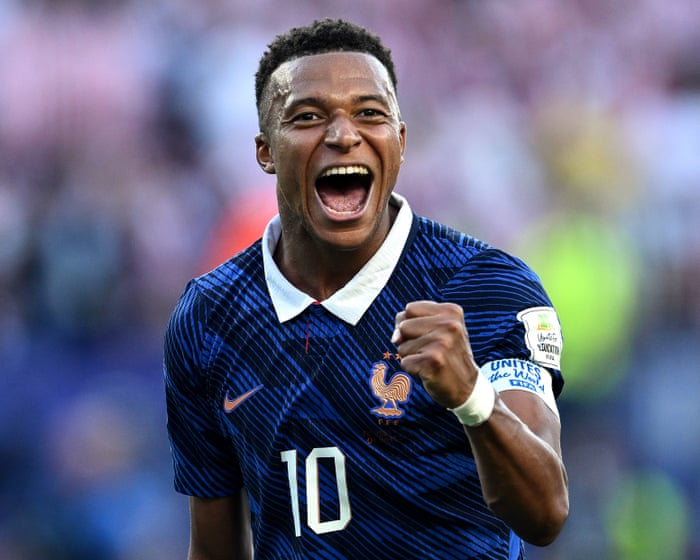
E então, é claro, há o jogador que domina tudo — o homem cujo controle sobre seu jogo, seu humor e suas palavras é tão calmo quanto seus braços cruzados quando comemora um gol. As pessoas zombam de Kylian Mbappé desde que ele era criança, e ele tem dado a última risada por quase o mesmo tempo. Aos três anos, crescendo nos subúrbios de Paris, Mbappé cantava o hino nacional francês com a mão no coração, e as pessoas riam com indulgência sempre que ele anunciava — o que fazia frequentemente — que estava destinado a jogar pela França. Agora ele é o maior artilheiro de todos os tempos do futebol francês. Os amigos de seus pais uma vez lhe compraram uma maquete do estádio Bernabéu como piada, provocando-o por dizer que jogaria no Real Madrid. Agora ele é o jogador mais importante de Madrid. No sábado, Mbappé passou os minutos finais de uma difícil partida das oitavas de final contra o Paraguai — onde marcou o pênalti da vitória — passeando pelo campo com um grande sorriso bobo no rosto. Para onde quer que este homem vá no futebol, o resultado é sempre o mesmo: Mbappé vence. E ele está rindo!
A essa altura, todos sabemos o que torna Mbappé uma força tão imparável em campo: sua velocidade fulminante, sua força de buldogue e seu jogo de pés tão magnético que parece criar seu próprio clima. Em francês, chamam todo jogador de ponta de "crack", e ninguém se encaixa melhor nesse som do que Mbappé. Magro e feroz, ele é o chicote personificado — um homem tão rápido que já superou um de seus próprios sobrenomes: antes Mbappé Lottin, agora é apenas Mbappé. As últimas quatro semanas aprofundaram nossa apreciação desses talentos. A visão do árbitro, a inovação tecnológica que nos mostrou mil tipos diferentes de pelos de antebraço masculino, nos ajudou a entender como a velocidade e a agressividade de Mbappé também vêm com uma espécie de facilidade de batedor de carteiras — como cada demonstração de força é também um ato da mais leve misericórdia. As finalizações de Mbappé não são nada além de rápidas: ele é o gato e o raptor, a raposa e o mangusto.
Nesta Copa do Mundo, Mbappé passou de pacote completo do futebol a um ícone cultural completo, seu domínio fora de campo igualando sua grandeza dentro dele. Os memes do ditador começaram a sério pouco antes do torneio e só ganharam velocidade desde então. Agora são tão difundidos que Didier Deschamps sentiu a necessidade de apontar que seu capitão não é realmente um tirano, mas um jogador amado e querido por seus companheiros. Deschamps não me parece o homem mais engraçado trabalhando na França hoje, então não é surpresa que ele não tenha percebido que as comparações com Mobutu — alegremente abraçadas pelos próprios companheiros de Mbappé — só aumentam a reputação do grande general em campo, não a prejudicam. Tornar-se fonte de piadas online... Ser transformado em meme é o maior elogio na cultura moderna — ser transformado em meme é ser visto como lendário. Os grandes jogadores que vieram antes de Mbappé — Messi, Ronaldo, até Zidane — eram simplesmente insossos demais para receber esse tratamento. Kyks Baps lidera uma nova geração tão cheia de personalidade e energia que finalmente deu algo com que trabalhar para os brincalhões online do mundo.
E, claro, ele é muito mais do que isso — muito mais. A cultura do futebol francês valoriza a habilidade verbal tanto quanto os dribles, os chapéus e as roletas. Afinal, este é um país que reúne academias profissionais de futebol para uma competição anual de eloquência no palácio presidencial. Mbappé, que encenava suas próprias coletivas de imprensa falsas desde os cinco anos, sempre foi um dos grandes faladores do esporte. Mas neste torneio, ele atingiu novos patamares. Seus pensamentos e impressões espontâneas — sobre tudo, desde a evolução estilística do futebol ("É sempre o time que vence que está certo") até a "libertação de espaço" de seus companheiros e a sempre intrigante questão das pausas para hidratação ("Não peçam a opinião dos jogadores, somos como cata-ventos") — jorram daquela cabeça aerodinâmica, como um trenó, com autoridade urgente. Ele também tem sido firme na defesa de Deschamps, que continua sendo uma figura estranhamente divisiva na França, apesar de todo o seu sucesso. Mbappé descreveu memoravelmente seu treinador como um brincalhão, um amigo e um "pai disciplinador" ao mesmo tempo.
Para um jogador guiado pelo destino, Mbappé sempre teve um senso aguçado e incomum de seu próprio ridículo. Quando adolescente, depois que colegas de classe zombaram da camisa que ele usava na escola, ele apareceu no dia seguinte com jeans boca de sino e tênis de corrida com velcro (não é o tipo de coisa que um adolescente preocupado com a moda em Paris usaria no início dos anos 2010), expandindo a piada para poder participar da diversão também. "Je suis beau, madame?" ele perguntou à sua professora de francês enquanto posava com suas calças boca de sino. "Sou bonito, senhora?" Numa coletiva de imprensa durante o Campeonato Europeu de 2024, depois de gerar polêmica na França ao pedir um voto contra a extrema direita nas eleições legislativas daquele ano, Mbappé respondeu a uma pergunta de um repórter que disse estar sentado à "extrema esquerda" do jogador. Sem perder o ritmo, Mbappé respondeu: "Ainda bem que você não estava do outro lado."
Raramente, ou nunca, o futebol viu um jogador tão consciente de sua própria imagem na mídia, ou tão pronto para abraçar sua própria capacidade de polarizar. Se Michael Jordan vivia pela regra de que "republicanos também compram tênis", Mbappé parece perfeitamente confortável com um mundo onde apoiadores de extrema direita andam descalços. Não é surpresa que, nesta Copa do Mundo, a intervenção pública mais contundente de Mbappé tenha sido uma denúncia inflamada da senadora paraguaia que lançou um ataque racista contra ele após a derrota de seu país para Les Bleus nas oitavas de final. "Senhora Celeste Amarilla, a senhora é uma mulher desprezível", começou a declaração de Mbappé; "Nunca permitirei que pessoas como ela tenham a liberdade de espalhar seu ódio e racismo pelo mundo", terminou, com um clique satisfatório. Após anos de neutralidade monótona e evasão entre a elite esportiva global, o abraço revigorante de Mbappé ao combate político parece entrar em uma nova era geológica. A Ronaldocena acabou; começa a Mbappécena.
O profundo senso de princípio, o intelectualismo sem desculpas, a atenção à importância das palavras junto com o domínio contínuo dos gestos: que forças, exatamente, se uniram para construir essa personalidade notável, para criar o mito de Mbappé? "É uma questão de educação", disse o próprio homem certa vez. Segundo todos os relatos, Mbappé era uma criança inquieta, mas seus pais... Seus pais fizeram tudo o que podiam para ajudá-lo a administrar sua energia sem fim. A partir do sétimo ano, ele teve um psicólogo dedicado, além de aulas de flauta e teatro e, claro, futebol também.
A casa da família em Bondy, um subúrbio a nordeste de Paris, ficava a apenas um quarteirão do Stade Léo-Lagrange, um estádio municipal de futebol pequeno, mas bem equipado. Esta Copa do Mundo começou com 56 jogadores de Paris — mais do que de qualquer outra cidade do mundo. Nas últimas semanas, houve muita conversa sobre a banlieue, o anel externo onde vive a maioria dos 13 milhões de habitantes de Paris, e de onde vieram quase todos os seus grandes jogadores de futebol. Bondy é o solo fértil do futebol francês moderno; o companheiro de equipe de Mbappé, William Saliba, também cresceu lá, assim como muitos outros jogadores de futebol profissionais, do passado e do presente. O que torna a banlieue parisiense um viveiro tão poderoso de talentos do futebol? É a densidade populacional, o financiamento público para esportes, o design das habitações sociais, o tamanho dos campos ou a mistura muitas vezes tensa de comunidades migrantes e a cultura francesa dominante?
Provavelmente tudo isso, mas Bondy também mostra outro lado desse ambiente urbano que vale a pena notar. A uma curta distância a pé do estádio onde Mbappé se tornou jogador de futebol, entre lojas de artigos para o lar com desconto, monótonos blocos de apartamentos pré-fabricados e muitos campos de futebol, você encontrará um conjunto habitacional extravagante com torres cilíndricas cobertas de azulejos brilhantes e coloridos; uma obra-prima brutalista de Oscar Niemeyer, com suas curvas, que serve como bolsa de trabalho local, um centro de ajuda mútua e organização de trabalhadores; e uma piscina pública com o nome do cantor belga Jacques Brel. Nada captura a mistura de restrição e promessa da banlieue francesa — seu estranho poder como fábrica de talentos do futebol — melhor do que esta única milha quadrada de monotonia, comodidades, solidariedade e ambição.
E no centro de tudo isso, unindo diferentes vertentes da cultura francesa e incorporando o melhor das tradições autocríticas e esportivas de seu país, está Mbappé. Ele é um estadista e um comediante, uma fonte de memes e um porta-voz de verdades duras, a mais alta autoridade moral do esporte e sua piada mais confiável. Ele é jogador de futebol, flautista e ator. E ele está avançando para a história da Copa do Mundo com a confiança calma de alguém que conheceu seu próprio caminho desde o início. Levanta-te, Rei Kylian: Napoleão pode ter tido que se coroar, mas não há dúvida sobre de quem é a cabeça que usa a coroa do futebol hoje.
**Perguntas Frequentes**
Aqui está uma lista de perguntas frequentes sobre o papel único de Kylian Mbappé durante a Copa do Mundo, abordando suas personas de estadista, comediante e porta-voz da verdade.
1. **O que significa que Mbappé desempenhou o papel de estadista na Copa do Mundo?**
Ele agiu como um diplomata. Falou cuidadosamente sobre grandes questões e lidou com a pressão da mídia com maturidade, muitas vezes desarmando tópicos tensos sem causar drama.
2. **Você pode dar um exemplo de Mbappé sendo um comediante durante o torneio?**
Sim. Em coletivas de imprensa, ele fez piadas brincalhonas sobre sua própria idade e riu de comparações com lendas como Pelé. Ele também usou o humor para aliviar o clima após partidas difíceis, como brincando sobre suas chances perdidas.
3. **Que verdades duras Mbappé entregou?**
Ele foi franco sobre as fraquezas da equipe, admitindo que a França não jogou bem na fase de grupos. Ele também disse aos repórteres que a equipe não se importava com estilo, apenas com resultados, e que vencer feio era aceitável.
4. **Por que as pessoas disseram que Mbappé se tornou o rei desta Copa do Mundo?**
Porque ele não apenas marcou gols. Ele também controlou a narrativa, lidou com a imprensa, liderou a mentalidade da equipe e mostrou que poderia ser um líder tanto dentro quanto fora do campo.
5. **Como Mbappé equilibrou ser sério e engraçado?**
Ele alternava tons naturalmente. Em uma entrevista, ele dava uma resposta séria sobre racismo no futebol e, minutos depois, fazia uma piada sobre o penteado de um companheiro de equipe. Isso o tornava identificável e imprevisível.
6. **Ele usou as redes sociais para esses papéis?**
Sim. Ele postou memes engraçados de si mesmo após vitórias, mas também usou sua plataforma para denunciar notícias falsas e defender companheiros de equipe. Ele misturou conteúdo leve com declarações diretas e sem rodeios.
7. **Qual é um momento específico em que ele entregou uma verdade dura?**
Após a vitória da França na semifinal, ele disse: "Tivemos sorte de Marrocos ter tido chances. Se jogarmos assim na final, perdemos." Essa honestidade surpreendeu muitos fãs que esperavam uma resposta mais diplomática.
8. **Como seus companheiros de equipe reagiram ao seu comportamento de estadista?**
Eles