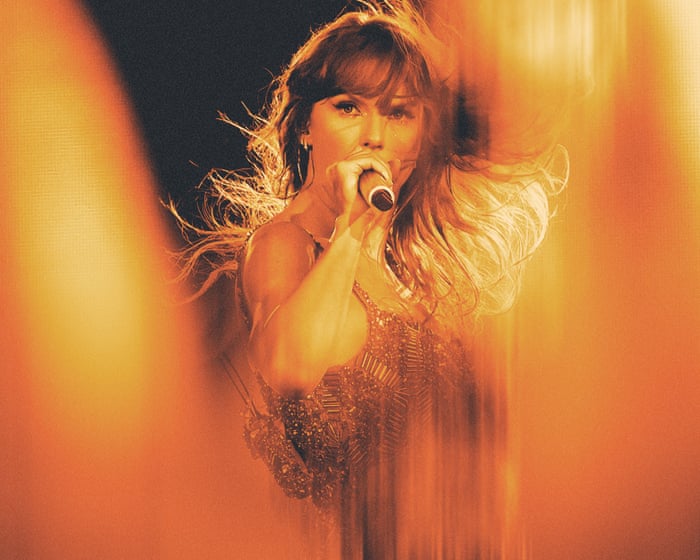
Nicola Coughlan is tired of the topic of “body positivity,” and thank goodness, because so am I. “The thing I say sometimes that pisses people off is I have no interest in body positivity,” she said in a recent interview. Like Coughlan and undoubtedly many other women, I’m exhausted by discussing it, thinking about it, reading about it—all of it (I do recognize the irony in writing about it, but hear me out). In the same interview, Coughlan recalled an encounter with a fan: “I remember this really drunk girl once talking to me in a bathroom being like, ‘I loved [Bridgerton] because of your body’ and started talking about my body, and I was like, ‘I want to die. I hate this so much.'”
She continued: “It’s really hard when you work on something for months and months of your life, you don’t see your family, you really dedicate yourself and then it comes down to what you look like—it’s so fucking boring.”
Coughlan—a brilliant actor—has been particularly unlucky, as her body is a talking point that won’t leave her alone. Even when, as she noted, she is a size 10, she is still labeled as “plus-sized.” In some ways, it reminds me of Kate Winslet in her early fame. The tone of the conversation is different; Winslet faced the merciless misogyny and body fascism of 1990s media, while Coughlan is held up as a “body-positive role model” as part of a pushback against that. Yet both actors have fought a similar battle: wanting to create meaningful work in their art form, only to find that everyone seems fixated on their supposedly “atypical” bodies.
Coughlan and I are from the same generation, coming of age when Winslet was being viciously body-shamed. It was a difficult time to become a young woman, and some of us have coped better than others in dealing with that era and its impact on our self-esteem from relentless, internalized self-scrutiny.
That’s why the body-positivity movement, popularized during fourth-wave feminism, was initially embraced. After years of shaming and fatphobia, here was a movement celebrating women’s bodies in all their diverse beauty. I found it inspiring, but over time, I realized it never truly quieted that constant, self-hating hum from years of being conditioned to see only our flaws.
To me, body positivity felt like another standard to meet—something other women excelled at. Loudly loving my body didn’t seem like a realistic goal. Maybe, deep down, I knew that the pressure to love my body was itself a directive to overthink it, when true liberation meant not having to think about my body at all. Perhaps it was less about loving it and more about learning to live with it peacefully.
Surely, true liberation is directing energy elsewhere—toward making art, engaging in politics, loving people and the planet? One of the most heartbreaking aspects of the toxic overemphasis on women’s bodies is how it erodes everything else that makes life meaningful. Coughlan’s frustration is mine too: all that time and energy could be spent on something far more worthwhile.
This seems to be the case no matter which way the pendulum swings, from body negativity to body positivity and back again. Currently, body positivity is fading, plus-sized models are losing work, and we appear to be returning to a 1990s worship of ultra-thinness, amplified by the rise of weight-loss injections. Presumably, another backlash will follow. I just don’t think I have it in me to engage. As Coughlan says, it’s…This is so boring. Whether we’re talking about body negativity or body positivity, we’re still just talking about the body at the expense of everything else. What we should be aiming for is body neutrality—simply accepting our bodies. That’s where real freedom lies.
We all reach this point, or start moving toward it, in different ways. Maybe it’s through giving birth, becoming seriously ill, or seeing your body accomplish something demanding. I’d describe it as a kind of detached respect and appreciation for what your body can do, as the vehicle that carries you through the world.
While writing my novel Female, Nude, where my characters grapple with these questions, I attended a lot of life drawing classes for research. As an exercise in learning body neutrality, there’s nothing better. If I had a young daughter, that’s what I would recommend. At first, you might look at the model and notice the sorts of “flaws” that can be erased online with a click—the softness of an upper arm pressed against the side, the folds from a slight turn of the torso, cellulite. Then something shifts: the body dissolves into a series of lines and curves. Observing becomes detached, and the human body becomes simply a fact. Instead of constant, tedious discussion about the female body, truly looking at it—properly and without judgment—feels to me like a step toward balance and, hopefully, freedom. It’s a process, but Coughlan’s refreshing attitude reminds me to keep trying.
Rhiannon Lucy Cosslett is a Guardian columnist and author of Female, Nude
Do you have an opinion on the issues raised in this article? If you would like to submit a response of up to 300 words by email to be considered for publication in our letters section, please click here.
Frequently Asked Questions
FAQs About Nicola Coughlans Statement on Body Positivity
BeginnerLevel Questions
1 What did Nicola Coughlan actually say about body positivity
She expressed a view that the constant focus on body positivity can sometimes keep us stuck in cyclical repetitive conversations instead of moving toward deeper acceptance or different frameworks for selfimage
2 What does body positivity typically mean
Its a social movement focused on accepting all bodies regardless of size shape skin tone gender or physical ability and challenging unrealistic beauty standards
3 Is Nicola Coughlan against people feeling good about their bodies
No not at all Her critique seems aimed at the discourse around body positivityhow we talk about itand whether that talk leads to meaningful lasting change or just goes in circles She advocates for selflove and acceptance
4 Whats an example of a repetitive discussion she might mean
Debates that often loop back to Should we celebrate all bodies vs What about health or public figures being praised or scrutinized solely for their body confidence rather than their work or other qualities
Advanced Conceptual Questions
5 Whats the difference between body positivity and body neutrality
Body Positivity Actively loving and celebrating your body
Body Neutrality Focusing on what your body does for you rather than its appearance Its about taking the emphasis off looks altogether Some find this a more achievable and less pressurized goal
6 What might be a next step beyond these repetitive discussions
Shifting focus toward systemic change or embracing frameworks like body liberation which connects body acceptance to broader social justice issues
7 Could this view be seen as controversial within the body acceptance community
Yes Some may feel criticizing any part of the body positivity movement undermines its vital work in challenging fatphobia Others agree the conversation needs evolution to avoid performative trends and address root causes of body shame
8 How does Nicola Coughlans role in Bridgerton and Derry Girls relate to this
As a actress in hugely popular shows her body is constantly in the public eye and subject to