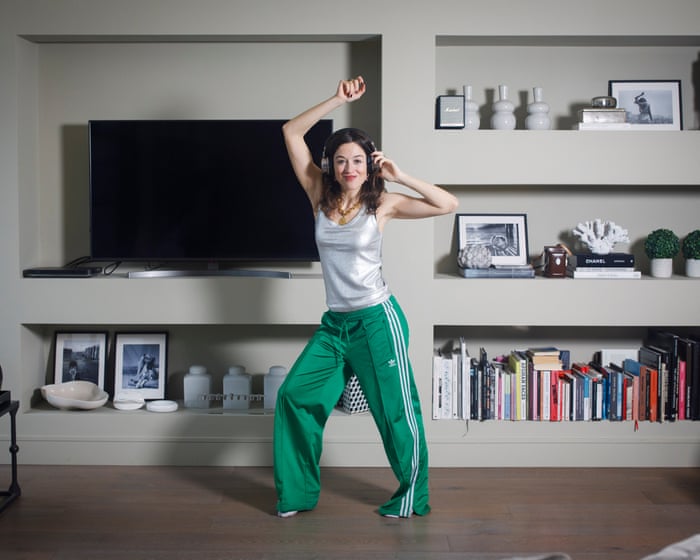
My first time dancing at home was a happy accident. I had just finished a tense conversation with an ex, and my body was reacting in its usual way: heart racing, breath shaky, fingers trembling. I needed to calm down. Scanning my flat for quick fixes—my bed, some stale chocolate biscuits, a pack of cigarettes—I settled on the kitchen radio, which had been quietly humming in the background all morning.
It was tuned to BBC Radio 6 Music, playing a disco track I didn’t recognize. But the beat was steady, woven with tambourines, synths, and drums. I turned up the volume, and before I knew it, my body was moving—arms swinging, feet tapping, hips swaying. I kept going into the next song, leaning into the feeling and getting more animated to another upbeat 70s tune, imagining myself on a crowded, sweaty dance floor. It felt silly, but by the third song, my anxiety had melted away. I was smiling, and I felt like myself again.
For me, anxiety has always felt like an overflow of energy.
Let me be clear: I can’t dance. Not even a little. It’s a running joke among my friends, who’ve mercilessly teased my moves for years. And honestly, they’re right—I have no rhythm, and my hips are so stiff they practically announce how awkward I am. Still, I’ve always loved dancing and kept at it at weddings, festivals, and parties. And since that day in my kitchen, I’ve realized it also helps calm me down.
Anxiety, for me, always shows up as too much energy. Depending on my mood or where I am in my cycle, it can be set off by anything—a misunderstanding with a friend, a stressful work email, a lost lipstick, or an ignored Instagram DM. I have other ways of coping, but they’re either less healthy (like sugar and cigarettes) or not always available. Exercise is great, but not if I’ve already worked out that day, and I’m certainly not going to ask someone for sex on demand.
Dancing, though, is always there. I’ve noticed it works by taking that anxious energy and turning it into movement. With the right music, the same jittery feeling that makes me shake can easily turn into a terrible dance move. And honestly, the worse it is, the better—because then I end up laughing at myself.
I’m not sure where the impulse came from. But as a devoted Grey’s Anatomy fan, I suspect it’s linked to the show’s famous “dance it out” tradition, where the two female leads, Meredith and Cristina, would dance together during tough times.
There are a few rules, though. First, the song has to be unfamiliar. Otherwise, there’s always some memory or association that keeps me stuck in my head. It also helps to be alone—for obvious reasons—since I haven’t found a “dance it out” partner yet. And it works best at home, though it can happen anywhere. This little trick has been a game-changer; now, when anxiety hits, I know how to handle it. Or at least how to make myself smile again, which is more powerful than you might think.
And if you ever see a short brunette wriggling awkwardly on the tube, just let her be. She’s just dancing it out.
Frequently Asked Questions
Of course Here is a list of helpful and natural FAQs about discovering a simple enjoyable and free way to relax
General Getting Started
Q What is this simple enjoyable way to relax youre talking about
A Its a free relaxation technique that uses deep rhythmic breathing combined with focusing on a positive memory or a simple calming image in your mind
Q How is this different from just taking a deep breath
A While a single deep breath helps this method is a structured practice It combines sustained breathing with a mental focus which actively calms your nervous system and stops the cycle of anxious thoughts more effectively
Q Im a complete beginner Is this easy to learn
A Absolutely Its designed to be simple You dont need any special skills or equipment just a few minutes of your time and a quiet space to start
Benefits How It Helps
Q What are the main benefits of doing this
A The main benefits are reducing feelings of anxiety and nervousness slowing a racing heart calming shaky hands and clearing a frantic mind It brings a sense of control and peace
Q How long does it take to feel a difference
A Many people feel calmer within just a few minutes of starting the exercise With regular practice the overall sense of calm can last longer and become your default response to stress
Q Can this help with my anxiety in social situations or before a presentation
A Yes thats a perfect use for it Its a discreet tool you can use right before you step into a stressful situation to center yourself and reduce those shaking with nerves feelings
Practical Application Tips
Q Can you give me a quick example of how to do it
A Sure Sit comfortably close your eyes and take a slow deep breath in for 4 seconds Hold it for 2 seconds then breathe out slowly for 6 seconds As you breathe out picture a place that makes you happy like a quiet beach or a cozy room Repeat for 25 minutes
Q How often should I practice this
A For best results try to do it for 5 minutes once or twice a day You can also use it onthespot anytime you feel stress building