A senior official at the European Central Bank has warned that the climate emergency and the breakdown of nature pose a rapidly growing threat to the global economy.
Frank Elderson, a member of the ECB’s executive board, said the eurozone’s central bank is increasing its oversight of financial risks tied to the loss of “ecosystem services”—the natural processes and resources that support human activity.
“These services are not stable; they are declining quickly. That’s why we talk about the climate and nature crises,” he said. “Once we understand how dependent we are on them and how exposed banks are, we see that this is a real concern.”
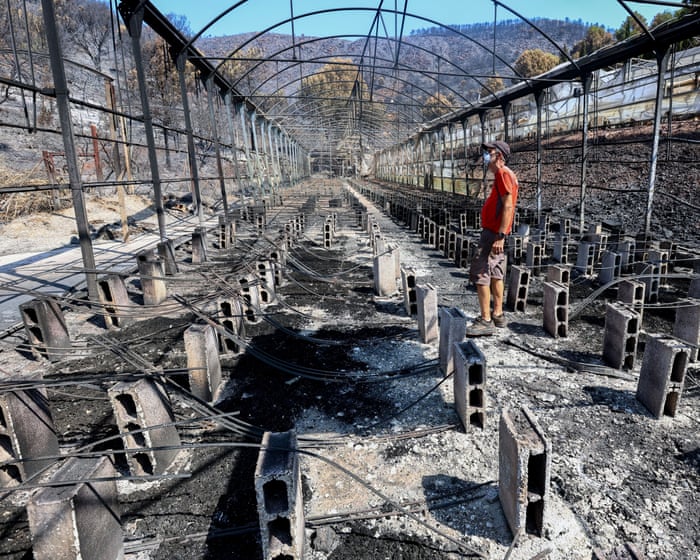
Across France and Spain, wildfires have erupted during record heat, destroying land, businesses, and homes. Beyond the direct human cost, this emergency will carry a heavy economic toll.
In an interview with the Guardian before the recent devastation across Europe, Elderson said it was clear that the growing frequency of natural disasters linked to global warming poses a risk to financial stability.
He noted that more work is needed to assess the risks from the collapse of ecosystem services, since dependence on nature is harder to map than the impact of a single extreme weather event.
Ecosystem services are any benefits derived from natural structures or processes—for example, water can serve as a raw material, a power source through hydropower, or a means of transport. It also provides habitats for marine life essential to food production and supports recreational activities.
“Nature-related risks can create significant economic and financial risks, including through their effects on credit risk, growth, inflation, and—over the long term—potential financial instability,” Elderson said.
“I’ve said in past interviews that if you destroy nature, you destroy the foundation our economies rely on. That got people’s attention. This isn’t some kind of tree-hugging, flower-power exercise. This is core economics. This is about financial stability and price stability at their heart.”
As the supervisor of Europe’s largest banks, the ECB has launched a work program to assess how worsening damage to ecosystem services could expose the financial system to risk.
The central bank plans to publish analysis later this year examining how “ecosystem degradation pathways” could affect credit losses for eurozone banks.
Elderson, a Dutch lawyer and central banker, played a key role in founding the Network for Greening the Financial System (NGFS) in 2017, alongside Mark Carney and François Villeroy de Galhau, then heads of the Bank of England and Banque de France. He served as the founding chair of the group, which now includes 114 global central banks and financial supervisors working to develop climate risk management.
The push for green finance has faced resistance under US President Donald Trump, as some businesses try to stay tied to the fossil-fuel economy. Trump pulled the US out of the NGFS last year, leaving Europe to lead on climate-related risks without the world’s largest economy.
Elderson said the banking industry remains convinced that climate and nature-related risks must be addressed.
“I think it would be very hard to find a bank in Europe that would honestly say they don’t think this matters,” he said. “I believe that time has passed.”
Frequently Asked Questions
Here is a list of FAQs based on the topic of the ECB warning about climate risks to financial stability
BeginnerLevel Questions
1 What exactly did the ECB official say
They warned that climate change and the transition to a greener economy are becoming major threats to the stability of our financial system This means they could cause banks to fail or markets to crash if we dont prepare
2 Why does climate change matter for my bank account
If a big flood destroys homes and businesses in a region the people and companies cant pay back their loans If this happens on a large scale banks lose money This could make it harder for you to get a loan or could reduce the value of your savings if you invest in affected companies
3 What does financial stability actually mean
It means the financial system is strong enough to handle economic shocks without collapsing If its stable your money is safe and the economy keeps working normally
4 How can the weather cause a financial crisis
Extreme weather can destroy assets that are used as collateral for loans It also forces insurance companies to pay out massive claims If these events happen too frequently insurance becomes unaffordable and banks are left with huge losses
5 Is this just about physical damage or is there more to it
There are two main risks
Physical risk The direct damage from climate events
Transition risk The risk that happens when we suddenly change policies to go green which makes the value of fossil fuel companies plummet overnight
Intermediate Advanced Questions
6 What specific risks is the ECB worried about for European banks
They are worried about carbon bubblesthe idea that banks are lending heavily to polluting industries If climate policies tighten these loans could become stranded assets causing massive losses for banks that are overexposed
7 How does the ECB plan to stresstest banks for climate change
They run scenarios like simulating a severe drought or a sudden spike in carbon prices They look at how these events would affect a banks capital reserves The goal is to find out which banks are most vulnerable and force them to hold more cash to cover potential losses