Think of a superfood. What comes to mind? Avocado? Turmeric? Quinoa? Most of us are familiar with the mainstream options—those dietary superheroes boosted by savvy marketing. They shine in the public imagination: blueberries with their polyphenols, kale packed with vitamin K, goji berries brimming with antioxidants.
But what qualifies as a superfood often comes down to trends. Take the recent comeback of cottage cheese, once dismissed as tragically uncool. Loved by Richard Nixon with pineapple (the Watergate tapes revealed more than just political secrets) and a diet-culture staple in the 60s and 70s, this creamy, tangy cheese curd is back in style. There are other nutrient-rich foods that haven’t yet gotten the marketing spotlight but deserve attention. Once common in the UK diet, they’ve unfairly fallen out of favor. So which nutritious foods have we forgotten, and which should we bring back?
Experts remind us that there’s no such thing as a single “superfood”—it’s more about a super diet. “We all want a simple answer. Is it fiber? Protein? Broccoli?” says Josiah Meldrum, co-founder of pulse specialist Hodmedod’s. “What we miss is that the real super ingredient is diversity.”
Peas
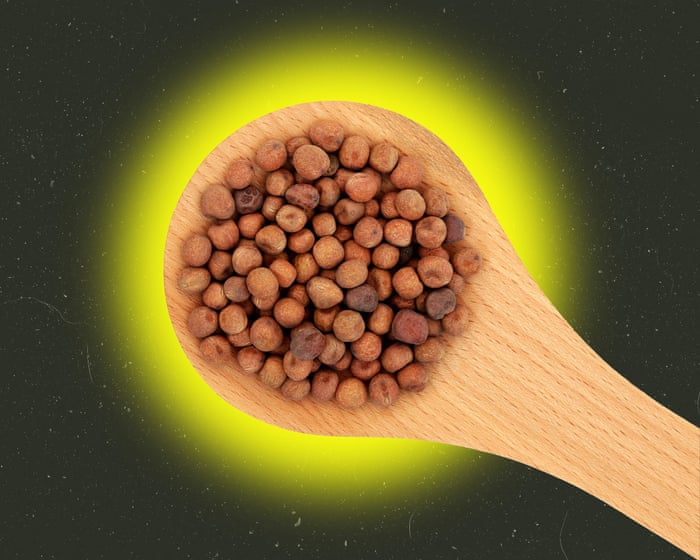
While beans get plenty of praise, peas are often overlooked. Dried peas share “all the same qualities as beans,” says Meldrum. He’s not referring to garden peas or petit pois, but varieties like carlin—a dark-skinned pea once common across northern Europe—and marrowfat, the chunky pea used for mushy peas. These peas have deep roots. “They were one of the first crops grown in the UK by Neolithic farmers,” says Meldrum. Food historian Annie Gray adds, “They’re our native pulse… we ate a lot of them, and they’re brilliant.”
Why did they fade into obscurity? Meldrum explains that early industrialization brought wealth and a “diversity of new foods from the late 18th century onward.” Eating humble peas became stigmatized—a sign of hardship. Gray puts it bluntly: “It’s because they’re associated with poverty.”
That’s a shame, because carlin peas are “really high in fiber, a good source of plant-based protein, and very versatile,” says nutritional therapist Xuxa Milrose. Dietitian Bini Suresh notes that “given the UK’s fiber intake remains below the recommended 30g per day, traditional pulses like these are incredibly relevant.” Boiled carlin peas make a nutritious snack, and marrowfat peas can be used like avocado on toast. “You don’t see them as the hero ingredient anywhere,” says Meldrum, “and they really, really could be.”
Prunes
Often seen as old-fashioned, prunes were fashionable in Elizabeth I’s time, and the bacon-wrapped prune canapé, devils on horseback, was a Victorian hit. “They’re basically like dates, but with less sexy PR,” says Milrose. “They’re just as high in fiber, rich in protective plant compounds called polyphenols, and contain a specific type of sugar called…”Sorbitol increases the amount of fluid your gut absorbs, which helps soften stool.
Prunes are still often found in Persian stews or Moroccan tagines. Their reputation as a natural laxative, which some find unappealing, is perhaps part of why they fell out of favor. But that shouldn’t put you off. According to Milrose, they are also “really high in vitamins and minerals like copper, potassium, magnesium, vitamin K… and they don’t have the effect that other sweet things would have in causing blood sugar to rise so rapidly, because of their sorbitol content and because they’re low in glycemic sugars.”
Plus, according to Suresh, “emerging research, particularly in postmenopausal women, suggests regular prune consumption may help maintain bone mineral density.” Milrose recommends putting them in porridge or, “if, say, you wanted to make your dessert a little bit higher in fibre, you could put them on top of meringues.”
Blackcurrants
We all reach for oranges when we feel that first throaty twinge of a cold—but Gray would have us also reaching for blackcurrants, which she says are much higher in vitamin C. So much so that “during the second world war the government encouraged people to go out and pick them to make cordial.” Even Ribena was, she says, originally co-invented as a health drink by a biochemist and a scientist in Bristol (she notes that now Ribena is “largely artificially flavoured with very, very sweet cordial”). Labelled by the RHS as “tiny little bombs of health and flavour,” according to Milrose, blackcurrants are also “full of anthocyanins, which are an antioxidant, known to reduce free radical damage.” Plus they’re “a really good source of potassium.”
Blueberries are one of the recognized superfoods, yet blackcurrants have languished. “People pick and choose which sort of berries to favour, but berries in general are really high in antioxidants, magnesium and they’re good sources of fibre,” says Milrose. For Suresh, “we’ve imported exotic berries for their antioxidant content while overlooking one growing in British hedgerows. There is growing interest in berry polyphenols and vascular health—blackcurrants quietly outperform many imported ‘superfruits.'” Gray thinks one reason they fell out of favor is because “we’ve also lost the taste for sour.” Because they’re not super sweet, “no one’s grabbing a handful of blackcurrants to eat,” says Milrose.
Perhaps it’s time to retrain ourselves and our sour-hating palates. Gray thinks that “everyone should have a blackcurrant bush in their garden… they grow really easily in the British climate… [and] it’s dead easy to make the cordial.” But one note of caution from Suresh: while the whole fruit offers fibre, juice does not.
Quark
A German word for curd, quark is “a soft, unaged cheese” that, according to Milrose, is not dissimilar to cottage cheese. Yet while cottage cheese has enjoyed a resurgence thanks to it being “so high in protein and low in fat as well as being really versatile,” quark is still out in the cold—in the UK at least—despite being “actually higher in protein and lower in calories than cottage cheese.” According to Suresh, “with increasing awareness of sarcopenia (age-related muscle loss), accessible protein sources like quark are valuable… it delivers high-quality protein without the heaviness of many cheeses.”
Milrose remembers her mum eating it in the 90s. But its history goes back further: many sources say it dates from 14th-century Europe, and it reportedly has some unfortunate associations with the Nazi regime. Still big in the country, according to Mintel, “owing to its long history, theIn Germany, quark is a much more established category than in other markets. However, it has long taken a back seat to the more dynamic yogurt sector when it comes to launching modern, lifestyle-oriented products.
Like cottage cheese, quark is a versatile ingredient suitable for both sweet and savory dishes, ranging from cheesecakes to smoothies and moussaka. These are three dishes that, while they sound fine together in a sentence, should never actually be served at the same meal.
Sprouts
We’re not talking about Brussels sprouts here, but rather alfalfa, broccoli, and other varieties—”the very young plants that are harvested and look somewhat like cress.” Sprouts are “essentially plants at their most concentrated growth phase—small in size but dense in bioactive compounds,” says Suresh. Milrose notes that broccoli sprouts, in particular, are “one of the richest sources of glucoraphanin, which your body converts to sulforaphane when you chew.” This is a sulfur-rich compound that is “really good for helping your body detoxify itself” and is also “really good at helping to lower inflammation.”
Sprouts were “very trendy in the 70s and early 80s when veganism was having a big resurgence,” she says. Because good vegan food was relatively hard to find at the time, Milrose believes vegans became skilled at growing their own food, including sprouts. More recently, people may have avoided them due to well-publicized risks: sprouts are common culprits in foodborne illnesses like salmonella and E. coli. But perhaps it’s time to reconsider—and learn how to prepare them safely, says Suresh—while also ensuring they are sourced from reputable suppliers. Milrose recommends eating them raw on top of salads or avocado (or marrowfat peas!) on toast. However, the Food Standards Agency is more cautious, advising that as a precaution, sprouts should be cooked thoroughly until piping hot throughout before eating. As Suresh points out, the risk of bacterial contamination is higher for certain groups, “particularly for pregnant women, the elderly, or immunocompromised individuals,” so for anyone in those categories, it’s best to avoid them altogether.
Liver
Once a staple of British cooking—”in the 60s and 70s, it was quite popular to eat liver and organ meats,” says Milrose—liver has all but disappeared from many British plates. It remains popular in many parts of the world and is often called “nature’s multivitamin.” While Milrose does not support or promote it (she advocates for plant-based eating), she acknowledges that liver is “nutritionally dense—it’s so full of protein, iron, and B vitamins, and is one of the best animal-based sources of vitamin A.” Suresh goes even further, calling it “one of the most nutrient-dense foods available.”
Its iron content, in particular, is impressive, especially since “iron deficiency remains the most common nutritional deficiency globally,” according to Suresh, “particularly among menstruating women.” Yet, she says, “one of our richest traditional sources has fallen out of favour.” Additionally, “haem iron (from animal sources) is more bioavailable than non-haem iron found in plant foods.”
But even the most carnivorous among us should consume it in moderation. Liver is high in vitamin A, and Milrose cautions that “moderation is key” to avoid vitamin A toxicity (the NHS advises avoiding liver entirely during pregnancy). Liver is also “high in purines, which can worsen or trigger gout.” One way to enjoy it is in a pâté or in a Lebanese dish like sawdeh, where it is finely chopped and cooked with spices.Sumac and pomegranate are used to sweeten chicken livers.
Emmer
This ancestor of durum wheat is, as Meldrum notes, “one of the original cereals.” Originating in the Fertile Crescent of the Near East, it has persisted in parts of Europe where it was traditionally eaten because it adapts well to challenging growing conditions. While it hasn’t gained widespread popularity, there is a group of consumers in the UK who appreciate emmer for its exceptional nutrition, high fiber content, and rich flavor.
Meldrum describes it as “nutritionally fantastic.” Speaking of whole grains in general, and emmer specifically, he explains that the seed coat—usually removed in white flours—remains intact. This layer contains most of the nutrients, aside from carbohydrates.
So why isn’t it more common? “It doesn’t respond well to nitrogen fertilizer, so it isn’t suited to conventional farming, and there hasn’t been any push from agribusiness to promote it,” says Meldrum.
Emmer is versatile and has a nutty taste that makes it more flavorful than rice. Meldrum suggests using it as a simple substitute for rice, bulgur wheat, or couscous. While it’s easy in our busy, convenience-driven lives to rely on the same rice every day, eating a wide variety of foods is essential for this kind of “super-diet.”
As Meldrum points out, such a diet is actually quite traditional: “Historically, our diets would have been more diverse than we imagine.” Today, we might see an illusion of abundance and diversity in supermarkets, with their many fancy packages, but in reality, we depend on very few species of plants and animals. Two hundred years ago, he says, “our diets would have been supplemented with wild and forest foods that we no longer eat.” Perhaps all is not lost—some of these foods may be forgotten, but they haven’t disappeared entirely.
Frequently Asked Questions
FAQs Peas Other Overlooked Superfoods
Q1 What does it mean that peas are criminally overlooked
A It means peas are packed with nutrients like protein fiber and vitamins but people often dismiss them as just a boring side dish or a frozen vegetable ignoring their true superfood potential
Q2 Okay but what exactly makes a food a superfood
A A superfood is a marketing term for foods exceptionally dense in nutrients antioxidants vitamins or minerals that offer significant health benefits for relatively few calories
Q3 What are the main health benefits of eating peas
A Peas are a great source of plantbased protein and fiber which aid digestion and keep you full Theyre also rich in Vitamin K for bone health Vitamin C for immunity and various antioxidants
Q4 You mentioned forgotten superfoods What are some examples besides peas
A Other oftenoverlooked superfoods include lentils sardines beet greens prunes barley and pumpkin seeds Each offers unique concentrated nutrients
Q5 I only know peas from a can or the freezer aisle Are those still good
A Yes Frozen peas are fantastictheyre frozen at peak freshness retaining most nutrients Canned peas are convenient but watch for added sodium rinsing them helps
Q6 How can I easily add more peas to my diet beyond just a side dish
A Blend them into pestos or smoothies mash them into guacamole or hummus stir them into soups stews and risottos or toss them into salads and pasta dishes
Q7 Are there any common problems or downsides to eating these superfoods
A For some people a sudden increase in highfiber foods like peas and lentils can cause temporary bloating Introduce them gradually and drink plenty of water Also for canned varieties be mindful of sodium content
Q8 Whats one simple tasty recipe to start with for these forgotten superfoods
A Try a Power Green Mash Steam peas and beet greens together then mash with a bit of olive oil garlic lemon juice and a sprinkle of pumpkin seeds on top Its a nutrientpacked side