As one Green activist described it, the party faces a never-ending series of “constantly good problems to have.” But how does a party adapt when its membership suddenly triples? And when a majority of people in an organization are new, is it even the same entity anymore?
The numbers alone are striking. Before Zack Polanski became leader last September, the Greens in England and Wales had around 66,000 members. That figure has now soared to 215,000 and continues to climb rapidly.
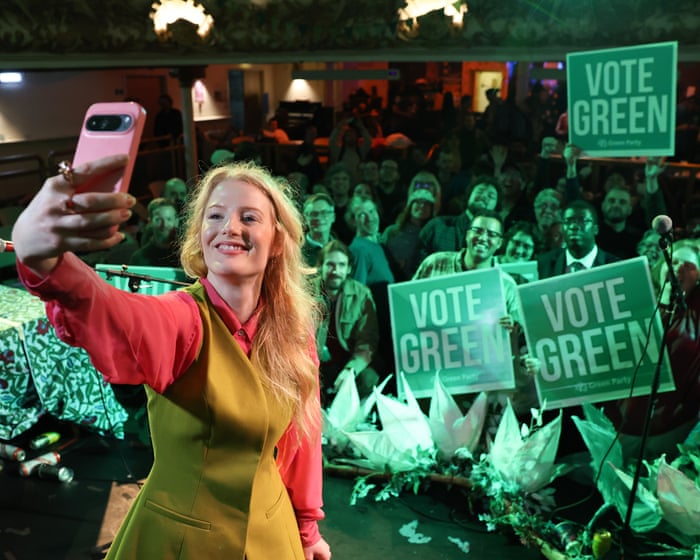
This surge means the party has many more people to knock on doors and deliver leaflets, as seen in the recent Gorton and Denton byelection, where the Greens mobilized large numbers of canvassers to secure a win.
However, some within the party note that this growth has also brought a shift in culture, particularly with an influx of members who have left Labour or Jeremy Corbyn’s faltering Your Party.
“We are, in effect, a completely different political party,” said one experienced Green organizer. “The majority of people have been around for less than six months. It’s almost like when the Liberals and SDP merged to create the Lib Dems. In this case, it’s the merger of a bunch of quite online people with the Greens. Some have definitely brought in this Corbyn-esque focus on winning arguments and factionalism, rather than on gaining power.”
There have been some missteps, such as new members adding Palestinian flags to leaflets distributed in affluent, non-radical suburbs. Some outsiders warn that the Greens should be cautious of what could amount to a de facto takeover by new members, particularly those from the traditionally well-organized left.
One Labour MP, whose constituency saw the Greens come second in the last election, remarked: “I was worried about the Greens, but less so now. My local Greens seem to be full of these ultra-factional Corbyn refugees. I can’t see it going well.”
Yet many within the party remain optimistic, partly because the Greens’ famously decentralized and democratic structures—along with a lengthy, sometimes Byzantine policy-making process—make any kind of takeover highly difficult.
Another Green organizer explained: “What entry-ism looks like for us is people attending conference and having their voices heard. Yes, if your membership triples, then by far the biggest cohort have been members for less than a year. So there will be some disagreements and tensions. But I’m really confident the culture of the party will remain.”
A party official echoed this: “Even if new members wanted to change party policy, it’s not easy. It isn’t a single motion; it’s an 18-month process. You do get some people saying, ‘What have I just joined? This isn’t like the Labour party.'”
Some challenges are purely logistical, such as welcoming and integrating new members when local parties are seeing as many as 500 join each month. “In any sudden growth, there are always adjustments,” said one senior Green, whose local party has more than doubled in size. “But there is a lot of extra energy. And it’s great to have friends who have never been especially political message me to say they’ve signed up.”
Some Greens argue that a cultural shift could be beneficial. “Before, we could be quite cozy as a party, with local meetings spending hours on the minutiae of nuclear policy,” one organizer said. “They were almost like a social group. Then suddenly you have 100 or 200 new faces, and it changes the dynamic.”No new members are joining. People are being pushed out of their comfort zones, moving away from the security of always being right or feeling like a big fish in a small pond. Now, the pond is much larger.
Of course, having more members also brings more money. The party’s budget for 2026 is expected to more than double compared to the previous year, allowing for the hiring of new media and policy officers as part of a push to become more professional.
“Right now, all our policy groups are led and run by volunteers,” one official explained. “Some are true experts, but others are a nightmare to work with. With the additional funding, we can ensure the process is properly managed.”
However, some things remain unchanged. “We’ve recently had some councillors defect from Labour, and they all seem surprised by how we work together,” an organizer shared. “One told me, ‘You’re all so nice to each other. Someone even brought a cake to a meeting.'”
Frequently Asked Questions
FAQs We are a completely different political party Inside the Greens Membership Surge
Basics Definitions
Q What is this article about
A Its an analysis of a recent significant increase in membership for the Green Party exploring why people are joining and what it means for their identity as a distinct political force
Q Who are the Greens
A The Greens are a political party typically focused on environmental sustainability social justice grassroots democracy and nonviolence The specific party referenced would depend on the country
Q What does a completely different political party mean in this context
A It suggests the Greens are positioning themselves as an alternative to traditional leftright politics emphasizing values and longterm thinking over shortterm partisan games
Reasons Motivations
Q Why are so many people joining the Greens suddenly
A Common drivers include heightened concern about the climate crisis disillusionment with mainstream parties a desire for clearer ethical policies and support for specific local campaigns or candidates
Q Is this surge just about climate change
A While climate is a major factor its often combined with issues like economic inequality affordable housing and democratic reform People see these issues as interconnected
Q Are new members typically younger people
A While the Greens often attract younger voters a membership surge can include people of all ages who feel other parties arent addressing urgent systemic problems
Impact Strategy
Q What practical difference does a membership surge make for the party
A More members mean more volunteers more small donations greater legitimacy and a larger pool of ideas and candidates It strengthens their grassroots base
Q How does being different affect their strategy in parliament or government
A They may position themselves as a principled negotiating partner or a disruptive force refusing to follow traditional political scripts This can mean crossbench alliances or steadfast opposition on key values
Q Could this surge actually split the vote and help parties they oppose
A This is a classic critique The Greens argue they are expanding the electorate by engaging nonvoters and that their growth pressures larger parties to adopt greener policies
Common Concerns Criticisms