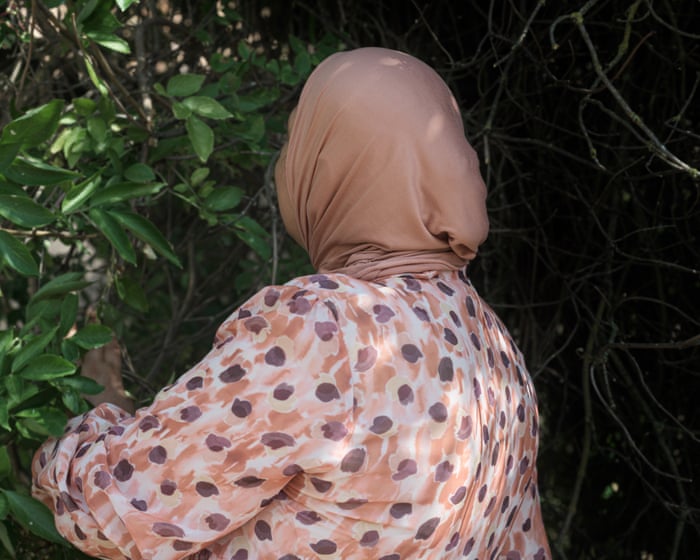
On a farm in the northwestern Spanish region of Castile and León, a typical day for Fatima* would start at 2 a.m. and stretch late into the night. She handled tasks ranging from planting vegetables to herding sheep and cleaning the chicken coop.
After she arrived at the farm, her to-do list kept growing until she was working up to 19 hours a day, seven days a week.
“If I were still there, I would have probably killed myself,” says the 50-year-old Moroccan national. “When I start thinking about it, I get anxious. Why did I put up with all of that?”
Fatima left Morocco for her third time as a seasonal worker in Spain because her husband pushed her to go. He was eager for the money she could send home. In 2020, she was one of thousands of women who came to pick strawberries, bracing themselves for months of hard work and time away from their families.
But those plans were ruined by the coronavirus pandemic. When her work visa was canceled, Fatima decided to stay in Spain instead of going home empty-handed to her husband and four children, who were then between the ages of seven and 26.
She took whatever unofficial jobs she could find: caring for children and elderly people, baking bread, or sewing shoes. “Some of them paid me and others didn’t,” she says.
Fatima knew she was vulnerable. Few people in Spain spoke Berber, her native North African language, and she spoke very little Spanish or Arabic. She had been taken out of school at age six by her father to work on the family farm, leaving her unable to read or write.
At first, she had help from a brother who lived in a village in another part of Spain. But after his wife started worrying about the risks of having an undocumented person in the house, he heard about a farm in Castile and León that needed a worker. “And that’s when the nightmare began,” says Fatima.
At the beginning, the family who owned the farm treated her and another Moroccan woman who worked there well, she says. Sometimes they even helped them in the fields. The other Moroccan woman translated for her and helped her with anything she couldn’t read.
But there were signs that things weren’t as they seemed. She never received any kind of contract, and she was shocked to learn that the other woman was sleeping with one of the family’s sons. She was given three payments of €300 (about £255) for the first three months—far less than the Spanish minimum wage of around €1,425 a month.
Then she stopped getting paid at all, she says. The family said they couldn’t pay her because of the high cost of their promise to help her get residency.
About 18 months into the job, the other woman got her papers and left. “That’s when everything changed,” says Fatima. She was left to do everything herself: hauling animal feed, milking sheep, and planting and harvesting the land.
Fatima says the son who had been sleeping with the other woman started pressuring her to have sex with him, and got angry when she refused. She claims that he and his father became physically abusive, hitting her and warning that they would get even more violent.
“One time the son ran over my foot with the tractor. I asked him, ‘Why are you doing this to me?’ He said, ‘You deserve this’ and that ‘I run this tractor over you and crush you.’”
She was housed in a shack with no heating, leaving her freezing as nighttime temperatures dropped as low as –6°C (21°F). A small heater, given to her by a Moroccan man who occasionally visited the farm to buy milk, was taken by the family, she says.
Fatima was told that any contact with the police would result in her being deported to Morocco.
The conditions got even worse one night after she asked about her unpaid wages and the status of her residency papers, she says. She recalls how the father and son came into the shack and smashed the windows and doors. “After that, it felt like I was sleeping on a”A mountain of ice,” she says.
She lived without access to drinking water, using a hose meant for watering livestock as a makeshift shower and a hole in the ground as a toilet. “I didn’t think to ask for help. Instead, I thought, ‘If I can just hold on a little longer, maybe I can get residency,'” she says.
She was only allowed to leave the farm once every two weeks, when she was taken to a small supermarket in a nearby town. The farm owners warned her to stay away from the police, telling her that any contact with them would lead to her being deported to Morocco.
“All I could think about was my family and the fact that I didn’t want to go home with nothing,” she says.
Food was often hard to find, and the closest thing she had to a kitchen was a wood-burning stove. She kept a mobile phone hidden from the farm owners and used it to call her family from time to time.
“Sometimes I would bang my head against the wall,” she says. “I thought I would either leave here with papers or dead.”
In late 2023, the police were tipped off about a woman being housed and exploited on a sheep farm. About two months later, agents from anti-trafficking units in Burgos and Valladolid had gathered enough evidence to step in, along with labor inspectors.
Police described finding Fatima in terrible conditions, living without electricity in unsanitary housing. For Fatima, seeing the police at the farm brought an overwhelming sense of joy. “I thought, ‘Let whatever needs to happen happen, but I want this to end,'” she says. She estimates she was mistreated for up to two years after the other woman had left.
Since being rescued, Fatima has slowly rebuilt her life with the help of the Adoratrices, a Catholic religious order that supports women who have been trafficked. They paid for her stay in a hostel after the police raid and helped her as she rebuilt her life in Spain, finding her work, a place to live, and helping her see her children again.
Consuelo, the head of the Adoratrices in Burgos, who asked that her last name not be published, says of Fatima: “When we met her, she was downcast, quiet, and had a sad look on her face. She didn’t want to leave her room, sometimes out of fear. Now she’s completely different. She walks into a room and lights it up.”
Fatima says the support from the organization changed her life. “Meeting them was the best thing that ever happened to me,” she says. “The rest was a nightmare.”
Since finding Fatima, the police have arrested three men suspected of human trafficking for labor exploitation. A trial is expected to start in the coming months.
Fatima now has the legal right to work in Spain. “After everything I’ve been through, I have a lot of faith in the authorities. I hope justice is served,” she says.
“I’m super proud that I got through that. Now I’m happy and eager to start a new life and bring my family here to be with me.”
* Name has been changed to protect her identity. This story is part of an investigative journalism project funded by Journalismfund Europe.
Frequently Asked Questions
Here is a list of FAQs about the book Why Are You Doing This to Me One Womans Story of Surviving Two Years Enslaved on a Farm in Spain written in a natural conversational tone
BeginnerLevel Questions
1 What is this book actually about
Its the true story of a woman who was kidnapped and forced to work as a slave on a remote farm in Spain for two years It details her captivity abuse and eventual escape
2 Is this a novel or a true story
Its a true story told as a memoir The author experienced these events firsthand
3 Who is the author
The book was written by the survivor herself though she often uses a pseudonym to protect her identity The specific name varies by edition but it is her personal account
4 Why is the title Why Are You Doing This to Me
Thats the question the author kept asking her captors It captures the confusion desperation and disbelief of finding yourself in a situation that makes no sense
5 Where does the story take place
On a remote isolated farm in rural Spain The isolation is a key part of why she couldnt easily escape or get help
IntermediateLevel Questions
6 How did she become enslaved
She was lured by a false job offer or a promise of a better life then trapped and held against her will The book details the specific manipulation and coercion used
7 What kind of work did she have to do
Forced agricultural labor cleaning cooking and other farm chores She worked long hours with no pay and very little food or rest
8 Was she physically abused
Yes The book describes severe physical abuse including beatings and starvation as well as psychological torture and threats to keep her compliant
9 How did she finally escape
Without giving away the entire ending she found a small window of opportunity when her captors became careless She managed to flee to a nearby village and get help from strangers
10 Is this book very graphic or disturbing
Yes it is extremely graphic and disturbing It contains detailed descriptions of violence abuse and trauma It is not an easy read
Advanced Practical Questions