Reading that actor Barry Keoghan sometimes “doesn’t want to go outside” due to the scale of online abuse about his appearance felt devastating. It’s not just the viciousness of the attacks, but how hard it must have been for him to admit that, and what went unsaid—the parts of his face he’s likely now forced to obsess over and scrutinize.
As a man, it’s often difficult to say out loud that you feel insecure or that there are things you dislike about your appearance. Keoghan’s vulnerability as a grown man is striking, but I’ve also been thinking about how much harder it is to express this as a teenager or boy. I was familiar with the language of bodily dissatisfaction from a young age, though I kept those thoughts to myself: I didn’t like my thinning hair, my narrow shoulders, my large forehead, or the eczema on my right hand that often prompted questions like, “Were you in a fire?” I didn’t like that I wasn’t as tall as my brothers, or even that my voice didn’t break with a deep, husky tone but kept some squeakiness.
As an adult, I still think a lot about my appearance, but I’ve benefited from something simple: the space and time to sit with the emotional difficulty of disliking parts of yourself and to grow to accept it. There’s an essay by novelist Megan Nolan in the New York Times that I often return to, where she reflects on her teenage obsession with becoming beautiful: “I think now that I idolized beauty so much because I was often embarrassed and ashamed as a teenager and beauty seemed the opposite of embarrassment to me.”
That clarity about the real worth of your appearance—and the understanding that adolescence can feel like a never-ending ritual of shame and embarrassment (mine certainly did)—is the kind of insight that only comes with maturity and the journey toward acceptance. It’s realizing there may be limits to who you can be, what you’ll look like, and what people will like about you. And that there are things you can do to feel good about yourself, or to develop an identity or style that highlights your best features.
But there’s a troubling trend that I think will further stunt that emotional journey for young boys who already have little space to articulate bodily insecurities: the rise of “looksmaxxing.” Marketed to young boys through influencers like Clavicular, it reframes physical “self-improvement” as a mathematical problem to be solved with tools: measurements, ratios, syringes, even hammers to reshape bones.
There’s been no shortage of editorials about 20-year-old Clavicular, whose real name is Braden Peters, trying to explain him to those who are bewildered or shocked by his methods and wonder why any young boy would look up to him. Like other manosphere-adjacent influencers, the severity is the selling point: Peters claims to have injected so much testosterone that he’s now infertile. All of this, he says, puts him on the true path of “ascension.” The destination? It’s vaguely defined as the ultimate glow-up, but once beauty is treated this way, the endpoint becomes unreachable. There will always be someone ready to “frame-mog” you, where men compete in areas like muscularity and facial symmetry.
Looksmaxxing has pulled appearance into a quasi-Olympic arena of masculine competition. Critics have pointed out that this speaks to a homoeroticism inherent in looksmaxxing—that all this cultivation of beauty has little to do with actually attracting women or, despite the “incel” logic that informs the community’s foundations, obtaining a body that women will desire.
But I think it’s deeper than simply wanting to impress other men: it’s also about howAdolescence and puberty can be a bruising experience for young boys, as everyone ends up with a different, unpredictable outcome. Some boys gain height, deeper voices, beards, or athleticism; others are burdened by acne, weight struggles, or crooked teeth. From my seven years at a boys’ school, I know well that the stress of navigating this emotionally difficult time often leads boys to criticize and police each other—perhaps to deflect from their own perceived flaws or to seek social leverage.
That underlying sensitivity is what I think gets lost in the absurdity of trends like “looksmaxxing.” While it’s true that beauty and body standards are more punishing for women, and girls face sharper scrutiny, there is little acknowledgment of what this journey is like for boys. I believe part of the appeal of figures like Clavicular lies in recognizing this struggle. What is ultimately a very private insecurity—disliking one’s appearance—gets reshaped into a arena of competition and ridicule, making these vulnerabilities less visible but no less real.
This is only worsened by the fact that young boys can now access the casual cruelty of adult opinions on male appearance through social media. It’s not just the harassment aimed at someone like Barry Keoghan, but all the jokes about short men, mocked hairlines, weak chins, and more.
The core problem we face with young people today is that technological capability has far outpaced emotional adaptation. If you were 14 and felt unattractive in the past, there wasn’t much you could do but sit with the feeling. You might throw yourself into school, sports, or a subculture. Maybe later you’d hit the gym—as I did to address insecurities about my shoulders—or develop a skincare routine. Now, teenagers are fed algorithms that instruct them how to “solve” the “problem” of their appearance, with an array of strategies and tools at their fingertips to achieve their desired look.
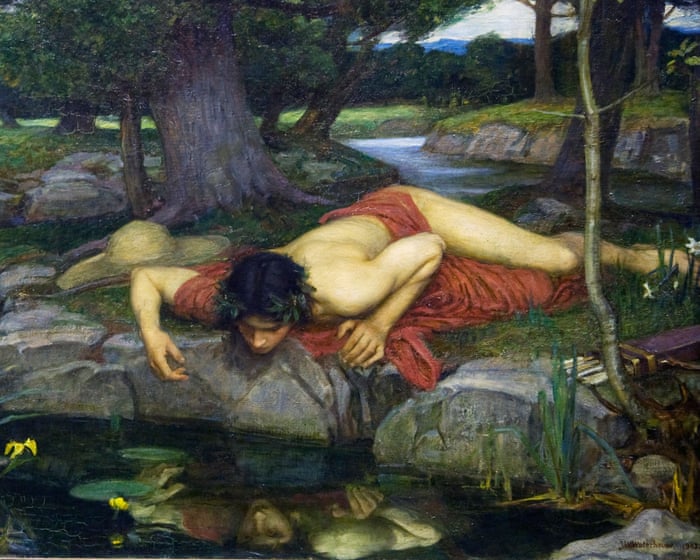
How many boys are actually taking extreme measures? It’s hard to say. But in some ways, that’s beside the point. The extremity of looksmaxxing acts as a mirror—it reflects an anxiety among young boys that has long gone unheard and unspoken. That’s why it’s incumbent on all of us to talk to the young boys and men in our lives about how they look and how they feel about themselves.
Frequently Asked Questions
FAQs on Clavicular Enhancement Looksmaxxing and Male Insecurity
BeginnerLevel Questions
1 What is looksmaxxing
Looksmaxxing is an online slang term for the practice of trying to maximize ones physical appearance through various methods including grooming fashion fitness and sometimes cosmetic procedures
2 What is clavicular enhancement
Its a cosmetic trend focused on making the collarbones more prominent and defined often through specific exercises weight loss or even surgical implants as they are seen as a sign of a lean athletic physique
3 Why are these trends suddenly popular
Theyve gained traction primarily through social media platforms like TikTok Instagram and YouTube where specific aesthetic ideals are heavily promoted and discussed in dedicated online communities
4 Whats the connection to insecurity
Many experts argue that the intense focus on hyperspecific body parts reflects a deeper anxiety It suggests that for some young men general fitness isnt enough they feel pressure to achieve a curated often unattainable standard of perfection to be seen as attractive or successful
5 Is caring about your appearance a bad thing
Not at all Taking pride in your grooming health and style is normal and can boost confidence The concern arises when it becomes an obsessive costly or risky pursuit driven primarily by comparison and fear of not measuring up
Advanced Practical Questions
6 What are the risks of pursuing these specific trends
Clavicular enhancement surgery carries standard surgical risks for a nonessential procedure
Psychological risks Obsessing over minute details can lead to body dysmorphia anxiety and poor selfesteem It can also be financially draining
Unrealistic goals Genetics largely determine bone structure Chasing a perfect clavicle may lead to frustration and unhealthy practices like extreme dieting
7 Besides surgery how do people try to enhance their clavicles
Methods include targeted exercises to reduce body fat around the neck and shoulders posture correction and using makeup or contouring for a temporary effect