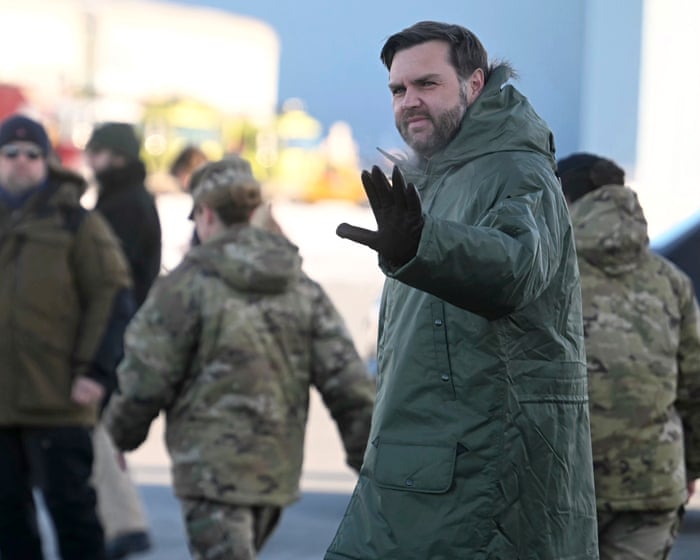
Donald Trump has warned the UK against engaging in business with China, just hours after Keir Starmer praised the economic relationship during a significant visit to Beijing.
The U.S. president described it as “very dangerous” for the UK to seek closer ties with the rival superpower, as the prime minister’s three-hour meeting with Xi Jinping highlighted a warming in previously tense relations.
Starmer, the first British prime minister to visit Beijing in eight years, pledged a “more sophisticated” relationship with China, securing better market access, reduced tariffs, and investment agreements.
However, in Washington, when asked about Starmer’s efforts to reset economic ties, Trump responded, “Well, it’s very dangerous for them to do that.”
His comments could cause concern in Downing Street, given the U.S. president’s unpredictable nature and longstanding hostility toward China. One official noted that the U.S. had been informed of the trip and the UK’s goals beforehand.
When questioned about Trump’s remarks, Starmer told Sky News, “I don’t think it’s wise for the United Kingdom to stick its head in the sand. China is the second biggest economy in the world. Along with Hong Kong, it’s our third largest trading partner. This visit has opened up many opportunities for jobs and wealth creation back in the UK.”
Asked by BBC Breakfast if the U.S. president was wrong, Trade Minister Chris Bryant said, “Yes, he is wrong, and I say this precisely because, among other things, he himself stated that he is a friend of President Xi. As I understand it, President Trump is planning to visit China himself in April.”
After his talks with the Chinese president at the Great Hall of the People on Thursday, Starmer said the UK’s relationship with China was in a “good, strong place” and that his meetings had provided “just the level of engagement we hoped for.”
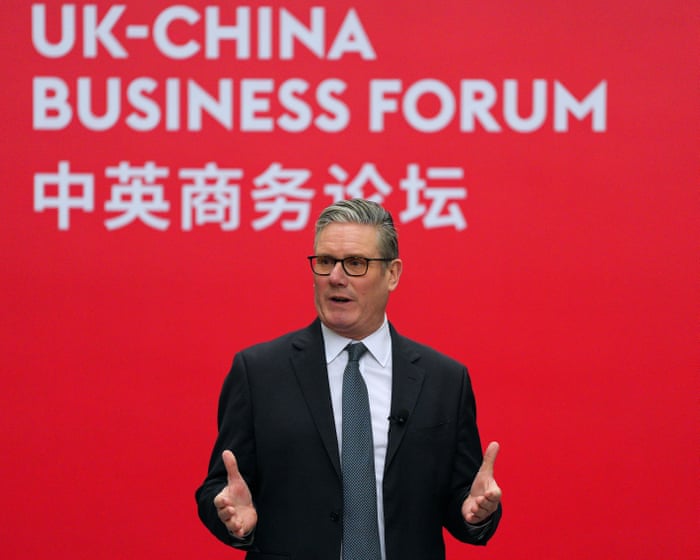
“We engaged warmly and made real progress, because the UK has a great deal to offer,” he told the UK-China Business Forum at the Bank of China in Beijing.
Chris Torrens, chair of the British Chamber of Commerce in China, called Starmer’s visit “successful,” telling the BBC, “It makes sense for the UK to look to China, as it’s one of its larger trading partners.”
The UK prime minister later traveled to Shanghai before departing for Tokyo to meet Japanese Prime Minister Sanae Takaichi for a working dinner.
Starmer is the latest Western leader to visit Beijing in recent weeks, seeking to build ties with the world’s second-largest economy and to hedge against an unpredictable U.S. president.
This comes amid Trump’s intermittent threats of trade tariffs and pledges to take control of Greenland, an autonomous territory of Denmark, which have unsettled longstanding U.S. allies, including the UK.
Earlier this week, Trump threatened to impose tariffs on Canada if it proceeded with economic deals made during Prime Minister Mark Carney’s recent visit to Beijing.
After commenting on the UK’s engagement with Beijing, Trump added, “It’s even more dangerous, I think, for Canada. Canada is not doing well. They’re doing very poorly, and you can’t look at China as the answer.”
However, the U.S. president, whose country is China’s largest single trading partner, also noted, “President Xi is a friend of mine, I know him very well.”
Before his trip to Beijing, Starmer told Bloomberg that Britain would not have to choose between the U.S. and China, stating the country could strengthen economic ties with Beijing without angering Trump or harming relations.”We have very close relations with the United States—of course we want to, and we will maintain that partnership, including in business, security, and defense,” he said.
Before Trump’s remarks, U.S. Commerce Secretary Howard Lutnick expressed skepticism that Starmer’s outreach to China would yield results.
“The Chinese are the world’s top exporters, and they make it very difficult for others to export to them,” he told reporters. “So, good luck to the British if they’re trying to export to China… it’s just unlikely.”
He downplayed the possibility of Trump imposing tariffs on Britain as he did with Canada, adding, “Unless the British prime minister takes on the United States and says very harsh things, I doubt it will happen.”
Frequently Asked Questions
Here is a list of FAQs about the recent news involving Trumps warning to the UK regarding China
BeginnerLevel Questions
1 What is this news story about
This story is about former US President Donald Trump warning the United Kingdom that doing business with China is very dangerous This came shortly after UK Prime Minister Keir Starmer praised the progress made in UKChina relations
2 Who are the main people involved
Donald Trump The former President of the United States and the current Republican nominee for the 2024 election
Keir Starmer The new Prime Minister of the United Kingdom leader of the Labour Party
China Referred to in the context of its global economic and political influence
3 Why did Trump say this
Trump has a longstanding view that China is an economic and strategic rival to the West He believes close economic ties with China pose risks to national security and economic independence His comment is a public effort to influence UK foreign policy
4 What did Keir Starmer say about China
Following a recent call with Chinas leader Starmer stated that a lot of progress had been made in the UKChina relationship and emphasized the importance of direct dialogue signaling a desire for stable pragmatic engagement
Intermediate Advanced Questions
5 Is this just about economics or is there more to it
Its about much more than just trade Advanced concerns include
National Security Fears over espionage intellectual property theft and dependence on Chinese technology
Geopolitical Alignment The US sees this as part of a broader global competition They want allies like the UK to closely align with US strategy to counter Chinas influence
Values Critics argue that deepening ties with China conflicts with Western commitments to human rights and democratic governance
6 How does this relate to the broader USChina rivalry
Trumps warning is a direct example of the US trying to rally its allies to adopt a tougher more unified stance against China The US often frames economic engagement with China as strengthening a strategic competitor
7 Whats the UKs typical position on China
The UK has a dualtrack or complex approach