Oil prices rose again on Monday due to growing supply concerns after the U.S. struck Iran’s key Kharg Island oil facility and former President Donald Trump called on allies to help reopen the Strait of Hormuz.
Brent crude, the international benchmark, increased by 1.8% to $104.98 per barrel in early trading. Another weekend of violence in the Middle East heightened worries about the conflict and its impact on global energy markets.
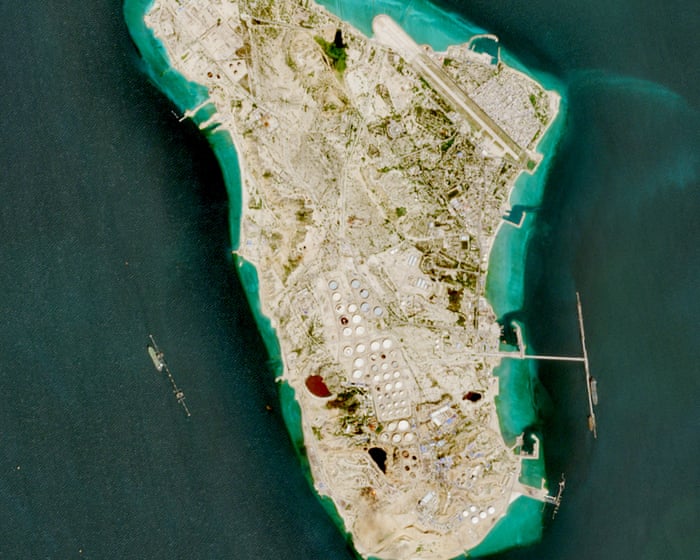
On Saturday, Trump claimed that U.S. strikes had “totally demolished” much of Kharg Island and told NBC News that the military might target the site “a few more times just for fun.” Kharg Island, a five-mile-long coral island in the Persian Gulf, is a crucial processing hub for Iran, handling about 90% of the country’s oil exports.
Trump stated on social media that he had avoided hitting the island’s oil and energy infrastructure “for reasons of decency,” targeting only military sites. However, the decision to strike Kharg—which had been largely spared in the first two weeks of the U.S.-Israeli operation—did little to calm global market anxieties.
The Strait of Hormuz, a vital waterway through which about one-fifth of the world’s oil usually passes, has been effectively closed since the crisis began. Trump claimed over the weekend that “many countries” would send ships to help reopen the strait. While he did not name specific nations, he publicly urged U.S. allies like France, Japan, South Korea, and the U.K., as well as China, to join a “team effort” to protect ships from Iranian attacks.
The response has been lukewarm. South Korea’s foreign ministry said it was “exploring various measures from multiple angles” to help secure energy transport routes. U.K. ministers are considering sending minesweeping drones to the strait, concerned that sending ships as Trump requested could escalate the situation.
Oil prices surpassed $100 per barrel last week for the first time since Russia’s invasion of Ukraine four years ago, driven by a market rally triggered by U.S.-Israel actions. This surge has raised fuel costs worldwide and pushed shares of major oil companies to record highs.
Frustration is mounting as fuel prices continue to climb globally. The average U.S. fuel price reached $3.70 per gallon on Sunday, up 62 cents from a month ago, according to AAA. “I don’t give a shit about Iran. I don’t want to pay higher gas,” said Kevin Dass, an underemployed father of two in Detroit, after paying $3.49 per gallon to fill his tank last week.
Trump downplayed the risk of sustained high fuel prices, telling NBC, “I think they’ll go lower than they were before.” He added, “There’s so much oil, gas—there’s so much out there. But you know, it’s being clogged up a little bit. It’ll be unclogged very soon.”
Countries across Asia are grappling with the energy crunch, implementing measures from fuel subsidies in Thailand to rationing in Bangladesh. In Europe, wholesale gas prices rose on Monday as the conflict disrupted liquefied natural gas exports, with the benchmark Dutch contract up by €1.82 to €51.94 per megawatt hour.
European stock markets were mixed, with the FTSE 100 slightly up while markets in France, Germany, Spain, and Italy fell by less than 1%.
Frequently Asked Questions
Of course Here is a list of FAQs about the reported oil price increase following former President Trumps claim about Irans Kharg Island terminal structured from beginner to more advanced questions
Beginner General Understanding
1 What exactly happened
Former President Donald Trump claimed in a speech that the US had completely destroyed Irans main oil export terminal on Kharg Island This statement caused immediate concern in global oil markets leading to a spike in oil prices
2 Why would that make oil prices go up
Oil prices are heavily influenced by supply and fear of disruption Iran is a major oil producer The claim of destroying its main export terminal suggested a potential sudden large loss of global oil supply Traders fearing a shortage quickly bid prices higher
3 Was the terminal actually destroyed
No US officials and multiple international reports quickly denied the claim There was no military action and the Kharg Island terminal was operating normally The price move was based on the fear from the statement not an actual event
4 How much did prices actually increase
The increase was sharp but relatively shortlived For example the global benchmark Brent crude oil price jumped by over 23 immediately following the statement before retreating once the claim was debunked
Intermediate Market Impact
5 Can one persons statement really move oil prices that much
Yes especially if that person is a major political figure like a former or current US President Markets react instantly to any news that suggests a risk to supply from a major producer like Iran Saudi Arabia or Russia The credibility and platform of the speaker amplify the effect
6 Why did prices fall back down so quickly
Prices fell because the fundamental reason for the spikean actual supply disruptionwas proven false Once official denials and satelliteindustry data confirmed no attack occurred the fear premium evaporated and prices corrected
7 Does this affect gas prices at my local station
Not directly from this single brief event Retail gas prices are based on longerterm trends in crude oil costs refining taxes and distribution A short fewhour spike in oil futures typically doesnt trickle down to the pump However sustained geopolitical tensions can lead to higher gas prices over time