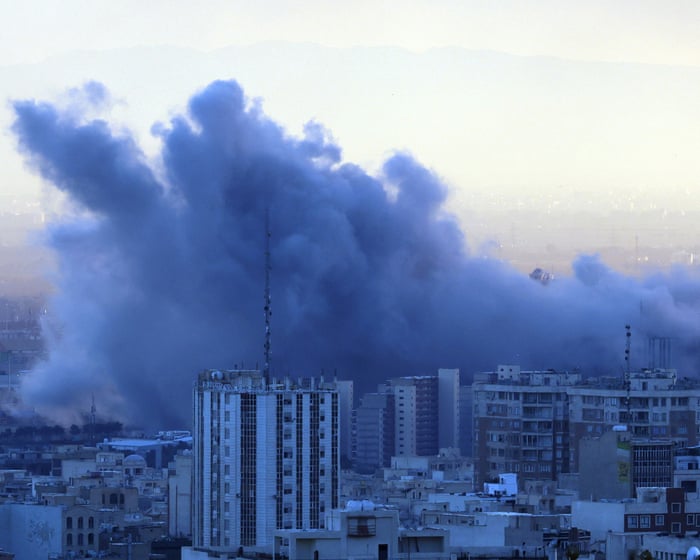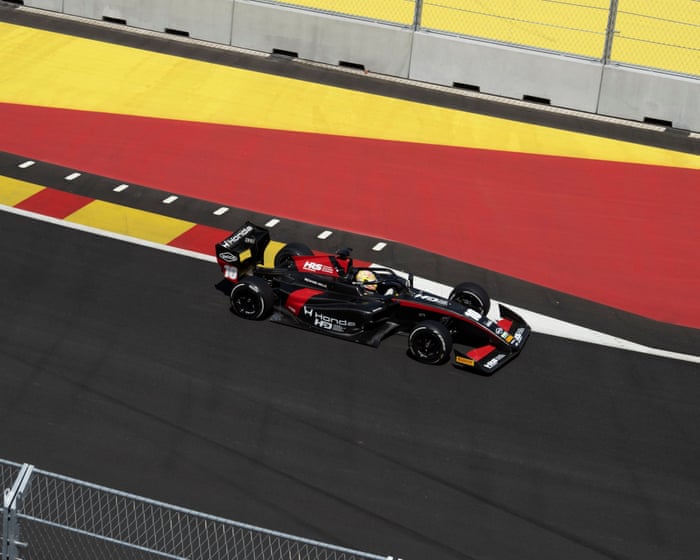
Opponents of Madrid’s newly built Formula One circuit have accused local authorities of putting profit ahead of people’s wellbeing. This comes after tests for the inaugural Spanish Grand Prix, set to take place later this month, produced noise levels far above the legal decibel limit.
The regional government of Madrid and the city council hope the 5.4km-long (3.3 miles) Madring circuit – built in the north-east of the Spanish capital at a cost of €83m (£71m) – will draw in visitors, boost the local economy, and put the city firmly on the motor racing map. The Madring describes itself as “a perfectly connected circuit: just 20 minutes from the city centre”.
However, recent tests using Formula Three cars have worried local residents, who are taking legal action over the circuit’s construction and the noise it is expected to generate. The Stop F1 Madrid platform, formed a year ago, said neighbours had recorded average noise levels of 102.7 decibels during the tests, with peaks between 107.7 and 109.1 decibels. The maximum noise level allowed in residential areas is 55 decibels.
Those against the Madring also argue that its construction will worsen the urban heat island effect during the summer.
“It’s not just about the dust and the noise,” said Antonio Ibáñez, a spokesperson. He noted complaints from people who said it was impossible to work remotely during the tests, adding: “We’ve also spoken to people who have children with autism and they had to get them out of the area because of [all the distress].”
One of the group’s biggest concerns is the large crowds expected to flood the area for the grand prix itself, putting huge pressure on public transport and the local neighbourhood. “An urban Formula One circuit is just a bad idea,” he said. “It’s a nonsense idea.”
Regional and city authorities have tried to reassure residents and are highlighting the economic benefits of the track. Borja Carabante, Madrid’s city councillor for urban planning, mobility, and the environment, said measures like acoustic panels would be put in place to reduce noise during the grand prix on 11-13 September.
He also said that the Formula Three cars used to test the track “make and emit more noise than Formula One cars, so there’ll be less noise on 13 September than there was during the tests”.
Carabante said the city council would work to keep traffic disruption to a minimum. But he called on the people of Madrid to welcome Formula One: “We should be congratulating ourselves that Madrid is hosting such an important and significant event that will put us at the epicentre of great sporting events. It’s amazing news for all the people of Madrid and it’s putting Madrid on the map.”
The regional minister for housing, transport, and infrastructure, Jorge Rodrigo, said the event would bring huge economic benefits to Madrid and would be well worth one weekend of disruption. “It’s worth a little bit of sacrifice from all of us … given the profitability of this event for the Madrid region and the city of Madrid, and, above all, given how it’ll position us internationally.”
A spokesperson for the Madring said it was taking “all measures within our reach to minimise the disruption caused by the construction work and the event”, adding: “Protecting the wellbeing of local residents and reducing the environmental impact are a priority for the organisers, and we are therefore working continuously with the relevant authorities and various stakeholders to implement mitigation and improvement measures.”From economics to the environment
Enter your email
Sign up
after newsletter promotion
The president and the penthouse: how Madrid’s government spent €6.3m on a temporary ‘office’
Read more
But environmental groups have questioned whether building a grand prix circuit in a city where summer temperatures can exceed 40C (104F) is a good idea. According to Stop F1 Madrid, more than 700 trees have been cut down or moved to make way for the track. María Ángeles Nieto, a spokesperson for the Madrid Environmentalist platform, also said a seasonal wetland that was home to amphibian species had been destroyed.
“Madrid is a city with significant temperature increases during the summer months – the entire city is a heat island,” said Nieto. “We’ve pointed out that this just makes that heat island effect worse.”
Nieto said there was “no justification whatsoever” for a track that would subject residents to “a living hell” during the grand prix and other possible events there.
“The people in charge of the city are putting the economic interests of Formula One ahead of the wellbeing of the citizens in such an absolutely absurd and unnecessary way,” she said.
This story was amended on 1 September to remove a reference to noise levels being almost twice the legal limit. The decibel scale is logarithmic, where an increase of 10 decibels reflects an approximate doubling of loudness.
Frequently Asked Questions
Here is a list of FAQs for residents of Madrid regarding the upcoming Formula 1 circuit written in a natural and accessible tone
General Logistics
1 When exactly is the race happening and how long will the disruption last
The Madrid Grand Prix is scheduled for early September However dont expect just one noisy weekend The disruption will last for several weeks construction and setup begin about a month prior and the actual track activity runs from Friday to Sunday
2 Where is this circuit actually located Is it in the city center
Its not in the historic center The circuit is located in the Valdebebas area near the IFEMA fairgrounds and the airport Its a hybrid circuit meaning it uses both public roads and new purposebuilt sections around the exhibition center
3 I dont live near the track Why should I care
Good question While the loudest noise will be within a few kilometers of the circuit traffic is the big issue The F1 organization expects massive crowds This will cause significant traffic jams on the M11 M40 and A1 highways and the metro will be packed Expect delays across the city especially in the northern districts
4 Will my street parking be affected
Yes likely The City Council will implement special parking restrictions around the circuit and near metro stations to encourage people to use public transport You will need to check the signs on your street about a month before the race for No Parking dates Towing will be enforced
5 Are there any public viewing areas where I can watch the race for free
There are no official free grandstands However the circuit is a street circuit so there will be areas around the perimeter where you might catch a glimpse of the cars through fences but sightlines will be very limited The best free experience will be the Fan Zone at IFEMA which has big screens food trucks and entertainment even if you cant see the track itself
Noise Disruption
6 How loud is it actually going to be Will I be able to sleep
The current