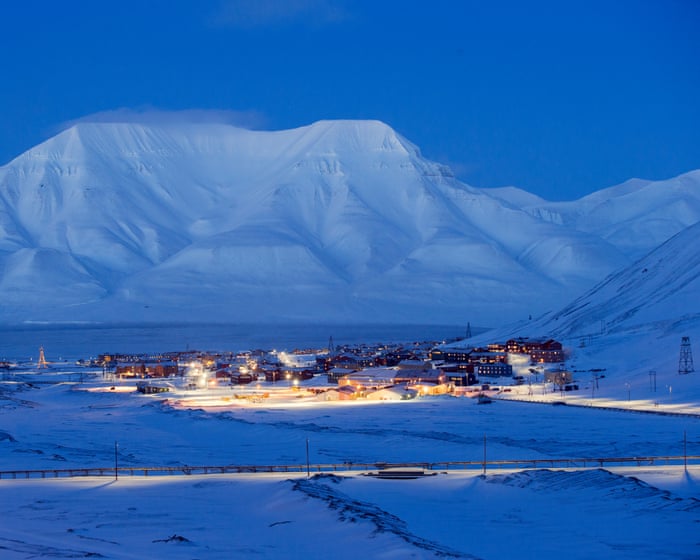
Residents of a remote town in Norway, located in one of the fastest-warming places in the world, have been told they can no longer drink tap water due to heavy metal contamination that scientists have linked to thawing permafrost. Longyearbyen, in the Svalbard archipelago, gets its main drinking water supply from a 1.5-mile-long (2.5km) dammed lake called Isdammen, or “ice pond.” Higher temperatures caused by the climate crisis have thawed permafrost, causing newly exposed bedrock to leach metals into the pond.
In the fastest-warming town on the planet, you can’t drink the tap water. Here’s why – video. Longyearbyen, 800 miles from the north pole, is warming at five to seven times the global average rate, with autumn temperatures rising by up to 4C per decade.
Researchers say the heavy metal contamination of the water supply is likely linked to two factors: the thawing of permafrost – rock-hard ground that stays frozen all year except for a so-called “active layer” that thaws in summer – and the geology of the former mining town. “The combination of thawing permafrost and the shale bedrock, which contains a mineral called pyrite, or fool’s gold, is causing contamination of the water supply,” said Marjolaine Verret, a permafrost expert and associate professor in Arctic geology at the University Centre in Svalbard.
When pyrite comes into contact with water and oxygen, it oxidises and generates acidity, she explained. “The acid produced can now leach heavy metals from these rocks into the waterways. The issue we’ve been having here in Longyearbyen is manganese, but other contaminants can also be leached from the rocks.”
The municipality, Longyearbyen lokalstyre, first alerted its 2,600 residents in September last year after manganese levels in the water supply were found to be 25 times higher than the 50 micrograms per litre recommended by the Norwegian Institute of Public Health. The mayor of Longyearbyen, Terje Aunevik, said that while drinking water quality had never been good due to sediment, the manganese levels had “gone ballistic.” Prolonged exposure to high levels of manganese can cause neurological problems, particularly in children and infants.
Emergency temporary measures were introduced, including a central tank of free purified water, filtered by the local brewery, where residents could refill containers at the local supermarket, and an investigation was launched. Manganese levels have since dropped, but earlier this year sulphate and nickel levels were found to exceed recommended drinking water limits. As a result, the ban remains in place.
Aunevik said that while manganese levels were “not dangerous,” government guidelines had to be followed. The drinking water crisis had created a lot of “noise,” he admitted, with some residents angry at the inconvenience.
The mayor, who has commissioned an investigation into water quality, said a “completely new water mains supply” may be needed. Potential solutions being considered include installing a filtration system at Isdammen and having a desalination plant as a backup, or the other way around. Either way would be “extremely expensive” and, due to Svalbard’s extreme temperatures, with water temperatures often below zero, would involve technical challenges, Aunevik said. “In Norway, where we have always taken for granted that we can drink water from the tap, it is challenging to start thinking that we need to carry our water like we do now. Other small communities should be cautious and start thinking about what to do if it happens to their sources.”
Verret and other scientists have warned that the contamination of water sources in Longyearbyen could be a foretaste of what is to come.“These ingredients—bedrock rich in pyrite and heavy metals—and thawing permafrost exist elsewhere in the Arctic, so this could be the first example of how climate change can affect freshwater, for instance in northern Canada and Alaska,” Verret said.
Frequently Asked Questions
FAQs Tap Water Unsafe in Norwegian Town After ClimateRelated Thawing Released Heavy Metals
1 What happened in the Norwegian town
Melting permafrost and thawing ground linked to climate change released heavy metals into the local water source Tap water was declared unsafe to drink
2 Which town was affected
This refers to a small northern Norwegian town where thawing ground freed metals that seeped into the drinking water supply
3 Why is the water unsafe
It contains elevated levels of heavy metals such as lead cadmium or arsenicabove safe drinking limits
4 What are heavy metals
Naturally occurring elements like lead mercury cadmium and arsenic In small amounts theyre harmless but higher levels can harm health
5 How did climate change cause this
Warmer temperatures thaw frozen ground Metals trapped in the soil for years are released and can wash into water sources
6 Is this a oneoff event or a growing risk
Its a growing risk As permafrost thaws in Arctic regions more communities could face similar contamination
7 What are the health risks of drinking the water
Depending on the metal risks include stomach problems kidney damage and longterm effects on the nervous systemespecially in children
8 What should residents do right now
Follow official advice dont drink tap water Use bottled water or approved filters and dont use tap water for cooking or baby formula unless authorities say its safe
9 Can I still shower or wash dishes
Usually yesskin contact is far less risky than drinking But check local guidance especially for young children
10 Does boiling the water make it safe
No Boiling kills bacteria but does not remove heavy metalsit can even concentrate them
11 Will a normal water filter help
Only some filters remove heavy metals Look for certified filters Simple jug filters may not be enough
12 How long will the water be unsafe
It depends on the source and cleanup Authorities must test and treat the supply before lifting the advisorythis can take weeks or longer
13 How is the water tested
Lab tests measure metal concentrations against national safety limits Regular monitoring continues until levels are safe