On August 27, 2013, a bright-eyed nine-year-old girl with long, neatly brushed hair boarded an overnight bus in Barcelona. Nada Itrab was smart and attentive, often at the top of her class. For this journey, she brought along a notebook to document her discoveries and a cherished lilac digital camera—a simple luxury that felt like a treasure to her.
In eight hours, she would arrive at Barajas airport in Madrid, where she would catch her first flight to Santa Cruz de la Sierra, Bolivia’s largest city. To Nada, this felt like an adventure straight out of the storybooks she borrowed from her local library in L’Hospitalet de Llobregat, just south of Barcelona. The daughter of undocumented Moroccan immigrants, she had lived there since she was four.
Nada was accompanied by only one person: Grover Morales, a neighbor known for his kind and devout demeanor. In their poor neighborhood of La Florida, Morales greeted everyone warmly, regardless of background. He read religious texts—the Bible, the Torah, and the Quran—and often helped Nada’s family, even building them a bath himself. A Bolivian man in his mid-thirties, Morales described this as a business and family trip: he was returning home to collect jewelry to sell back in Spain. As a reward for Nada’s excellent grades, he offered to take her along, promising they would return in a week. Her parents signed a notarized consent form allowing her to travel with him.
Nada was excited. For once, she would have a real summer story to share with her classmates instead of pretending her family had gone to the seaside. But she was also uneasy. She knew things about Morales that others didn’t. At the local cybercafe, she had once seen a video of him in a trance-like state at his place of worship, his hair whipping wildly as he worked himself into a frenzy. It frightened her. She also didn’t understand why, when her parents weren’t around, he would sometimes end their play-wrestling by lying fully clothed on top of her. Still, her parents had approved the trip. Surely nothing bad could happen.
Security footage from Barajas airport shows Nada and Morales, dressed in a white shirt, lining up to board the plane. The image of this bright child in her spotted dress, waiting eagerly, is heartbreaking. What followed is a story of survival—a testament to Nada’s resilience and to the few who helped her along the way.
Today, Nada is 21, a serious and hardworking law student at Barcelona University. As she grew up, few people asked what happened after she stepped onto that plane. Only in recent years has she begun uncovering the full details of the nine-month ordeal she tried so hard to forget. She has chosen to speak publicly about her experience, partly as a step in her own healing, and partly out of a determination to fight the stigma around trafficking and advocate for child protection worldwide. “I don’t want to just be the girl who got kidnapped,” she told me.
At the immigration desk in Santa Cruz, Nada managed a tired smile for the camera, her hair messy from the long journey. On the bus into the city, she gazed out the window. Back in Spain, she and her parents lived in a neighborhood synonymous with poverty, crime, and drugs.Nada felt despair, but to her, Santa Cruz seemed even dirtier, shabbier, and noisier. Children her age were selling goods by the roadside. While waiting for a second bus to Morales’ hometown of Cochabamba, they argued about her passport. Morales had kept it and now claimed it was lost, blaming her. He said they would have to stay longer while he got her a new one. It was then that Nada realized she had been tricked. She wept loudly, banged on the bus window, and cried for her mother.
Morales had claimed to be wealthy, but his mother’s home outside Cochabamba was a dump. They spoke Quechua, an Indigenous language Nada didn’t understand. Morales and Nada moved into a ramshackle two-story brick building on a dirt road in Cochabamba that belonged to his absent brother, Fidel. A woman named Cristina and her two daughters rented the downstairs.
Morales called Nada’s parents twice, briefly. During one call, Nada managed to tell her panicked mother that her passport was gone. On the other, she blurted out an urgent request: could her mother please tell her teacher she had chickenpox? That way, the school wouldn’t remove her from the rolls.
One night, Nada dreamed Morales was on top of her, and when she woke, she found his hands on her thighs. She screamed and rushed to the window, hoping someone would hear her cries for help. Nada was tall for her age, about the same height as Morales, but he was stronger and dragged her back. Today, she recalls it as “the worst night of my life.” Over the next few weeks, during the day, Nada would jump rope with Cristina’s daughters and borrow their Barbie doll. At night, the abuse continued.
Morales never let Nada out of his sight, so when his phone rang a week or two later, she overheard a Bolivian policeman’s voice demanding that he turn himself in and hand her over to the authorities.
Unbeknownst to her, Nada’s parents had reported her missing, sparking a police hunt across two continents. Yet this call only made her life worse. Morales took out his SIM card and smashed the phone. Even a nine-year-old could see what was happening: he was now a fugitive from justice, and Nada was his captive.
The next morning, Morales ordered Nada to grab a few of her things, and shortly after, they boarded a long-distance bus. Morales acted as if they were Bonnie and Clyde, two fugitives joyfully on the run together. He also gave her a new name: she was now Evelyn and would pose as his niece. He made her cover her head with scarves and wear long dresses.
Nada told me these stories as if from a distance, like a bemused spectator. “I use the logical part of my mind to repress the emotional side,” she said. “I can tell all this so calmly because I don’t feel it.” During our conversations, her tone shifted only once, when describing how she suddenly realized, on the day Morales changed her name, that she was powerless and no longer herself. She shed a few tears but quickly pulled herself together, apologizing.
After more than six hours driving northeast, the bus dropped Nada and Morales near a town called Entre Ríos. From there, they hitchhiked to a rural settlement known as Villa Unión. Morales had a knack for starting conversations with strangers and winning their trust. Within two days, he persuaded a farmer named Santos Rodríguez to employ them, and they moved into his house with his wife and two daughters.
The next morning, Nada was given a machete. She should have been starting back at school in L’Hospitalet. Instead, she began working from dawn to dusk, clearing fields, weeding pineapple crops, and hacking at the encroaching forest. She washed their clothes in a creek. When Morales thought she wasn’t working hard enough, he beat her with a belt.
Morales told Nada they were earning money to pay for her passport. She had always applied herself to schoolwork, and now she did the same with farm labor. “I thought…””That was my only way out,” she told me. Nada learned to fish in the creek, make fire by rubbing sticks together, and handle snakes. If the snakes were small, the trick was to step on their head, grab their tail, and hurl them away. If they were big, she called Morales or the other farm workers, who hacked at them with machetes. Apart from strength and experience, the men had an additional advantage: boots. Morales had only bought her rubber sandals.
On Saturdays, Morales would take her to a place of worship belonging to a controversial messianic Andean religion called Aeminpu, the Evangelical Association of the Israelite Mission of the New Universal Covenant. Founded by a former Peruvian shoemaker, this fiercely conservative religion preaches a mix of beliefs, focuses intensely on the Ten Commandments, and sees signs of the apocalypse everywhere.
One Saturday, Morales groomed himself carefully. Nada remembers watching a ceremony where he stood on stage while a man in a white tunic wafted incense. Words were chanted in Quechua. Men hugged him. Morales looked happy. When Nada asked what had happened, he said, “Now you are my wife.”
He became mean, jealous, and more violent. At night, he raped her. One evening, as she washed in the river, he pushed her head underwater and held it there, repeating the action three times. Another day, she dared to question his belief in God. Enraged, he struck her right foot with a machete, cutting a hole down to her sole. They doused the wound in gasoline. She still has the scar.
In the evenings, Morales made her recite the Ten Commandments out loud. In the mornings, she had to tell him her dreams, which he would interpret. In her spare time, Nada drew birds, plants, and flowers in her notebook. She labeled them in three languages—Spanish, Catalan, and English. It was like schoolwork, which made her feel better. She clung to her optimism, believing this would all be over one day, and she could return to her family and go back to school.
In late December 2013, four months into her ordeal, Nada and Morales returned to his brother Fidel’s house in Cochabamba. As Nada listened to drunken neighbors celebrate the New Year and calendars turned to 2014, Lt. José Miguel Hidalgo of Spain’s Civil Guard was anxiously awaiting permission to fly to Bolivia. At 45, Hidalgo was a lead detective in the homicide, extortion, and kidnapping squad at the elite Central Operative Unit (UCO) in Madrid.
Nada’s case had landed on Hidalgo’s desk after her parents went to the Catalan police in the early hours of September 5 and tearfully tried to explain what had happened. In Spain, international investigations must go through a national police force like the Civil Guard, so the two forces worked together. The Catalans tracked down Morales’s brother Fidel—owner of the Cochabamba house—who also lived in the Barcelona area. Wiretaps were placed on Nada’s parents’ phones and on his brother’s.
Nada’s parents said they had trusted Morales. They believed he wanted to dress her in jewels to smuggle back into Spain, but seemed confused. Even today, Nada is not sure whether Morales fooled them or if they effectively sold her. Maybe both things are possible. They were undocumented immigrants living in the shadows of Spanish society. Her father—who drank, raged, and bullied his wife—worked odd jobs for cash. Her mother cleaned houses. They squatted in a repossessed flat with no running water and electricity stolen from the grid. Water was fetched from a public tap in the cemetery across the road. Nada used to push a shopping trolley there with her mother to fill plastic bottles.
As he investigated the case, Hidalgo’s concern for Nada grew. He discovered that Morales had fled to Spain in 2005 using false documents to avoid trial in Bolivia for raping two women.Two half-sisters, aged 11 and 14, were involved. Making matters worse, it took four months for Hidalgo and a colleague to get permission to travel—delayed by bureaucracy and the tense relations between Spain’s right-wing government and Bolivia’s left-wing president, Evo Morales.
On January 28, Hidalgo and his colleague finally arrived in Bolivia. Two days later, police raided Fidel’s house in Cochabamba. When they got there, they were met by Cristina, who told them that Morales and Nada had left the day before. “It was like something out of a movie,” Hidalgo said during a recent meeting at the Civil Guard headquarters in Madrid. “You get so close, and then they vanish.”
In Cochabamba, Nada had seen Morales buying more farm tools and realized they were about to move again. He also bought her a guitar and a music book to learn Aeminpu songs. She was afraid of him, so she practiced diligently. Within a week, she could strum and sing—but Nada hated that guitar. When they left on the morning of January 29, 2014, he made her carry it. More precious items, like earrings her mother had given her, were left behind.
As Hidalgo was heading to Fidel’s house in Cochabamba, Morales and Nada were beginning a journey deep into the rainforest by bus, taxi, and on foot. Inside the forest, the trees grew so tall and thick that it was dark even during the day. Snakes, monkeys, giant ants, and jaguars lurked. It took nearly an hour to wade through chest-high water to cross one river. Eventually, they met a tall man dressed in black, wearing high boots. Nada noticed that Morales acted respectfully toward him and treated her better in his presence.
The man led them to their final destination: a coca-growing village high in the steep, green Carrasco National Park. Nada was astonished to find herself in what she saw as a stunningly beautiful prison. They were in a place where the land rose toward the Andes and clouds clung to the dense forest. Wooden houses were scattered around a green pasture with a crystal-clear stream. Horses grazed, and trees were heavy with fruit. The men there carried guns. Neat rows of green coca plants stretched out into the distance. Beyond that, the village felt isolated in both space and time. “Like something from the 12th century,” Nada recalled.
Now she worked full-time in the plantations, picking coca leaves for daily wages. It was her job to collect their pay from the farmers they worked for, and she secretly set aside small amounts of money, hoping to buy a ticket home. Planes and helicopters occasionally flew overhead—often involved in the cocaine trade. Police were afraid to come here and rarely did. There was no escape.
On February 13, 2014, Hidalgo and his colleague flew back to Spain, frustrated. They had missed Nada by just 24 hours, and now she had disappeared again. “The sad truth is that she had already been in the hands of an abuser for six months,” he recalled. The leads his Bolivian colleagues received over the following weeks led nowhere. Meanwhile, back in La Florida, few people outside Nada’s family knew she had been kidnapped. Her story had been kept out of the media.
Three weeks later, on March 2, Cristina received a call from Morales. Police were tapping her phone and listened in. The conversation was mostly in Quechua, but suddenly they heard a girl speaking Spanish. It was Nada, asking about the corn she had planted in Cristina’s garden. She sounded upset when Cristina told her they had already eaten it.
The call at least proved Nada was alive. Cristina’s phone showed that Morales had called from a solar-powered public phone deep in the Yungas de Totora region, an 18-hour hike from the nearest road. A police unit set out on March 4, prepared to camp overnight and cross three large rivers, but a wooden bridge over the last river had been washed away. As they trudged back the next day, Nada turned 10 years old.
Hidalgo returned to Bolivia, arriving in Cochabamba on March 7. Bolivian colleagues warned that the only way…The only way to reach her was by helicopter, but local drug traffickers would shoot at any aircraft flying over their fields. A deal had to be made. Over lunch at a restaurant in Cochabamba, Hidalgo negotiated with local leader Angel León, who had influence over the coca growers—some of whom grow legally, while others produce for the cocaine trade. “He took it as a matter of honor,” Hidalgo said, who also bought the farmers 500 kilos of sugar as part of the agreement. León agreed to instruct his men to capture Morales and hold onto Nada. Police could then fly in, load them up, and leave immediately.
That night, Nada and Morales were in their cabin when they heard men wading across the river. Soon, a group of farmers carrying rifles appeared at their door, looking menacing in the dark. Nada hid in a corner, sick with panic. Morales looked even more frightened.
The men tied Morales’s hands, locked him in a wooden crate, and told Nada to follow them. First, she grabbed her camera, notebook, and money. A farmer took her into his family cabin, cradling his gun as he watched over her. She remained terrified.
The next morning, an army unit provided two helicopters to take Hidalgo and a Bolivian police squad to rescue Nada. They took off at 11 a.m., flying above the thick forest canopy. Twenty-five minutes later, Hidalgo spotted a clearing with a few houses. A Bolivian police officer pointed to a girl standing in the field wearing a bright blue headscarf. Hidalgo knew the operation had to be fast. “In and out, without cutting the engines,” the pilots at the Chimore airbase had told him.
On the ground, Nada didn’t understand what was happening. The village was tense, with men standing at their cabin doors. The noise of the first helicopter grew louder until it landed in the field, and a policewoman in a blue uniform ran toward her. “Are you Nada?” No one had called her by that name for months. She barely had time to reply before another helicopter landed. A tall man jumped out and asked the same question. It was Hidalgo.
Hidalgo noticed her voice had a distinct Bolivian accent and her skin was blistered with mosquito bites. She began to cry. When they took off a few minutes later, Nada looked down, mesmerized by the lush rainforest from above.
The next ten days were a whirlwind of activity. Nada was flown to Cochabamba, where she was given a bed at a state children’s home. There were new clothes, medical checks, interviews with police and prosecutors, and outings to see the sights. Nada shared a dormitory with a group of teenage girls who brushed and styled her long, dark hair every day. No attempt was made to contact her parents, who were now under investigation by prosecutors for allegedly risking their daughter’s life in exchange for a promised share of Morales’s jewelry.
Hidalgo consulted his wife and then bought Nada a colorful Monster High backpack. She was delighted. He was impressed by her resilience and intelligence. One of her main concerns was whether she would have to repeat the school year. “She was very bright, lively, and grasped things really quickly,” he told me. She also translated basic Quechua words for him. To her, Hidalgo seemed like the kind of father she had only seen in movies—protective and caring. During the flight back to Spain, Hidalgo noticed she slipped his uneaten bread roll into her pocket. She was still in survival mode.
On March 17, 2014, seven months after leaving Spain, ten-year-old Nada Itrab stepped off a flight at Barcelona airport, dragging her new backpack behind her and holding Hidalgo’s hand. For a few brief minutes, she was allowed to see her parents, but not alone. “I’d never seen my father cry before,” she told me. Then they were led away. Nada was now in the care of the Catalan regional government.The court had decided to remove her from her parents. She would not be returning home or to the school friends she missed, as she was to be placed in institutions outside of L’Hospitalet. Her ordeal was far from over.
Newspapers and television programs ran jubilant reports about her return. The public had only learned of Nada after her rescue in the jungle. Police held a press conference, stating Nada was well but offering only vague details about what had happened. After that, the story seemed to end, aside from the news in October that Morales had received a 17-year prison sentence for child trafficking and sexual abuse, and two years later, that her parents were given two-year suspended sentences for “abandoning” their child.
In late 2022, Neus Sala, an experienced Catalan broadcast journalist, was making one of her regular visits to the Civil Guard headquarters in Madrid. While there, she spoke with Hidalgo, whom she had known for over thirty years. After leading some of Spain’s most famous murder and kidnapping investigations, Hidalgo is now a comandante and helps manage the Civil Guard’s 700-strong UCO unit from a bright office in Madrid. During my visit there late last year, a photo of Nada sat on a bookshelf. In his conversation with Sala, Hidalgo recalled Nada’s rescue as a career highlight. They realized the girl was now 18. What had happened to her? Sala was determined to find out.
Nada Itrab was easy to locate. Local news sites had reported that a girl with that name had recently won a €500 prize for the best senior year school essay in L’Hospitalet. Interestingly, the reports did not mention she was the same girl kidnapped a decade earlier. Nada, now studying business at a local university, also advertised online as a tutor. Sala wrote to her, explaining that she knew Hidalgo well and they both wanted to see how she was doing. Could they meet?
Nada told me her instinctive reaction was “no.” She did not want to revisit her past, especially with a journalist. The Bolivia affair was a distant, shameful secret, something she had deliberately erased. But the mention of Hidalgo intrigued her. A month passed before she agreed to meet.
By coincidence, Sala had also grown up in L’Hospitalet. They later discovered they had both lived as children in the same apartment building, opposite the Can Vidalet metro station. They arranged to meet at the station at midday on November 27, 2022.
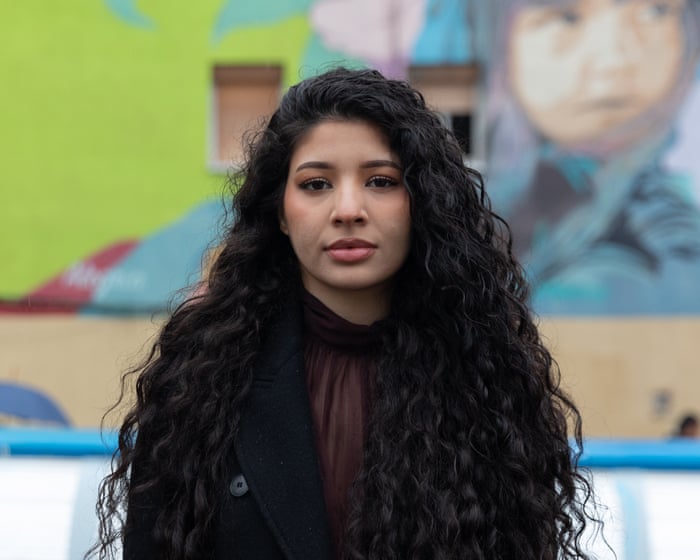
Sala waited in the winter sun with her small black lurcher dog, Pistón. When Nada arrived, Sala was struck by her calm and dignified style: she wore a blue overcoat, was impeccably made up, and had her thick black hair twisted into a braid that hung below her waist. In reality, Nada was a bundle of nerves at the thought of revisiting a deeply buried trauma, but she had learned to hide such feelings.
As Nada recounted the story of her life since returning to Spain, Sala listened in shock. Catalan authorities had placed her in two different children’s homes outside Barcelona until she was 14—where Hidalgo visited initially—and then returned Nada to her parents’ squat, despite their admitted guilt in the Bolivia ordeal. Four years later, Nada still lived there.
Returning to La Florida had been a terrible experience, though she had been desperate to leave the nuns who ran the last children’s home. She lived in fear of her father’s temper, often going to bed early without eating just to avoid him. She kept a knife under her pillow. At the local Rubió i Ors high school, Nada’s teachers watched her crumble as she struggled at home while fighting to earn top grades. She suffered severe anxiety attacks.
Hunger, scarcity, abuse, domestic chaos, and anxiety drove her deep into depression. She ran away fAt 15, she ran away from home, spending a week sleeping on apartment block rooftops and staircases. When she was 16, she contemplated suicide, pacing her tiny living room with a knife in her hand for about an hour. Then, she conjured a small light in her mind that helped her let go of the knife. “It represented hope for the future,” she said.
Once again, school became her salvation. Alba Solsona, the history and geography teacher who supervised her prize-winning essay on Palestine—a subject they both felt passionately about—told me that Nada always stood out as curious, competitive, and driven. She was more serious than other teenagers and, focused on getting good grades, found it hard to make friends. Teachers were informed that Nada came from an extremely vulnerable background, but they knew no other details. At home, Nada read constantly. In class, she was a determined debater. “As a teacher, she forced you to be at your best,” Solsona said. As they grew closer while working on the research project, Solsona occasionally suggested there was more to life than good grades. But Nada was clear: this was her way out of La Florida.
After meeting at Can Vidalet metro station on November 27, 2022, Nada and Sala continued their conversation over a shared plate of patatas con alioli in the winter sunshine outside a nearby bar, Juanito’s. For Nada, the meeting was eye-opening. She had barely spoken about Bolivia since her return and had come to think of it less as a kidnapping by an abusive pedophile and more as a holiday that went wrong. As she and Sala talked, the truth began to come into focus. “Tell me my story,” she begged Sala.
Sala was cautious about causing fresh trauma. “I’m not a psychologist,” she told me. Still, she outlined how Nada had been kidnapped, enslaved, and then rescued. Sala, who had spent her career reporting harrowing stories from around the world, was amazed by the poise and resilience of the woman in front of her. “She was a survivor,” Sala said. She was also outraged that the Catalan government had never formalized Nada’s residency status, even though she had lived in Spain since she was four and, as a victim of human trafficking, automatically qualified for permanent residency. Instead, as an undocumented Moroccan immigrant, Nada was not allowed to work or apply for student grants.
When Sala offered to help, starting by ensuring she gained legal residency, Nada was unsure how to respond. A month after their first meeting, in late December 2022, she went to Sala’s house in Barcelona with a surprising request. Nada explained that she didn’t just want help. She had heroines whose lives she studied and whose books she read—young women like Malala Yousafzai, the Pakistani education activist shot in the head by radical Islamists in 2012, and Nadia Murad, the Yazidi woman who had been enslaved by ISIS in Iraq when she was 21. These women had used their suffering to advocate for change. Nada wanted to do the same. “I want my story to make abused and enslaved children visible,” she announced.
Together, over the following months, they devised a plan. Nada would learn to tell her story in public, and they would work on a book and a documentary. With Sala’s help, Nada had her residency approved. She also switched her university course to law and international relations to better prepare for a life of advocacy. Yet even as she moved forward, Nada was haunted by terrible nightmares—of violent men chasing her through forests or threatening urban landscapes. Sala found Nada a psychologist and took her to an animal therapy center run by a friend, where Nada spent time with horses. One day, the owner asked Nada to speak to a group of executives who had come for a course. For the first time, she told her story to strangers. Nada was surprised to see them weep.
Soon, Sala stopped thinking of Nada as the protagonist in a story.The story that Sala would cover as a journalist became deeply personal. She came to think of Nada, as she told me, like “a second daughter.” For Sala, now 56, this relationship filled an emotional need after three decades of reporting on victims of crime and catastrophe. It has grown into an all-consuming, emotionally exhausting, and so far, financially draining project. “I’ve told a lot of stories of hardship and seen young girls die,” Sala told me. “If I can help just one of them make it, then it will be worth the effort.”
Throughout this time, Nada continued living with her family in La Florida, despite her father’s frightening rages and their repeated evictions from squatted apartments. While Sala was convinced that Nada’s family posed the greatest danger to her future, Nada felt a duty to support her mother and be there for her two younger brothers.
There was another reason she stayed. Nada had discovered religion at school. At 16, she found solace in TikTok videos of people reciting the Qur’an. Her parents were not religious, but she began reading the Qur’an and hadiths—the sayings and deeds of Muhammad—finding lessons about forgiveness, love, and peace. The key, she said, was “to answer evil with goodness.” To her, that meant forgiving her parents and even Morales. Strangely, her encounter with him hadn’t turned her away from faith. “My first real contact with God was when I asked how someone like him could claim to believe in God, and that was the day he stabbed me through the foot,” she said.
Early in 2024, Sala found a women’s refuge that offered a small studio flat in a town outside Barcelona. But Nada worried that leaving would violate her Islamic duty to her family. One day that summer, after visiting a contemporary art museum in Barcelona, she wandered into the Santa Maria del Mar basilica, a soaring 14th-century Gothic church. A Roman Catholic priest stood near the altar, inviting people to confess. She decided to ask for his advice.
In the confessional, she once again felt the power of her story. As she spoke, the priest wept with great, gulping sobs. “I’ve never seen anyone cry like that,” she said. “He was really suffering.” When he recovered, he advised Nada to move out. “You need to escape and start a new life.” When police arrived to evict her family from their squat in November 2024, she finally accepted the offer of the studio. Moving in, she felt joyful and free. It was the first time she had experienced peace at home—and only she had the key.
Yet another distraction pulled at her attention. Her mother had found her a job as a receptionist in a block of self-catering apartments popular with wealthy Eastern European and Russian mafia members. The men took a liking to her; one even took her shopping and to exclusive restaurants. Sala and Nada argued over whether she should accept anything from them. Eventually, Nada grew tired of their attention. “When they see you are poor, they think they have power,” she told me.
If Nada felt tempted by luxury, it wasn’t just because it was the opposite of poverty, but also because the plan with Sala seemed to be stalling. No one was interested in their documentary—at least not with the serious, campaigning tone they insisted it must have. Publishers shrugged at their book proposal. “If she had been white and not Moroccan, things would have been different,” said Sala.
By now, Nada was deeply invested in the project. With Sala’s encouragement, she switched her studies to law and international relations. This aligned with her new goals and felt more fulfilling, but it was riskier for future employment. What if the plan didn’t work? With no family safety net, failure could still mean ending up back in a squat in La Florida.
Since Sala’s old media contacts showed little interest, Nada took matters into her own hands and reached out directly to Uri Sabat, one of Spain’s best-known YouTubers. When Sala found out, she wasSala was furious that Nada had broken the exclusivity of her personal story, fearing it had damaged their chances of securing a documentary or publishing deal. That deal was meant to fund the completion of her studies and give her financial independence. They did not speak for a month.
After reconciling, Sala guided Nada onto popular mainstream morning talk shows. During her first appearance on Antena 3 in early September 2025, Nada shared her story and explained that she forgave Morales (who had since died in jail). “When you forgive, you don’t do it because the other person deserves it,” she said. “I do this because my heart deserves to live free of resentment.” The studio audience applauded enthusiastically.
While in Madrid, Sala took Nada to visit Hidalgo. The entire UCO headquarters seemed thrilled by her visit, and Nada learned her case was legendary. Several artifacts recovered with her—a pocket Quran and a notebook kept by Morales—had long been displayed in a glass cabinet. “It was a special case from the very start,” Hidalgo told me. “Any other child would have died. But she is a chameleon. She can adapt to anything.” Seeing her again was emotional. “It was the same Nada—so very bright and quick,” he said. Nada fought back tears, feeling a lump in her throat. “I could see how much my life had meant to them,” she said. Hidalgo invited her to return and help train agents dealing with trafficking victims.
On September 14, 2025, Barcelona’s La Vanguardia newspaper ran a story about their reunion and detailed Nada’s double tragedy: first the kidnapping, then her abandonment by the Catalan authorities. The article revived their project. Suddenly, publishers and television producers were interested again.
A few days later, I began traveling regularly from my home in Madrid to Barcelona to meet Nada. I was curious about her background, her ambition, and her relationship with Sala. We spoke for hours at the small dinner table in Sala’s two-story home, tucked down a private alley near Park Güell with its eccentric Gaudí decorations. Conversations were often three-way, with Sala present. Nada felt at home there, even stepping into the kitchen to make herself hot chocolate. Their bond had been strengthened by the ups and downs of their project, including disagreements. Sala was straightforward and caring, worrying about Nada’s eating habits or scolding her for being overdressed for television appearances. “You can’t turn up looking like Angelina Jolie!” Nada would shrug. She always arrived impeccably dressed and made up. Her calm, candid eloquence masked a restless energy. At first, she fidgeted with anything on the table, including my tape recorder.
These conversations felt like watching a box being slowly opened. Nada was excavating her own past, reading police and court documents for more details about what had happened to her, preparing to sue the Catalan government for €300,000 for negligence (with help from an internship at a Barcelona law firm), and uncovering memories with the help of psychologists. She was filling huge gaps in her life while trying to make sense of them. She struggled, especially, to understand her parents—a topic she did not wish to discuss.
In some ways, things were moving too quickly. During this period, she appeared on more TV shows, her polished presence and measured tone contrasting sharply with the horrors of her story. The American Spanish-language channel Univision broadcast a report about her. By then, she was receiving three emails a week from abused girls and young women around the world, including some from the Aeminpu cult. Nada wrote back or had video chats with them, though she could often do little more than listen and offer sympathy. At the same time, she was studying for her law degree, writing…While working on her book with Sala, interning at the law firm, and preparing her claim against the Catalan government, Nada pushed herself until, by December, she was exhausted and clumps of her hair began to fall out. She was determined to tough it out, but her body was giving way.
One sunny winter morning, we drove in Sala’s practical grey Toyota Proace van, accompanied by her dog Pistón, to La Florida. We walked around the cemetery where Nada used to fill water bottles. For Sala, whose father is buried there, this visit was a first—Nada had always asked to avoid her parents’ neighborhood when they met. Even now, Nada worried about bumping into her father, as her parents were upset about her television appearances. (By January, after using her book advance to buy furniture for her family, their attitude had softened. “They now realize that I will inevitably tell my story, and they’ve changed,” she said.)
We visited the rundown building where Morales had been their neighbor and passed the apartment with broken windows where her family now squats. As we walked, Nada declared that La Florida would become one of her causes, too. “I’m proud of this place,” she said. She recalled the delinquency, drugs, and fights—one year, youths set fire to the Christmas tree in the main plaza—but also remembered it as a neighborly, lively community.
As we drove away from La Florida, Nada shared her dream of addressing the UN about the need to combat child trafficking. This determination comes at a cost. When we last met at the end of January, Nada was undergoing an intensive, punishing round of therapy to overcome her dissociation from what had happened to her. Some of the pain locked away more than a decade ago was beginning to surface. It felt like removing a mask, she said, and it was terrifying. “I consider myself strong,” she told me. “So, if I’m suffering, imagine what it’s like for someone who doesn’t have the things I now have.”
Nada copes by diving even deeper into her fight. In a recent WhatsApp message, she told me she had drafted a letter to the well-known human rights barrister Amal Clooney, who has represented Nadia Murad—a Nobel Peace Prize winner, like Nada’s other heroine, Malala Yousafzai. “I want to ask her advice,” Nada said. She planned to send it once this article was published. Knowing Nada, it will be on its way tomorrow.
Frequently Asked Questions
Of course Here is a list of FAQs about the story Any other child would have died the miraculous survival of Nada Itrab
Basic Questions
1 Who is Nada Itrab
Nada Itrab is a young girl from Gaza who at the age of five survived being buried under rubble for several hours after an Israeli airstrike in 2018 that killed her mother and four siblings
2 What does the phrase Any other child would have died refer to
Its a direct quote from a doctor who treated Nada He said her survival given the severity of her injuries and the circumstances was medically miraculous and defied the odds
3 What exactly happened to her
Her familys home in Gaza City was hit by an airstrike She was trapped under concrete and debris Rescuers pulled her out alive but she suffered catastrophic injuries including the loss of her left arm and severe damage to her legs and abdomen
4 Where is Nada now
After initial treatment in Gaza she was evacuated for advanced medical care She has undergone numerous surgeries including in the United States for prosthetics and reconstructive surgery She continues her recovery and rehabilitation
Questions About Her Survival Recovery
5 Why was her survival considered a miracle
Doctors pointed to the combination of surviving the blast and collapse the timing of her rescue before bleeding out or suffocating and her bodys resilience despite massive trauma It was a perfect and unlikely alignment of factors
6 What were her most severe injuries
She lost her left arm above the elbow She also had a severe abdominal wound where her intestines were exposed a fractured pelvis and deep wounds to her legs
7 How has she been able to get treatment outside of Gaza
Her case gained international attention through media coverage and humanitarian organizations These groups along with medical charities facilitated her medical transfers and sponsored her complex treatments which were not available in Gaza due to the blockade and limited resources
8 Is she okay now
Physically she is on a long journey of recovery and adaptation learning to use a prosthetic arm and rebuilding strength Emotionally and psychologically like all child survivors of war she carries the profound trauma of losing her family and her ordeal
Broader Context Impact