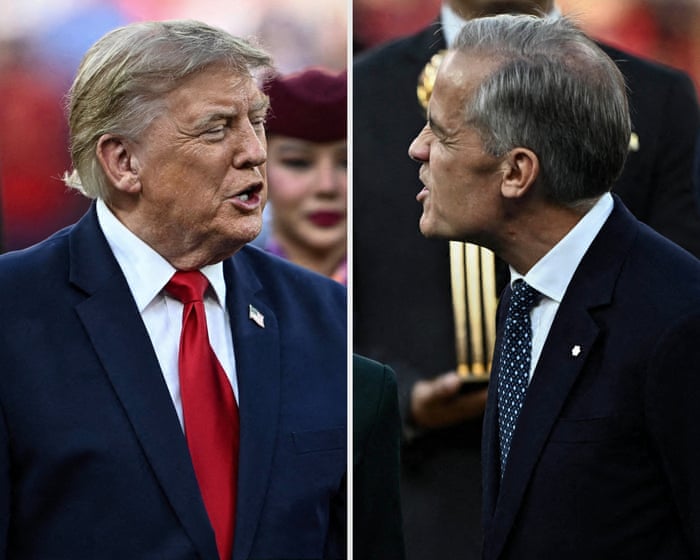
The US has placed 50% tariffs on certain Canadian goods, and Prime Minister Mark Carney has promised to respond with matching tariffs “dollar for dollar” after trade negotiations broke down. The tariffs took effect at 04:00 GMT on about $20 billion (£14.6 billion) worth of products, ranging from hockey sticks to tongue depressors. Trade experts say the tariffs could lead to some job losses, but the biggest impact is likely to be political, driving a deeper wedge between the two longtime allies.
This trade dispute marks the most serious rift in recent relations between Washington and one of its closest allies and trading partners, as Donald Trump’s aggressive foreign policy has angered officials in Ottawa. The two sides seemed close to a deal on Friday to reduce tariffs on steel, aluminum, and cars, but the agreement fell apart at the last minute, with each side blaming the other.
Canadian officials had worked hard and in good faith, but “last-minute changes in the US proposed terms were unfair, uneconomic and called into question the reliability of any deal,” Carney said in a statement. US officials, in turn, accused Canada of wrecking the deal by demanding extra concessions at the last minute.
Carney recalled his negotiators as Canada vowed to match Washington’s tough stance. No further talks are planned. The prime minister said of the 50% tariffs: “Canada will match those tariffs dollar for dollar to protect our workers and businesses.”
The US tariffs will affect about $20 billion worth of Canadian products. US Trade Representative Jamieson Greer called the breakdown a “missed opportunity for Canada.” In a statement just before midnight on Friday, he said, “Tonight, Canada declined to finalise the trade deal under the terms agreed earlier this week. Despite the US offer to Canada to receive the best treatment of any major exporter to our market, new demands and walk-backs of other commitments by Canada have upended the careful balance reached in the past days.” Greer added that the US offer was forward-looking and included “a historic economic and national security partnership.”
The retaliation escalates the trade conflict between the two countries and raises questions about the future of the North American trade pact involving the US, Canada, and Mexico, which is vital to industry in all three nations. Trade experts warn the tariffs could put additional strain on already vulnerable sectors, potentially leading to job losses and store closures.
Trump’s import taxes will apply to about 5% of what Canada ships to the US each year. A senior Trump administration official told reporters that Canada sought concessions on steel, aluminum, vehicles, and lumber that the US was unwilling to provide.
The political fallout from the breakdown is likely to be even greater than the economic impact. The two countries traded $880 billion worth of goods and services last year, and many Canadians and Americans work in each other’s country. Carney, whose willingness to stand up to Trump has boosted his popularity in Canada, has said that “America has changed” and that the two countries will not return to their old relationship.
The Canadian public is also angry over US policy toward their country, especially Trump’s comments about making Canada the 51st US state. A petition to expel US Ambassador to Canada Pete Hoekstra has gathered about 248,000 signatures, accusing him of normalizing the idea of the US annexing Canada.
The tariffs were originally set to take effect at 12:01 am on Wednesday, but Trump extended the deadline by three days to allow for further talks. Carney said his government would announce additional support for Canadian workers and businesses in the coming days.Throughout the negotiations, Canada’s goal was to secure the best possible deal, “never an agreement at any cost or under any deadline.”
Ontario’s Premier, Doug Ford, backed the move, saying on X: “Team Canada needs to stand together more united than ever. The prime minister has my full support for a strong response – tariff for tariff, dollar for dollar. As we work to protect Canadian sovereignty and economic security, everything must be on the table. Ontario is ready to do its part.”
Candace Laing, head of the Canadian Chamber of Commerce, described the tariffs as “a major blow to North American competitiveness.” She noted they would increase costs for Americans while putting Canadian customers, investment, and small businesses at risk.
With reporting from Associated Press and Agence France-Presse.
Frequently Asked Questions
Here is a list of FAQs about Canadas response to the US tariffs written in a natural clear tone
General Background
Q Wait I thought the US tariffs were 25 Why are you saying 50
A The original US tariffs on Canadian steel and aluminum were 25 However in response to Ontarios surcharge on electricity sold to the US President Trump threatened to increase the tariff to 50 on those specific goods This FAQ is about that escalated 50 rate and Canadas reaction to it
Q What does dollar for dollar actually mean in this context
A It means Canada plans to match the total financial impact of the US tariffs If the US tariffs on Canadian goods are worth 20 billion Canada will impose tariffs on US goods worth the same amount Its a titfortat strategy to make the financial pain equal on both sides
Q So is this a trade war
A Yes this is a classic example of a trade war One country imposes tariffs the other retaliates with tariffs of their own and they keep escalating Its a cycle of economic retaliation
The Details Impact
Q What specific US goods will Canada put tariffs on
A The Canadian government has published a list of items but it includes everyday things like orange juice peanut butter coffee appliances and various consumer goods They also target politically sensitive products from US states like dairy from Wisconsin or bourbon from Kentucky to put pressure on US politicians
Q Will I see higher prices at the grocery store because of this
A Yes its very likely If Canada puts a tariff on US orange juice for example the US supplier has to pay that tax to bring it into Canada They will usually pass that extra cost onto you the consumer You might see prices go up on specific Americanmade goods
Q How will this affect my job if I work in the manufacturing sector